PART I: Where do ideas come from?
Out in the world what usually catches my eye are not beautiful views or sunsets or gorgeous buildings but rather patterns, textures, and surfaces. When I happen upon an interesting one, I take a photograph and add it to my file of about two thousand shots collected from daily life, travels, the web, Instagram, and from friends. They are what inspire new pieces and techniques: my prime motivator in ceramics is surface, then comes the form, and function is last. I suspect that my vessels are primarily containers for texture.
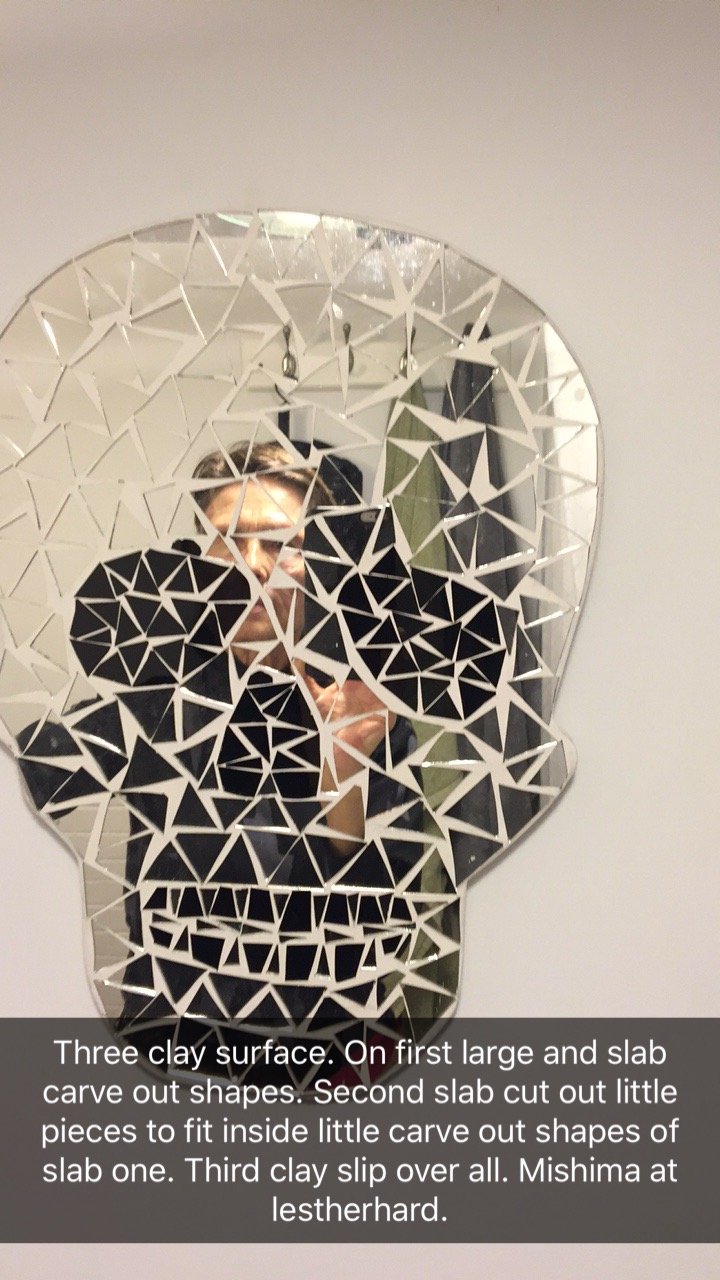
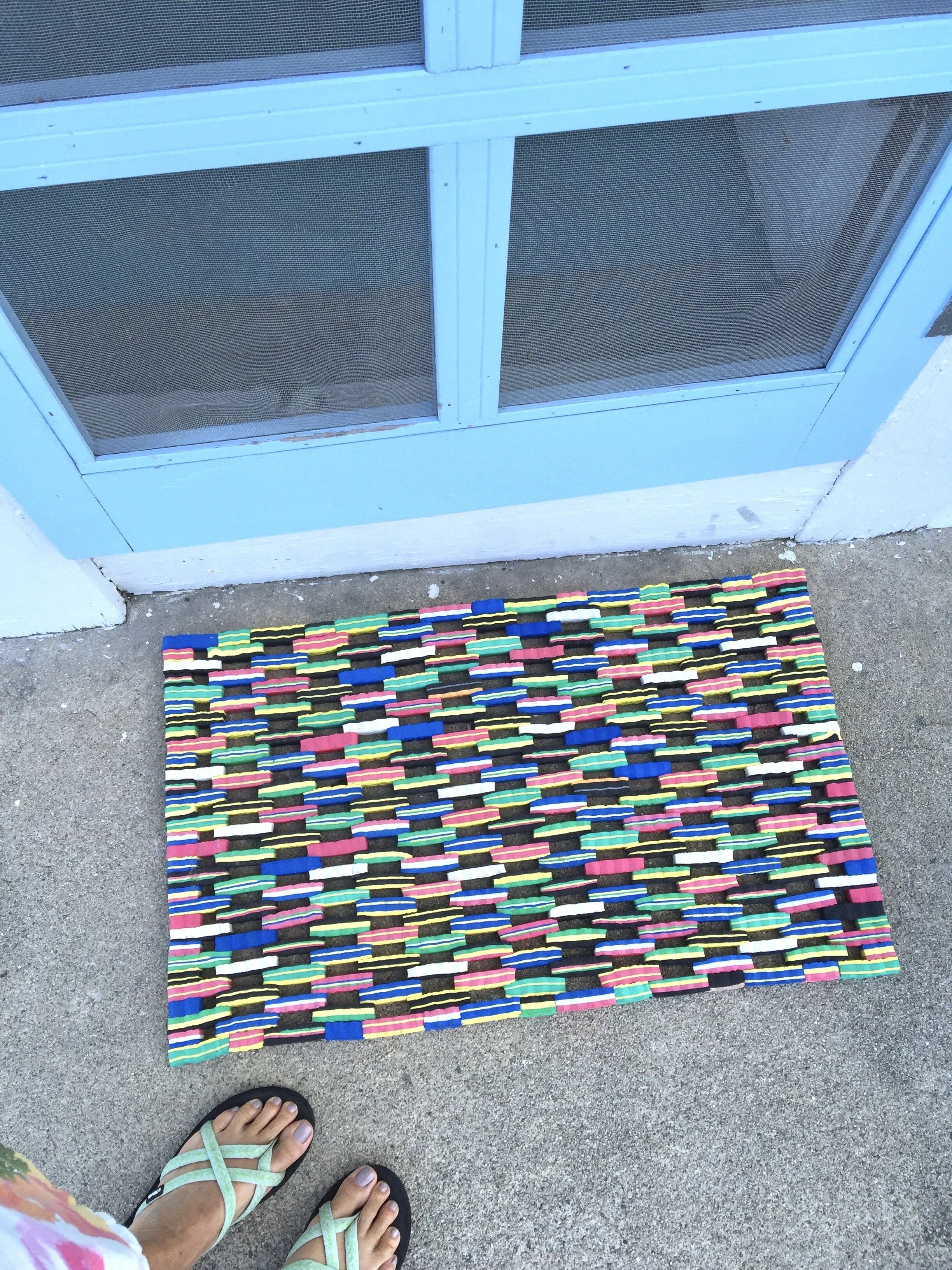
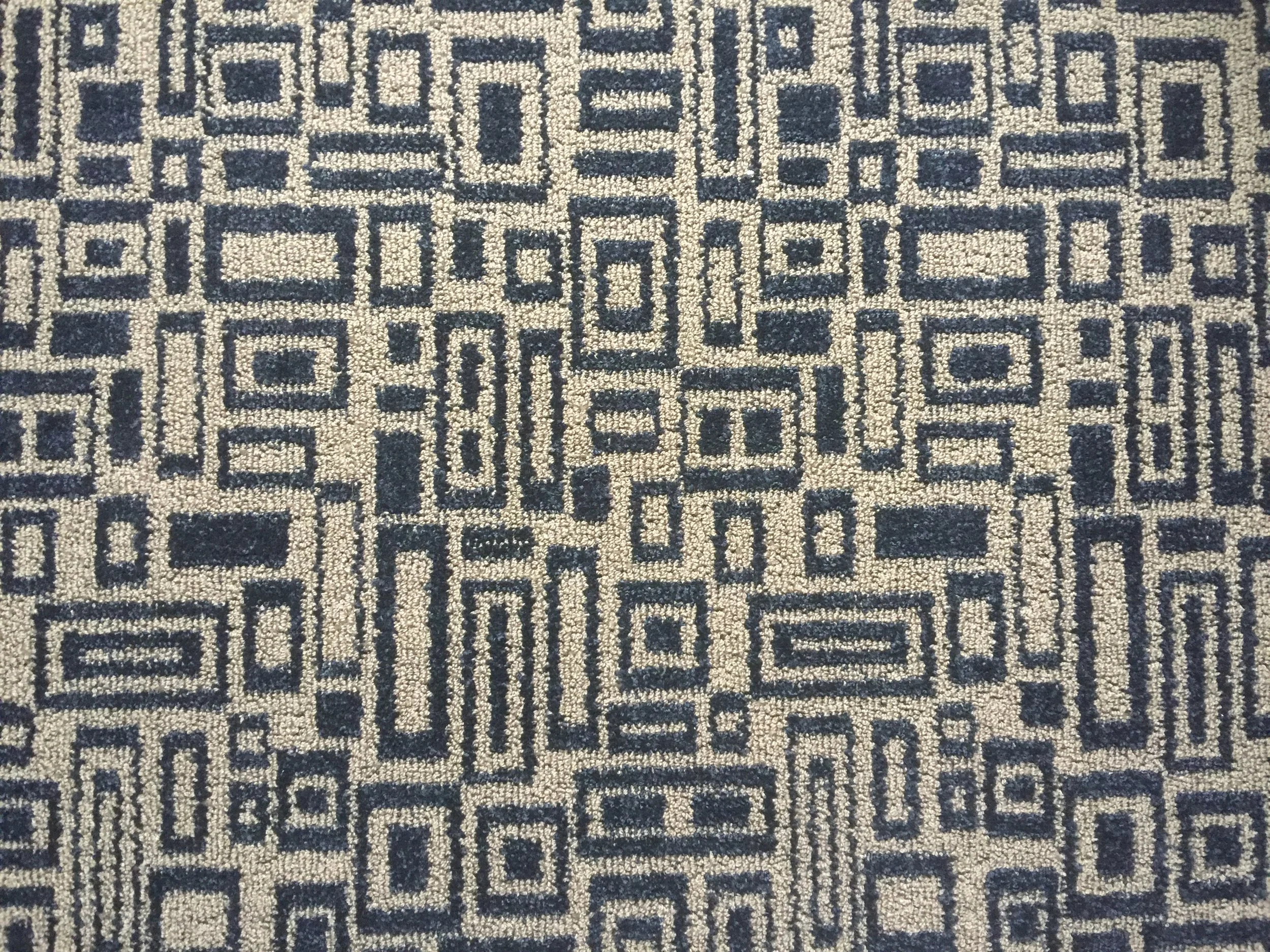
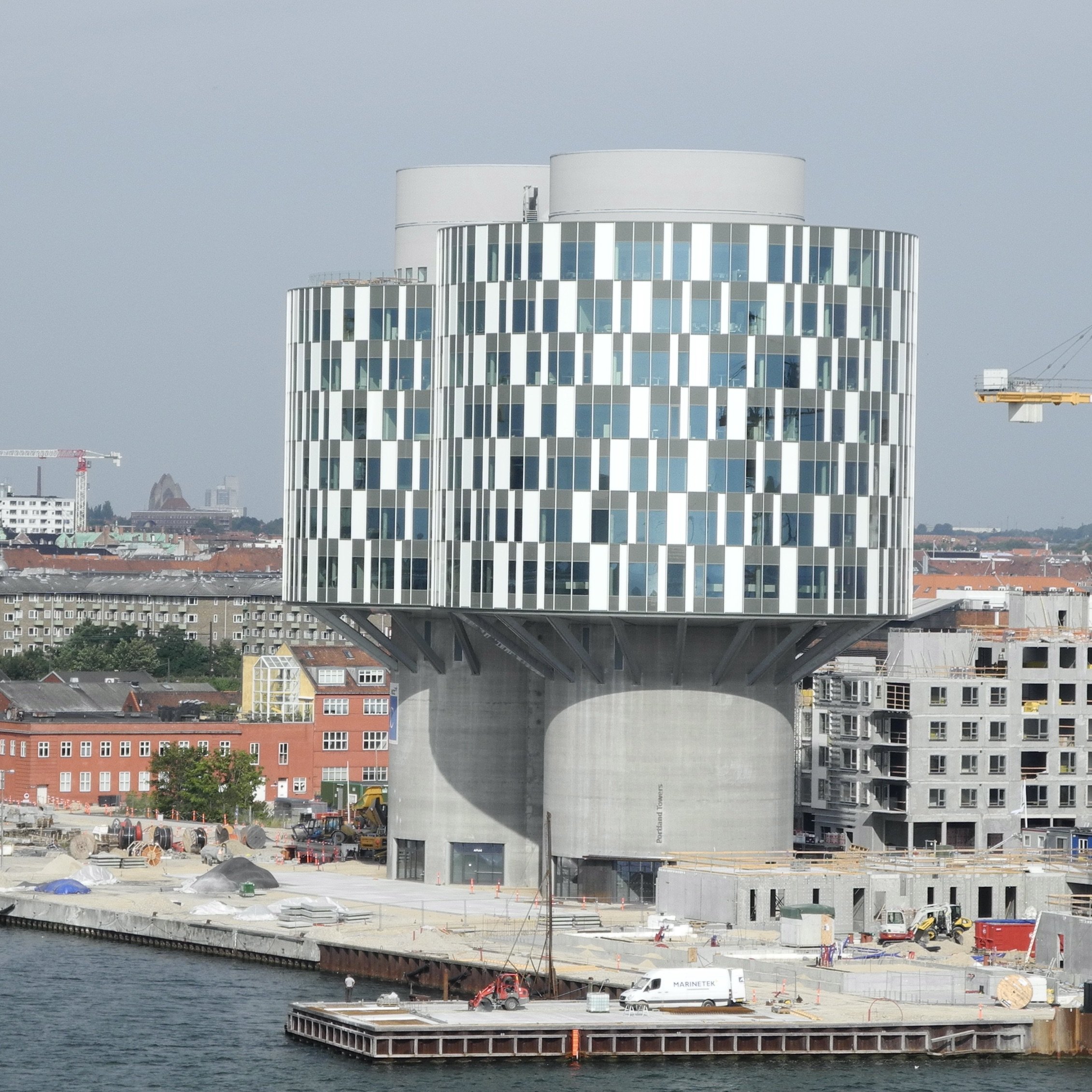
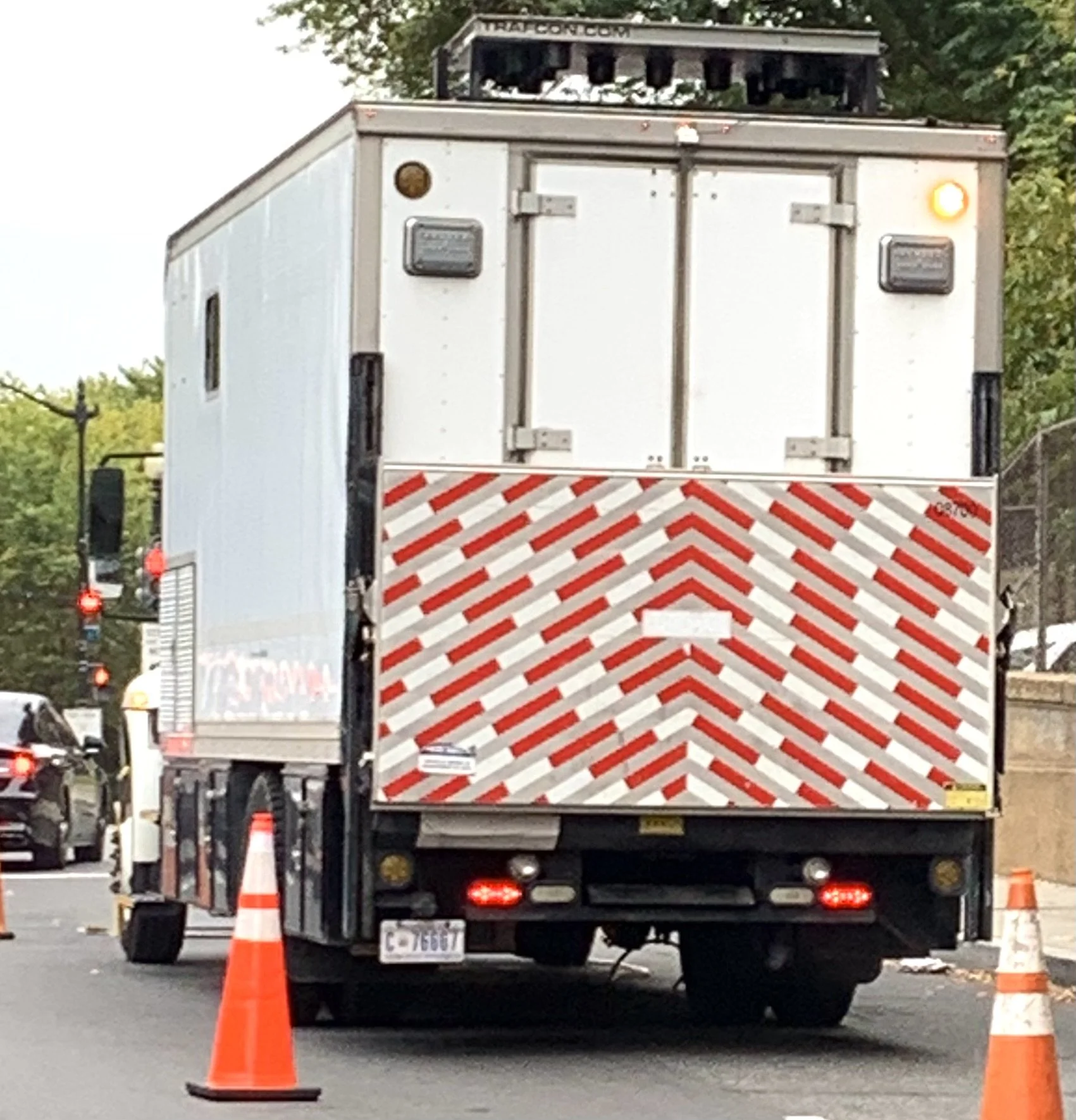
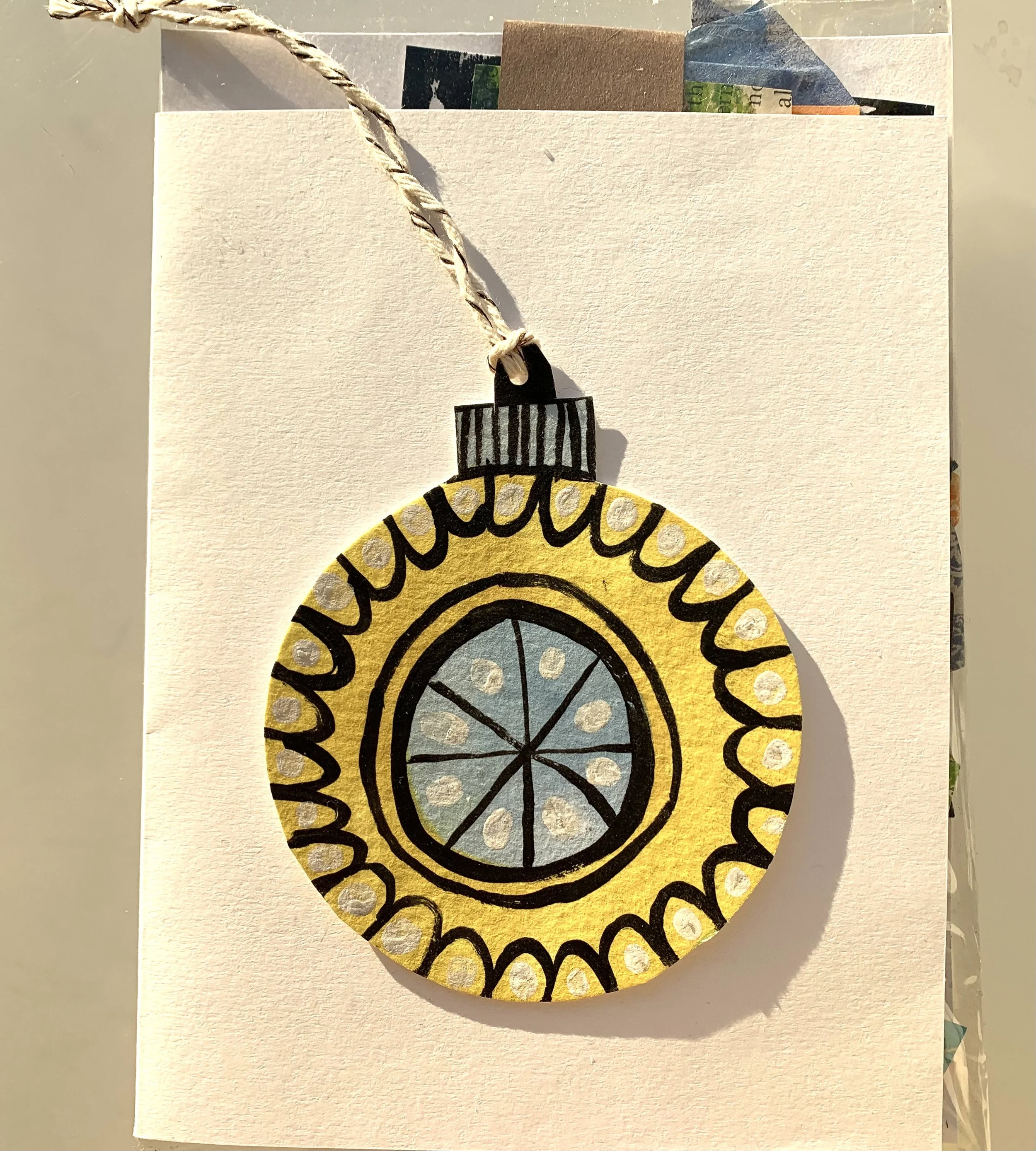
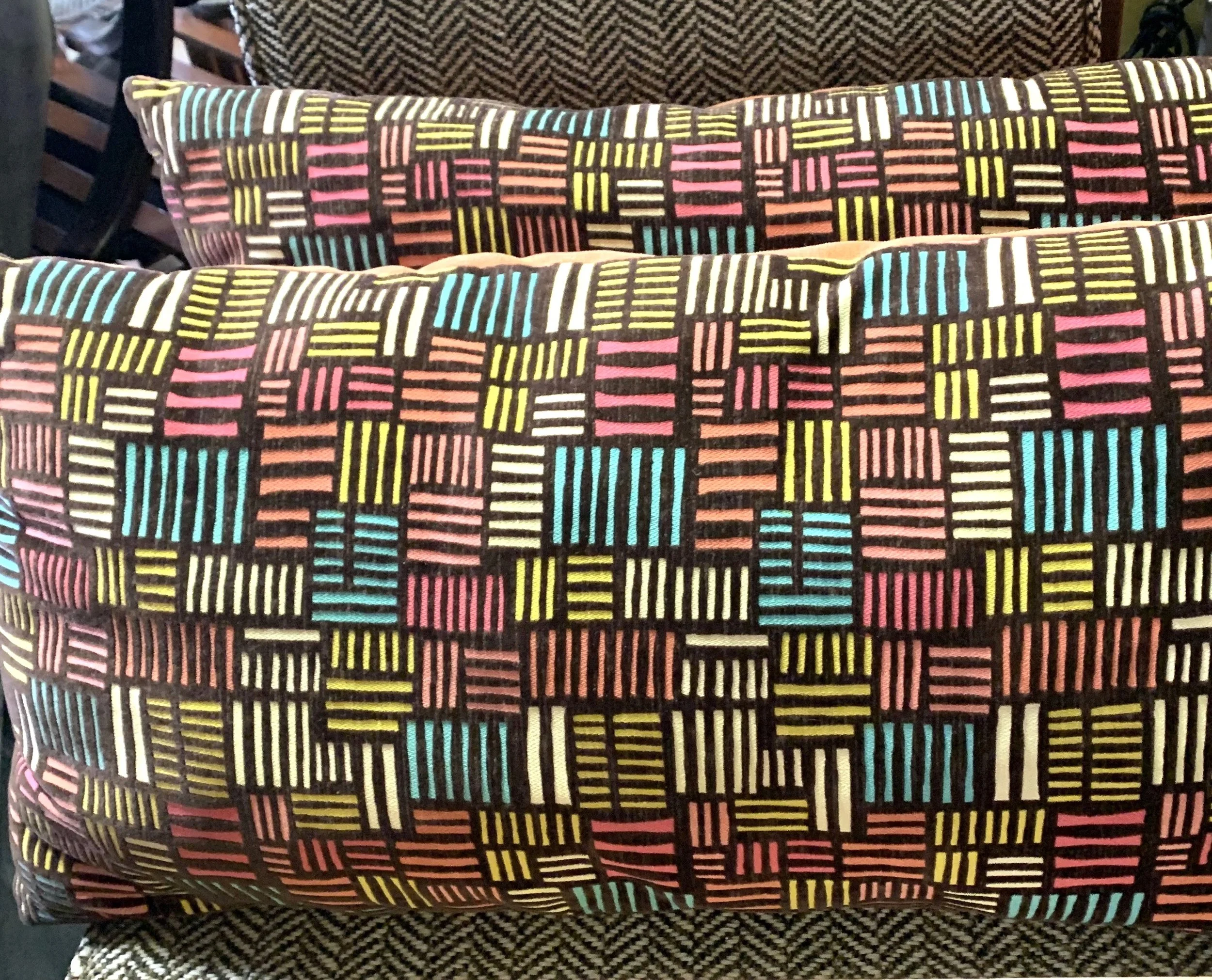
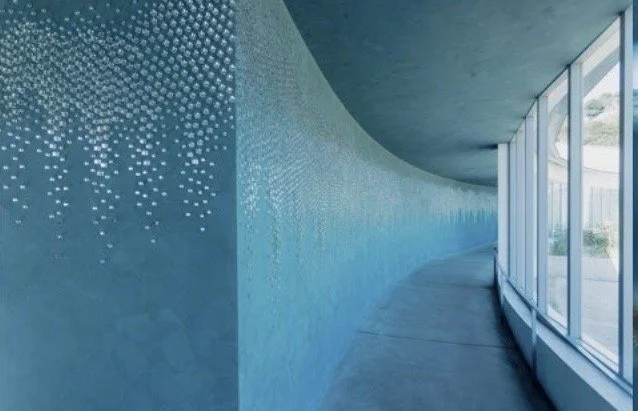
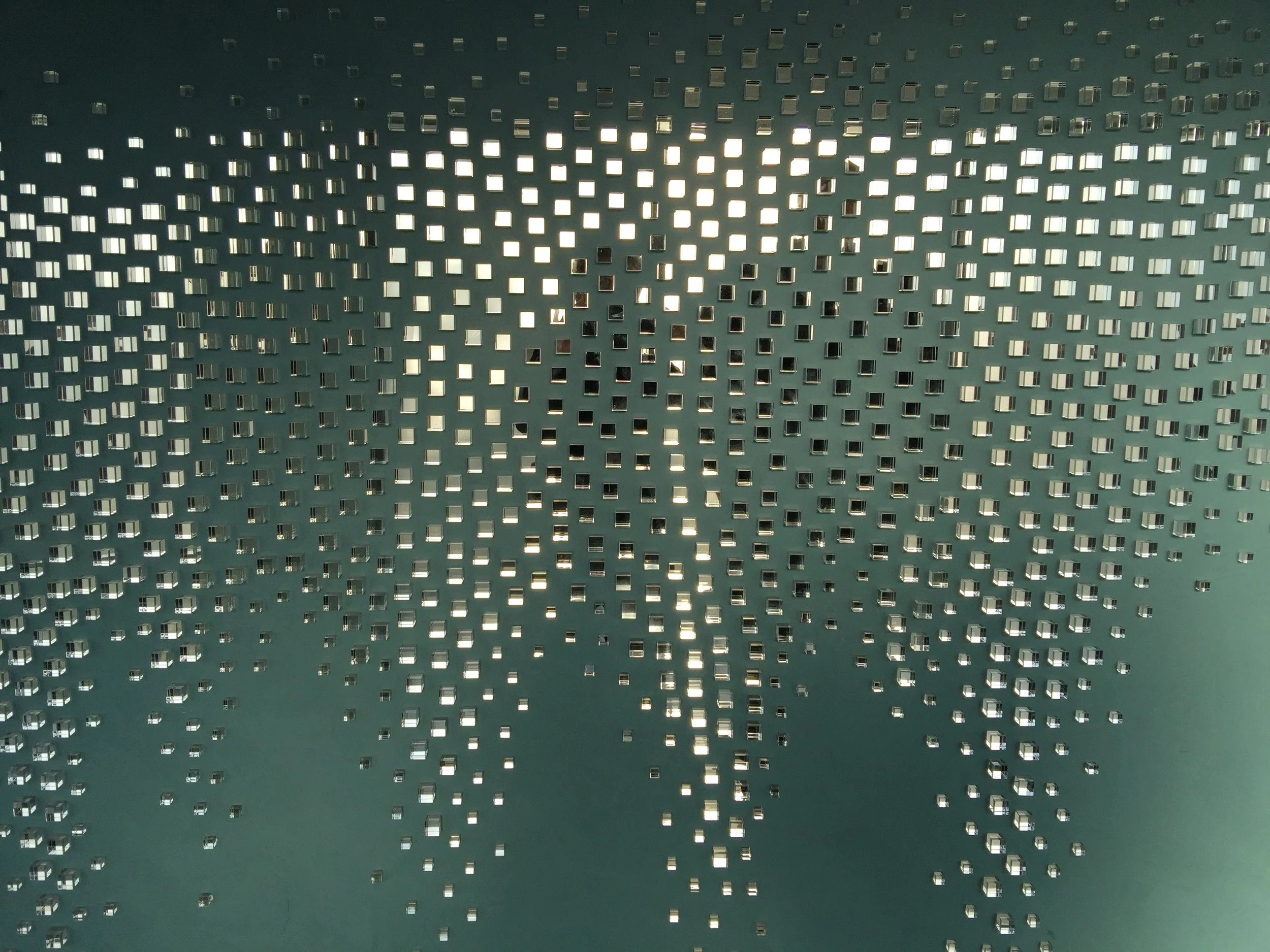
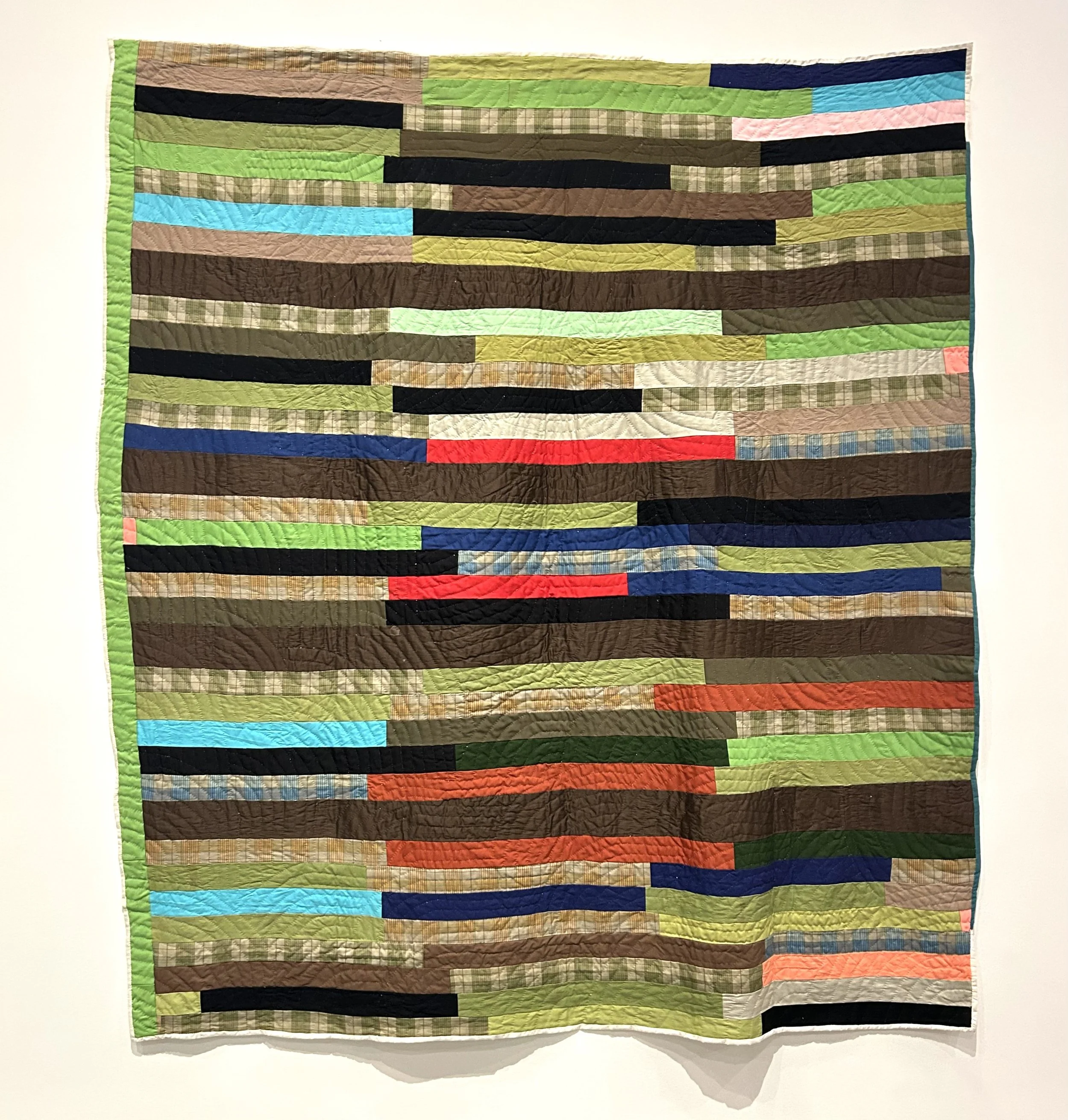
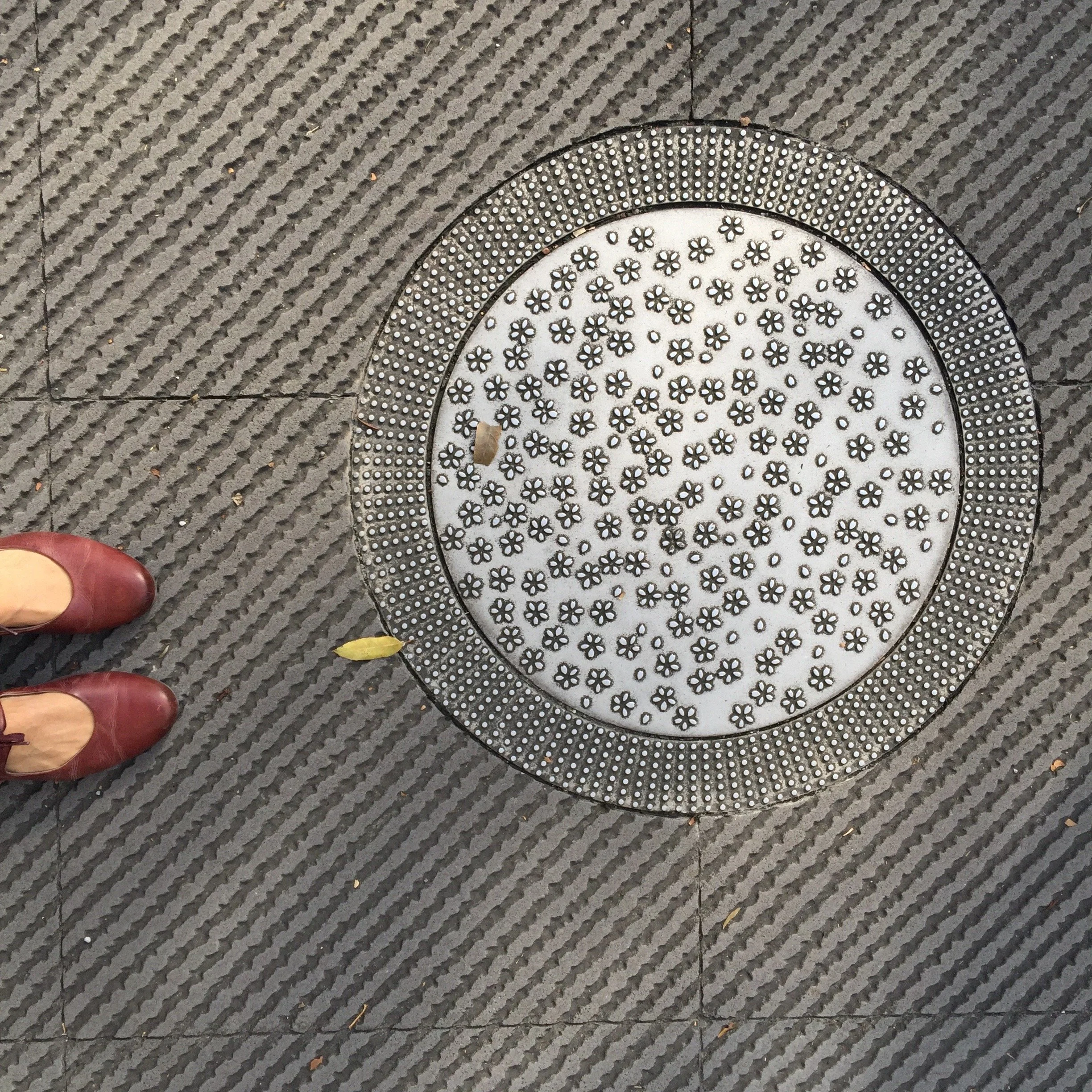
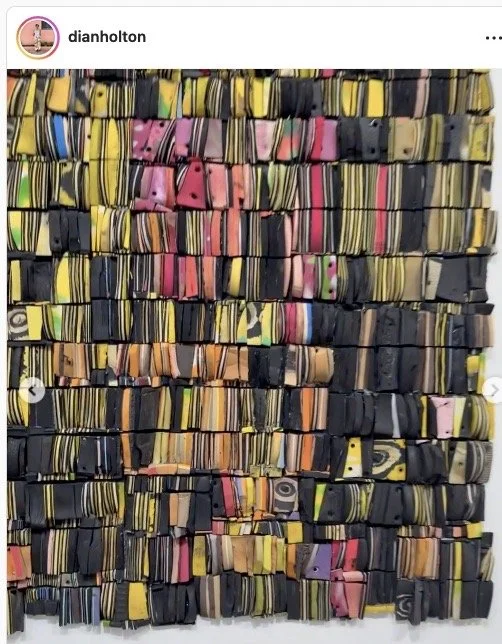
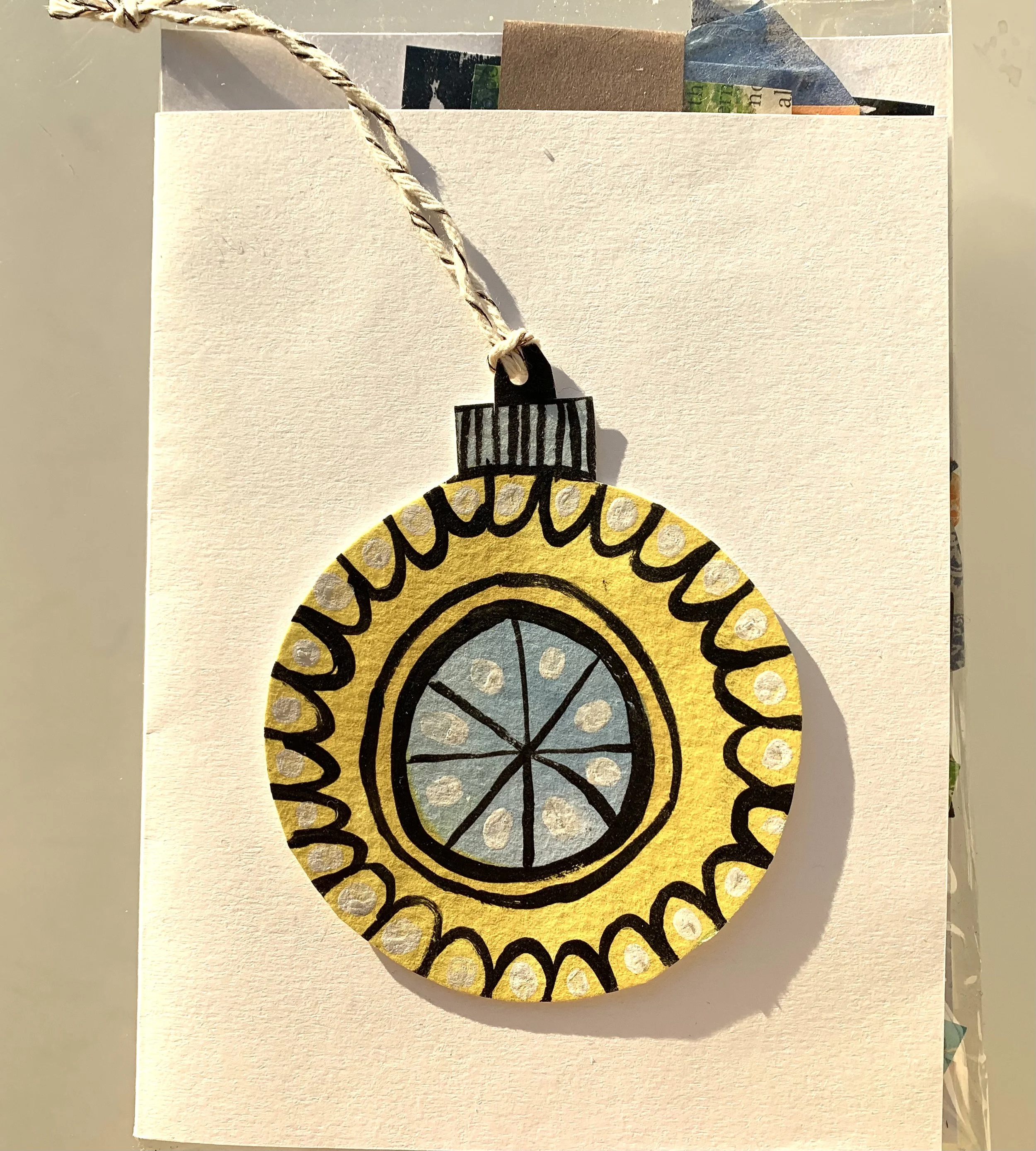
Here are a few shots that have inspired many of my pieces: a mirror in a Brooklyn b&b, a doormat in Westport MA, a carpet in Montreal, a building in Copenhagen, a utility truck in DC, a paper ornament from Jennifer Penick, pillows in an antique store in New Bedford MA, an installation by Teresita Fernandez at the Bennesse House in Naoshima, Japan, a quilt made by Irene Bankhead from a show in Berkeley, a manhole cover in Tokyo, and an artwork by Patrick Tagoe-Turkson who upcycles old flip-flops.
Nelly Series
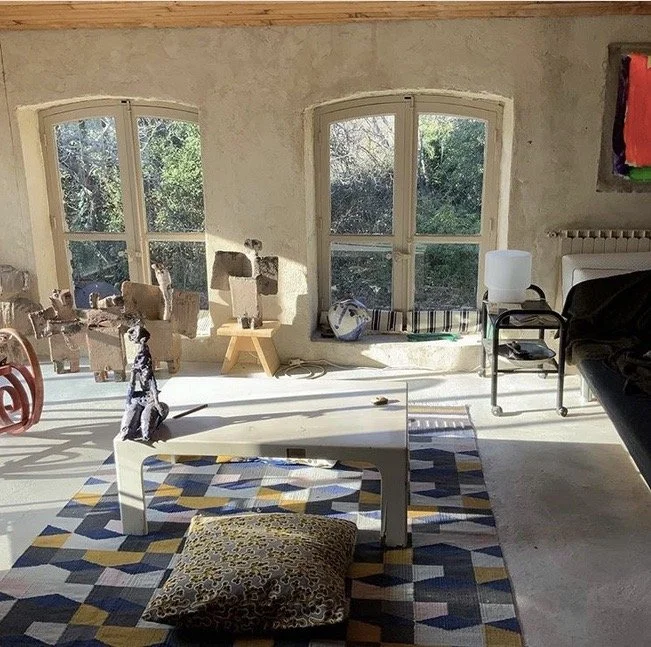
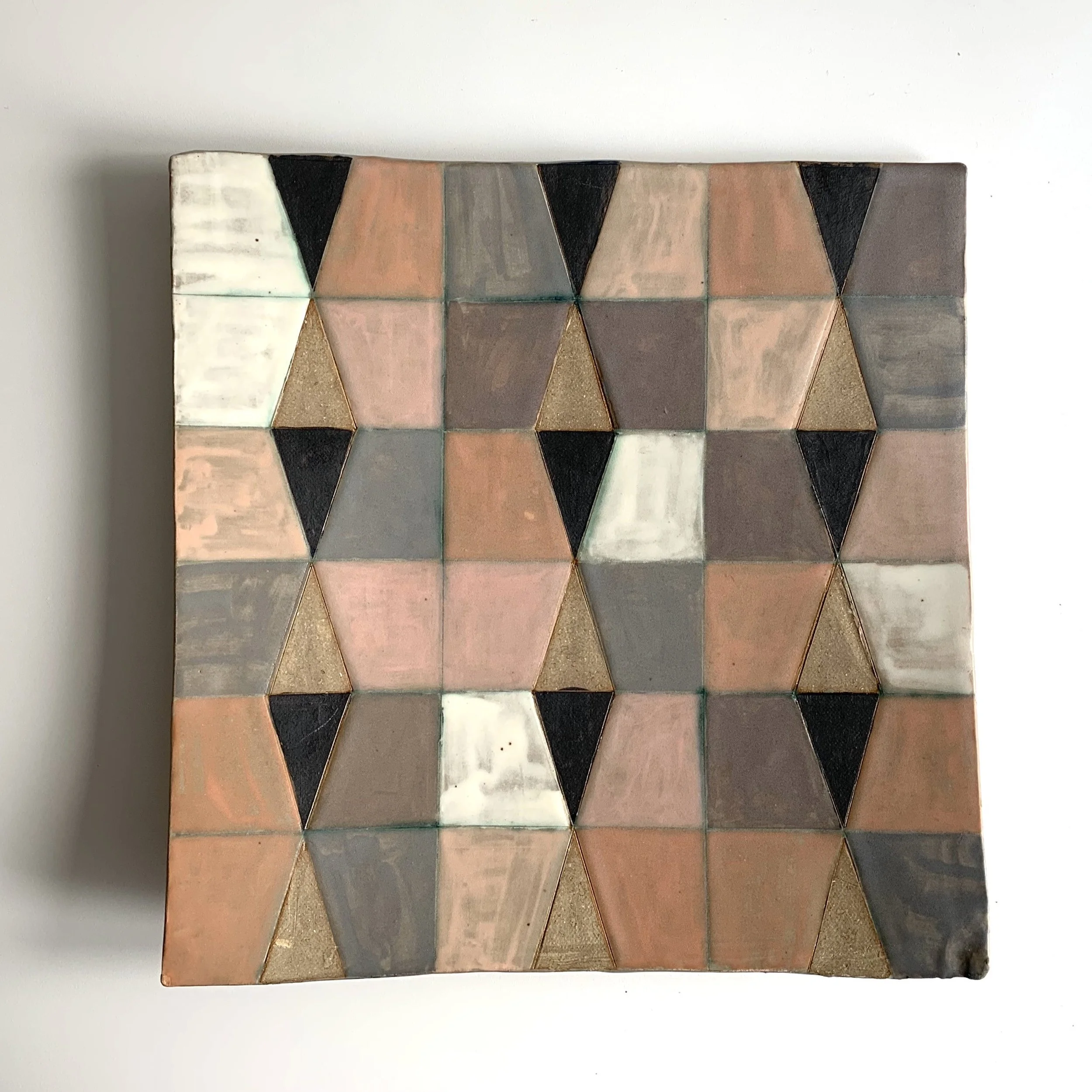
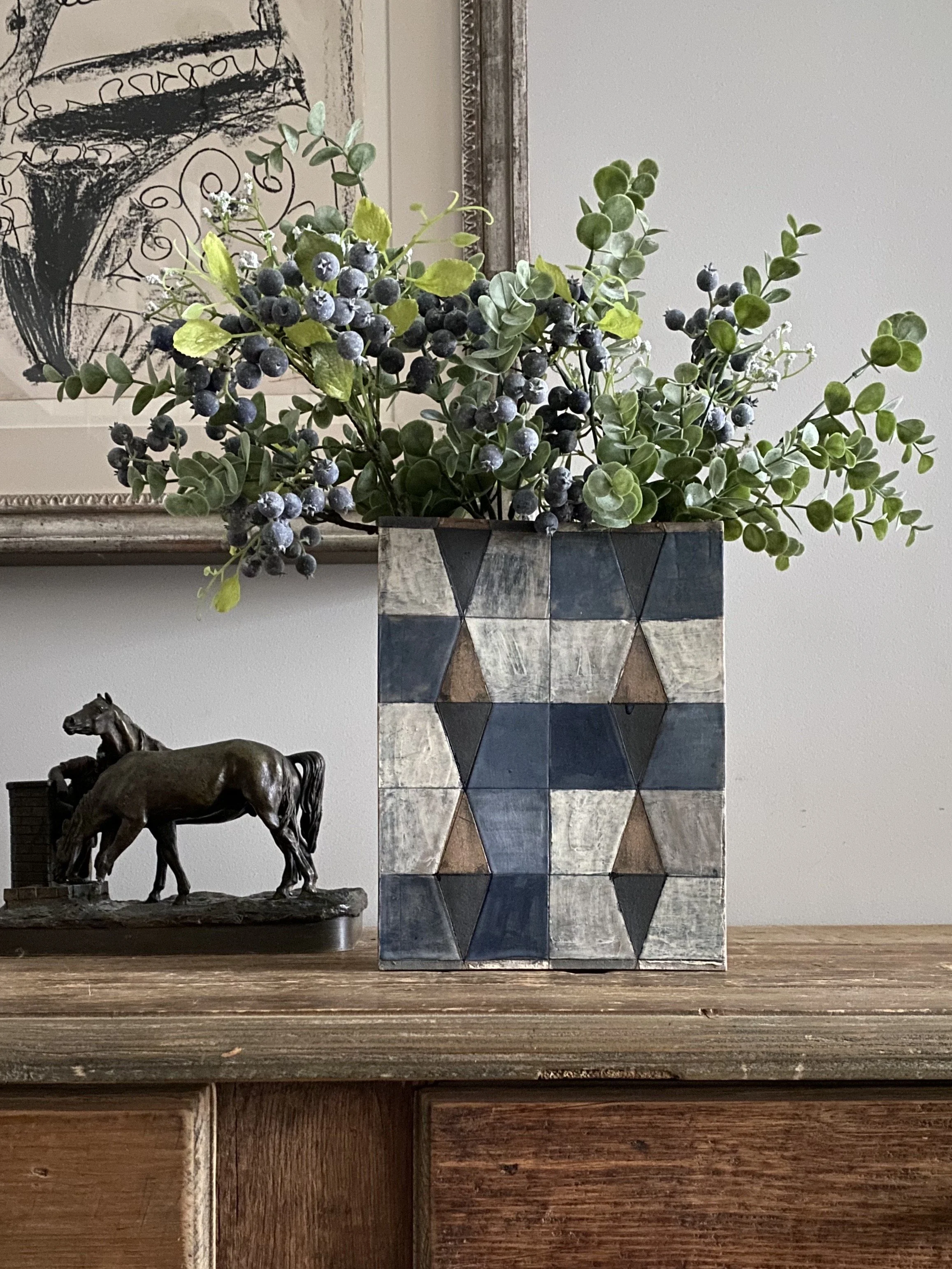
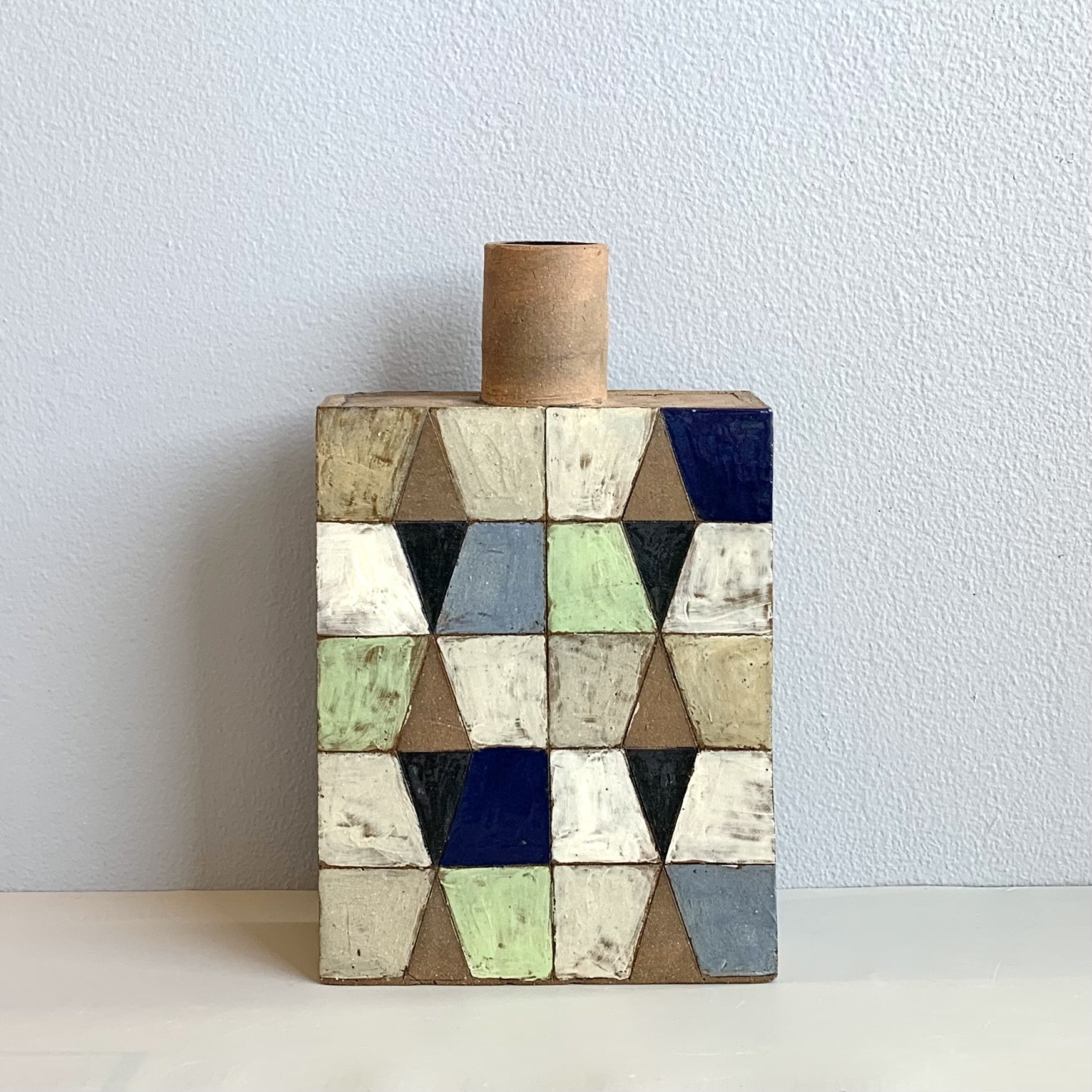
On the left below is a screenshot from an Instagram posting by ceramic artist Nelly Bonnand from her studio in Provence. What drew my eye was not the ceramics or the furniture or the beautiful space but the rug with an endlessly fascinating pattern that I’ve used over and over and will probably use again.
Tokyo Flowers
There are lots of beautiful manhole covers on the streets of Tokyo, but the one with little flowers shown above really spoke to me. Starting with the bottle, I began working with small bits of underglaze-painted clay which I pressed between my fingers or rolled with a roller to form flower petals and added to surfaces slathered with super thick slip.
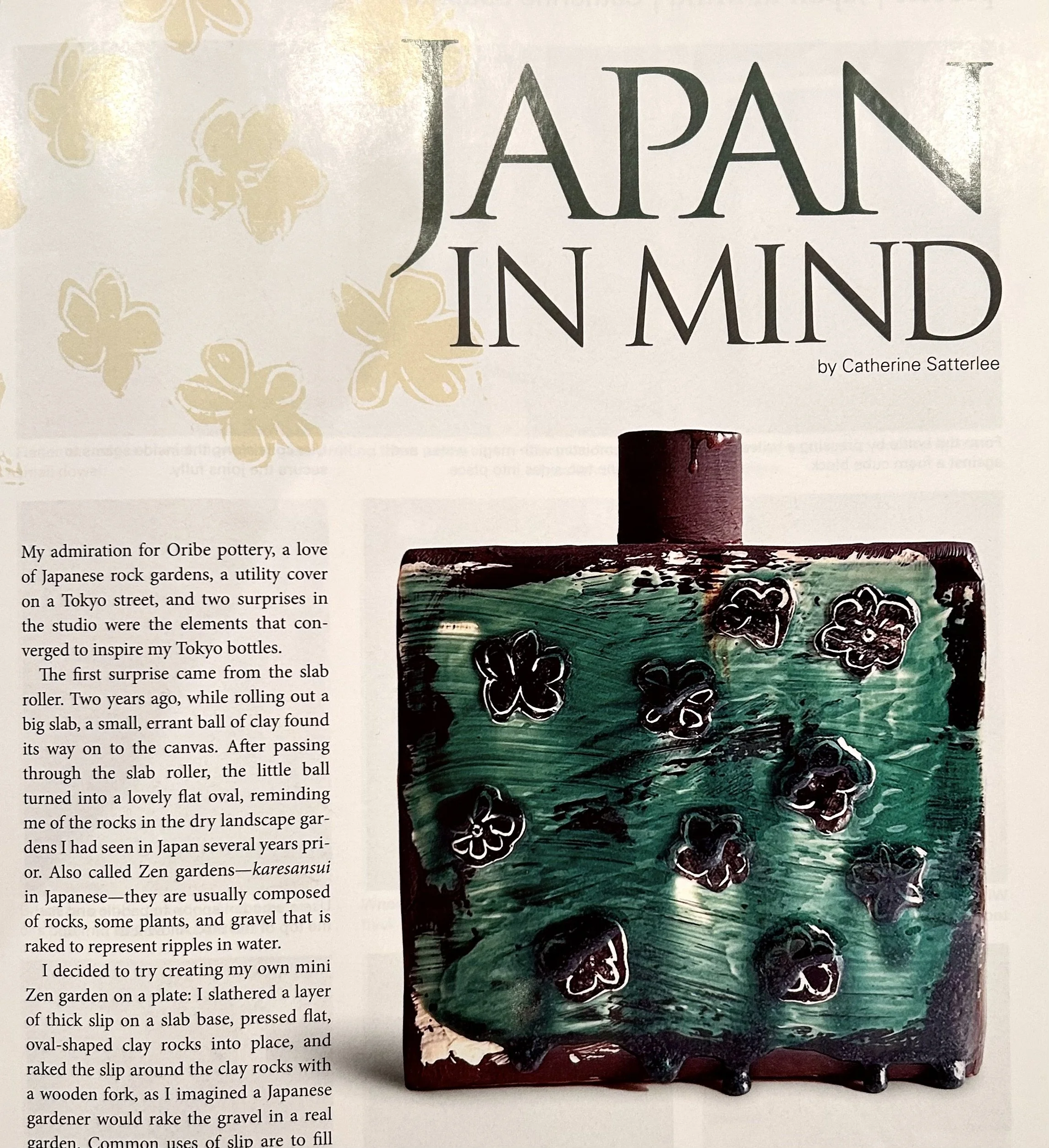
Pottery Making Illustrated, March/April 2021
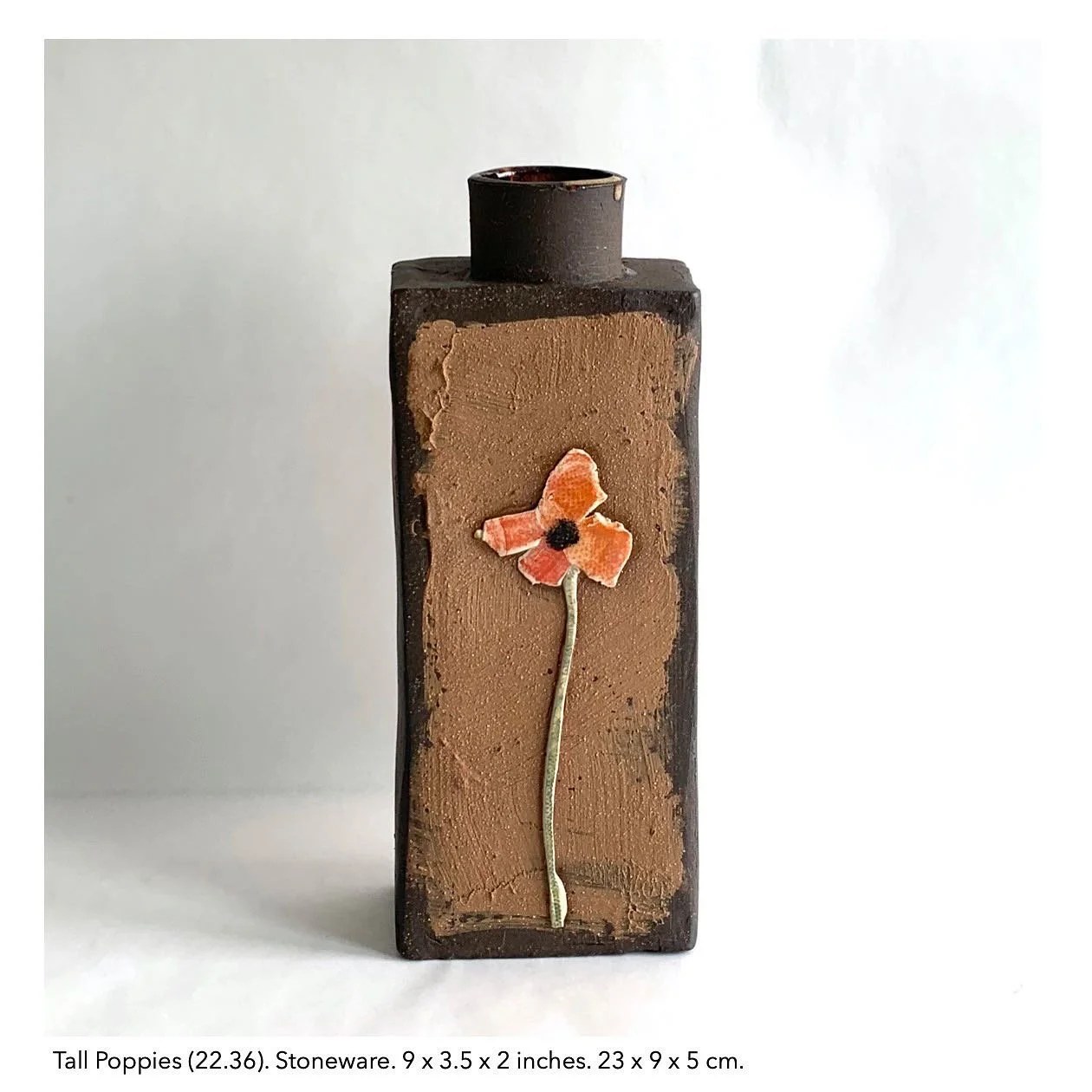
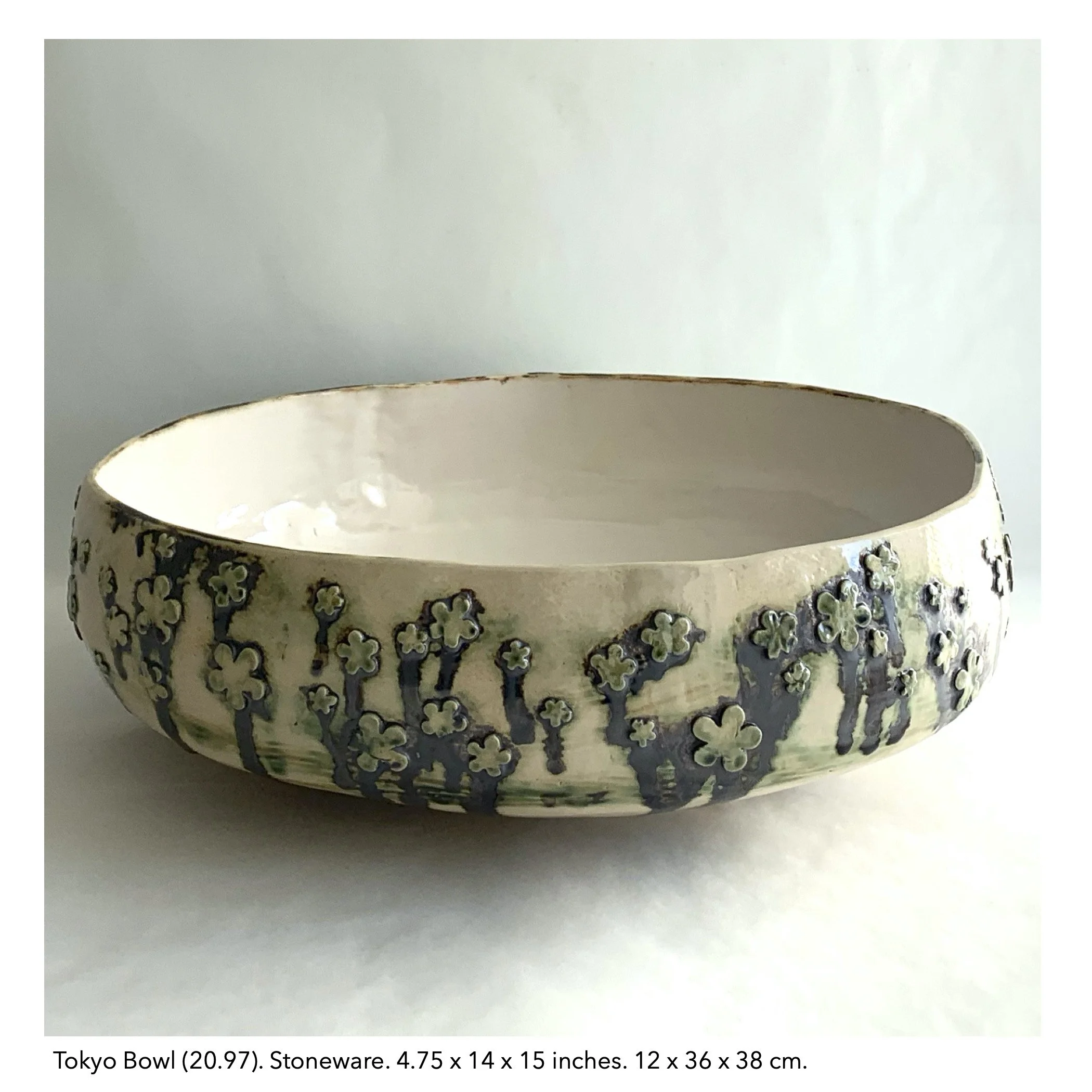
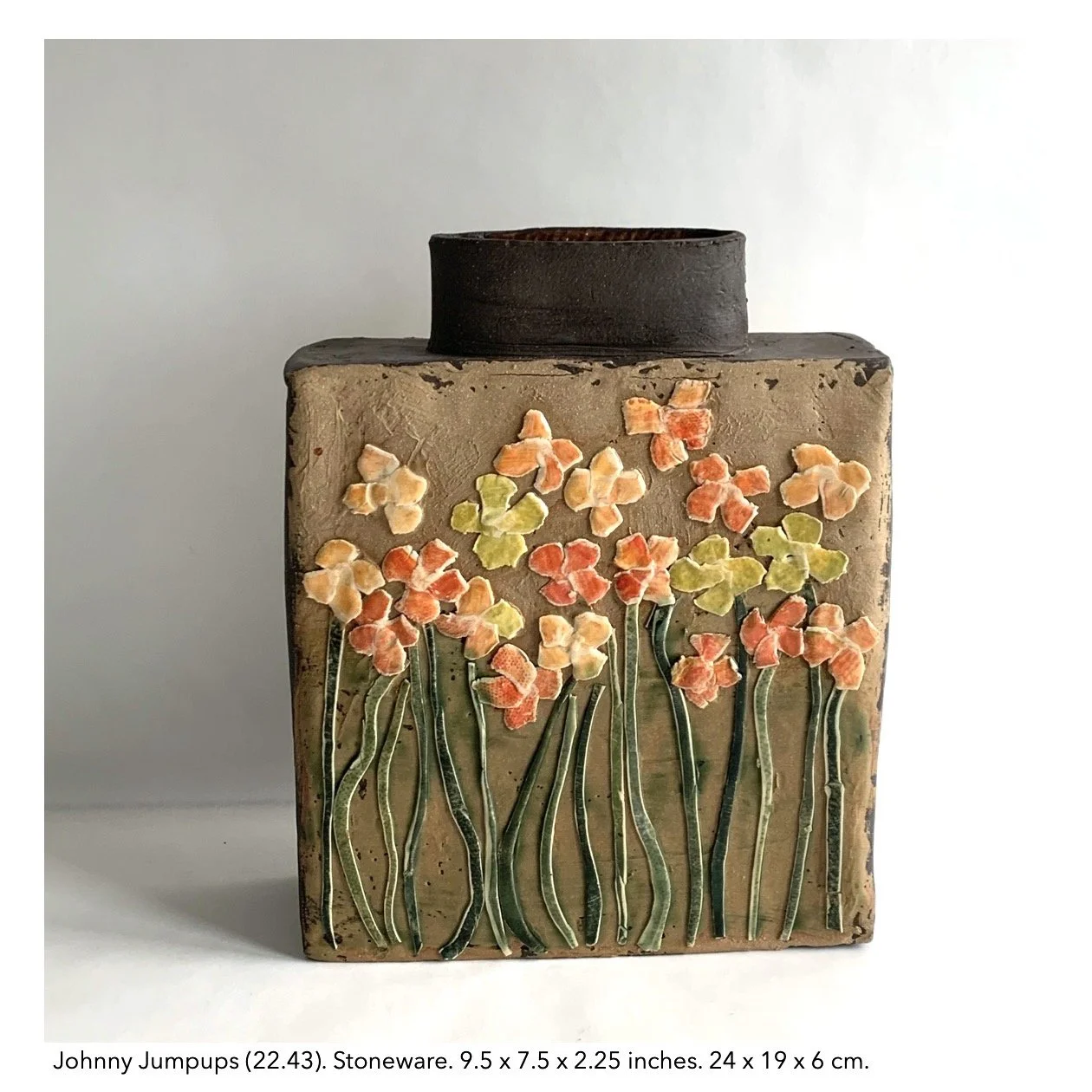
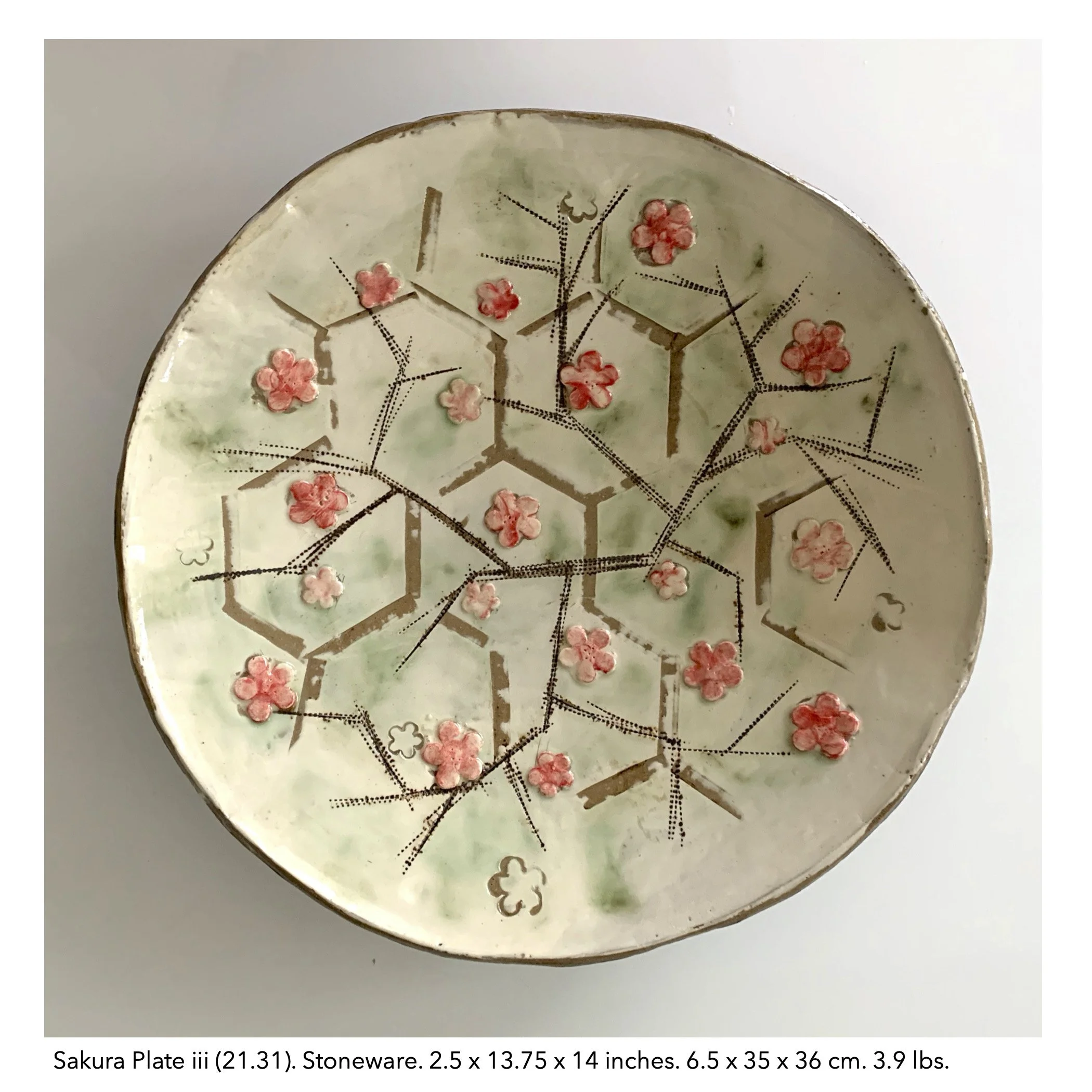
Collage with Clay
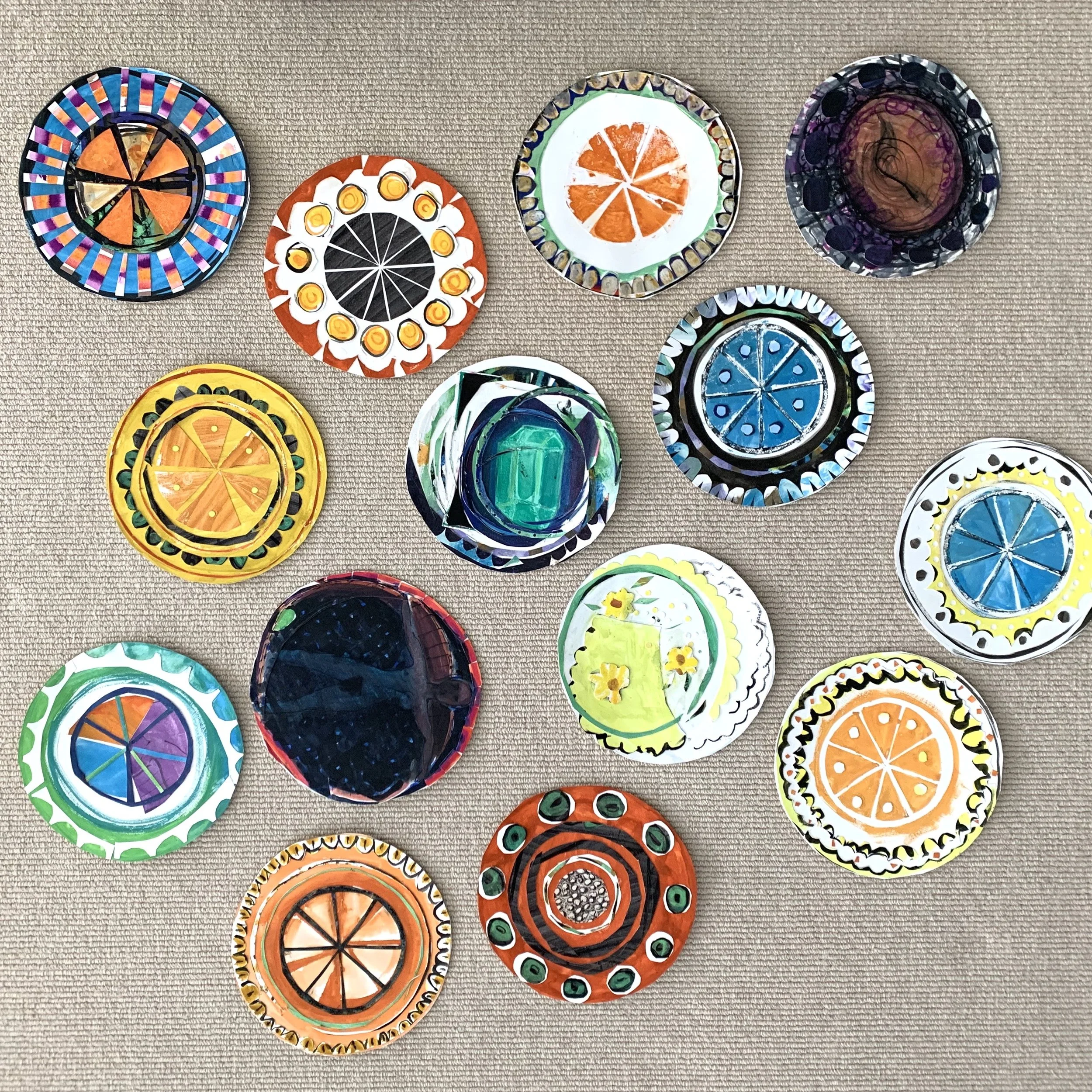
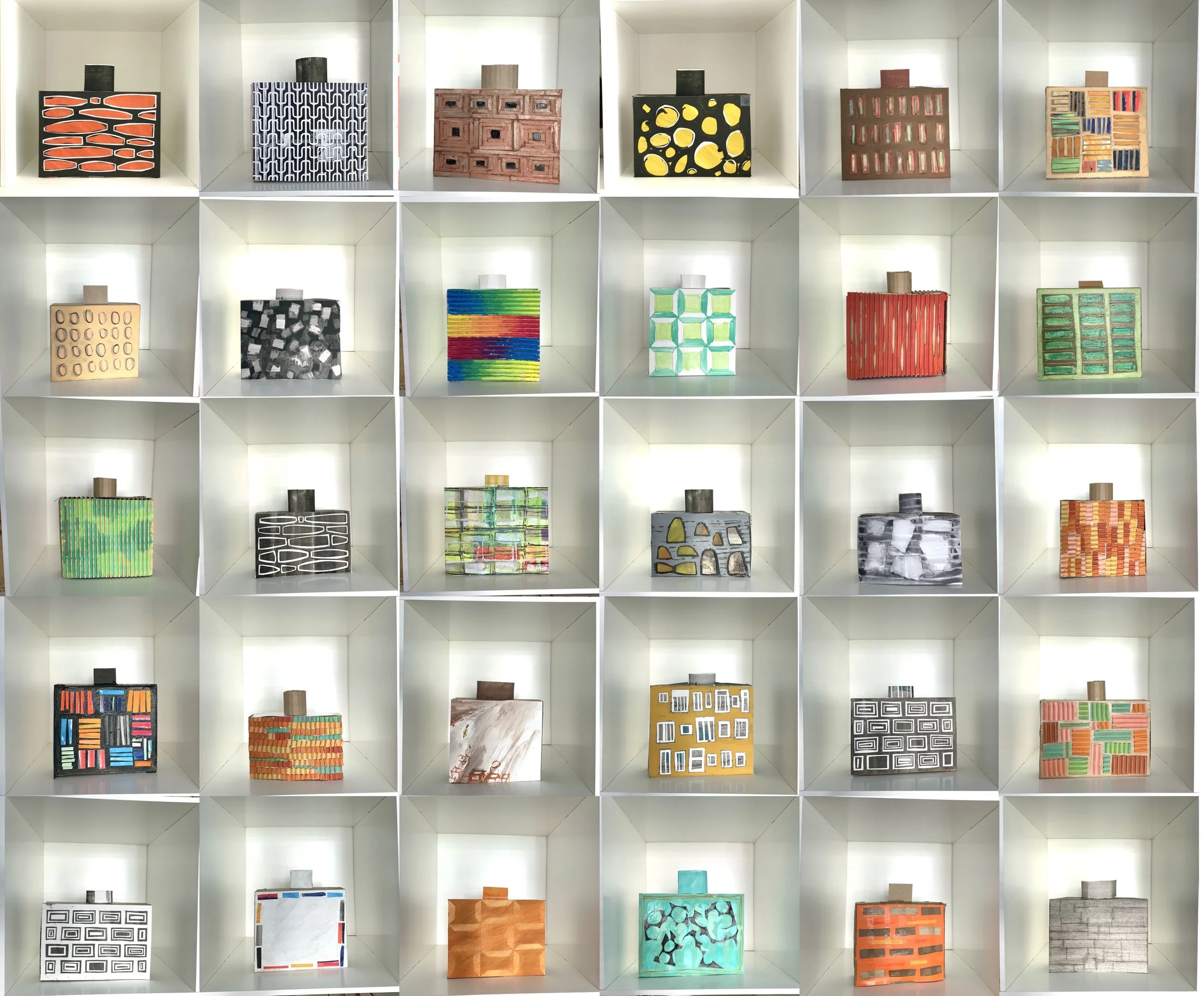
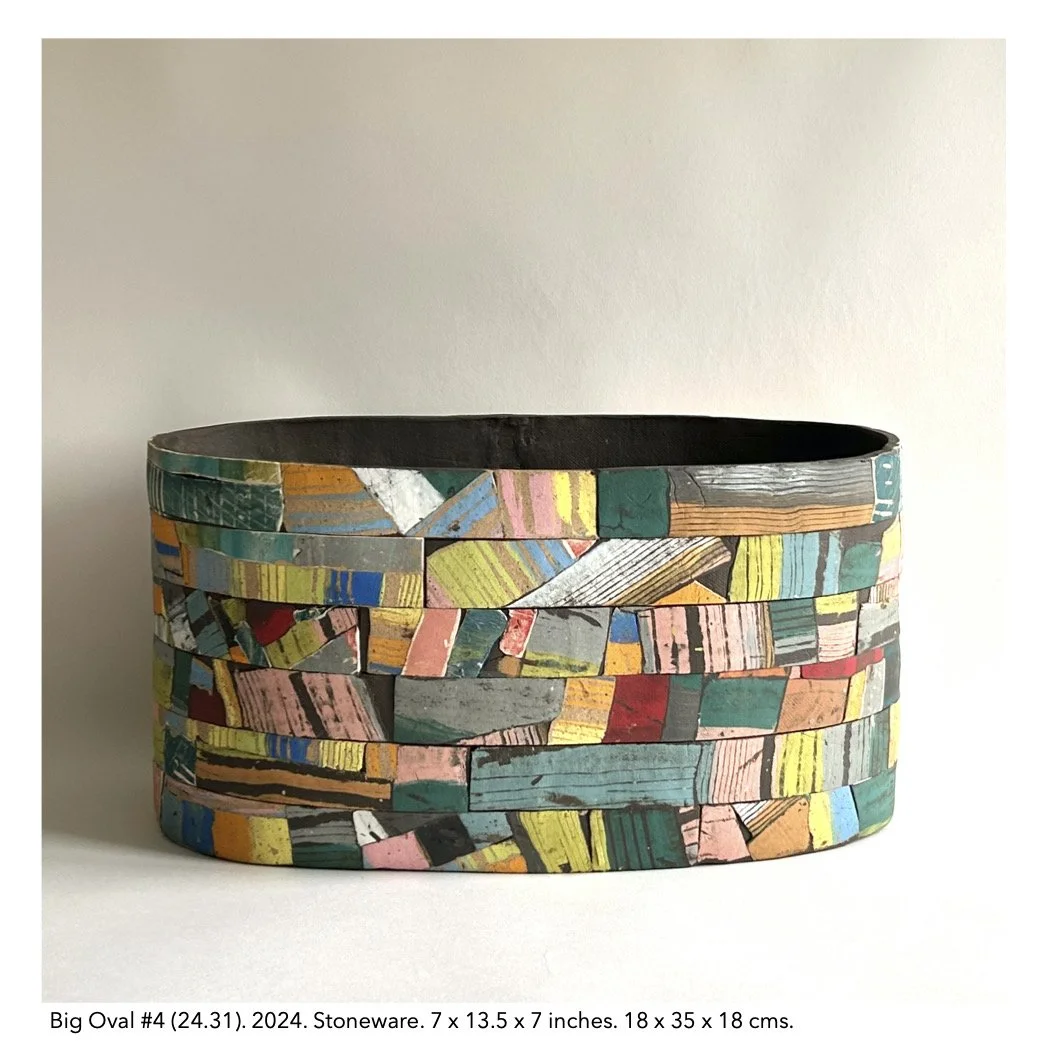
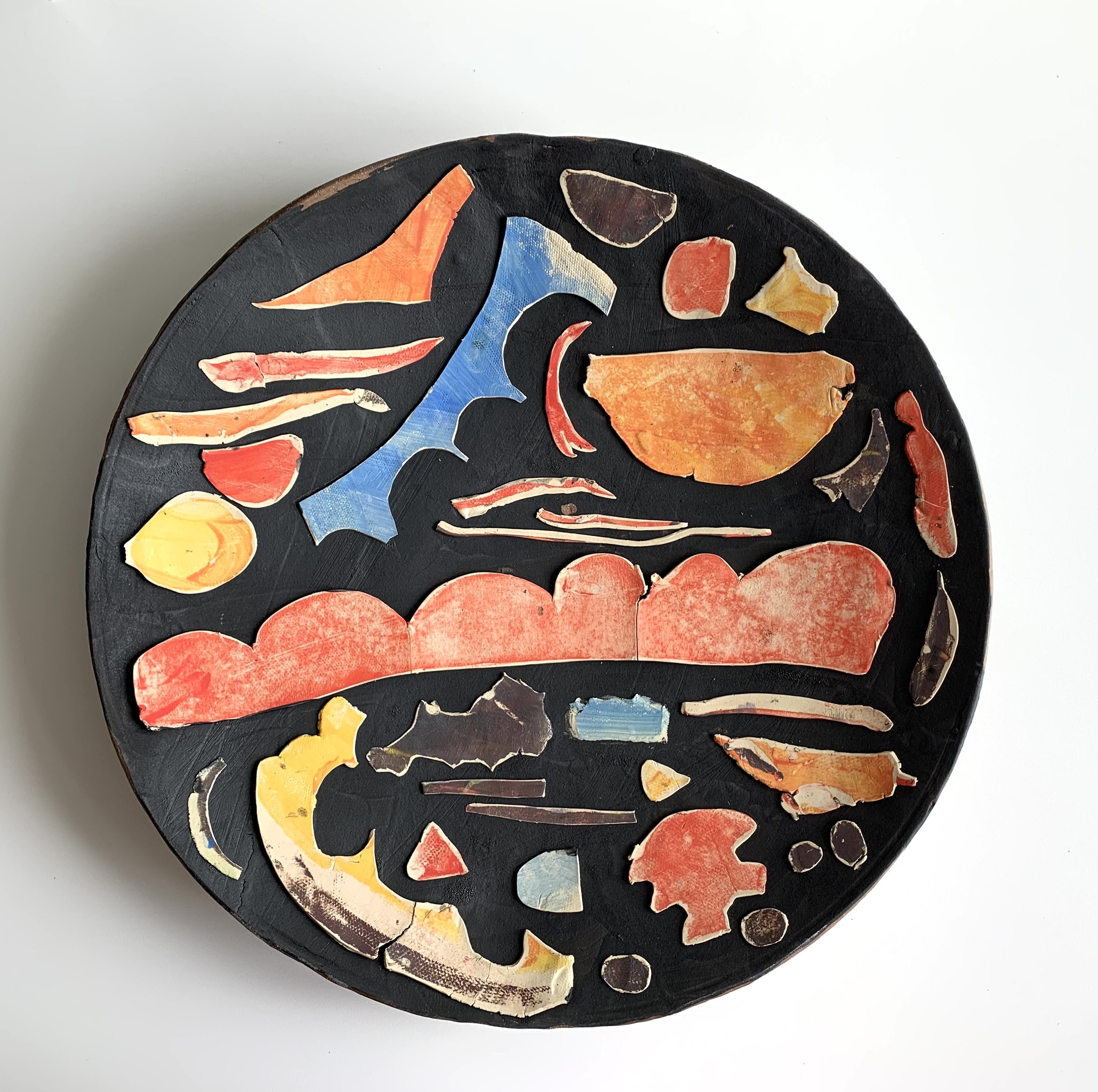
During Covid when the studio was closed, collage artist Jennifer Penick’s small paper ornament inspired paper plates and then paper bottles—mockups for what I hoped would be future ceramics pieces. I found an old trove of gouaches and cut them up for the at-home project. When I returned to the studio, I applied that same collage approach to my clay work. Instead of adhering paper scraps to cardboard with glue, I used liquid clay or underglazes to adhere the scraps of clay to a leatherhard base.
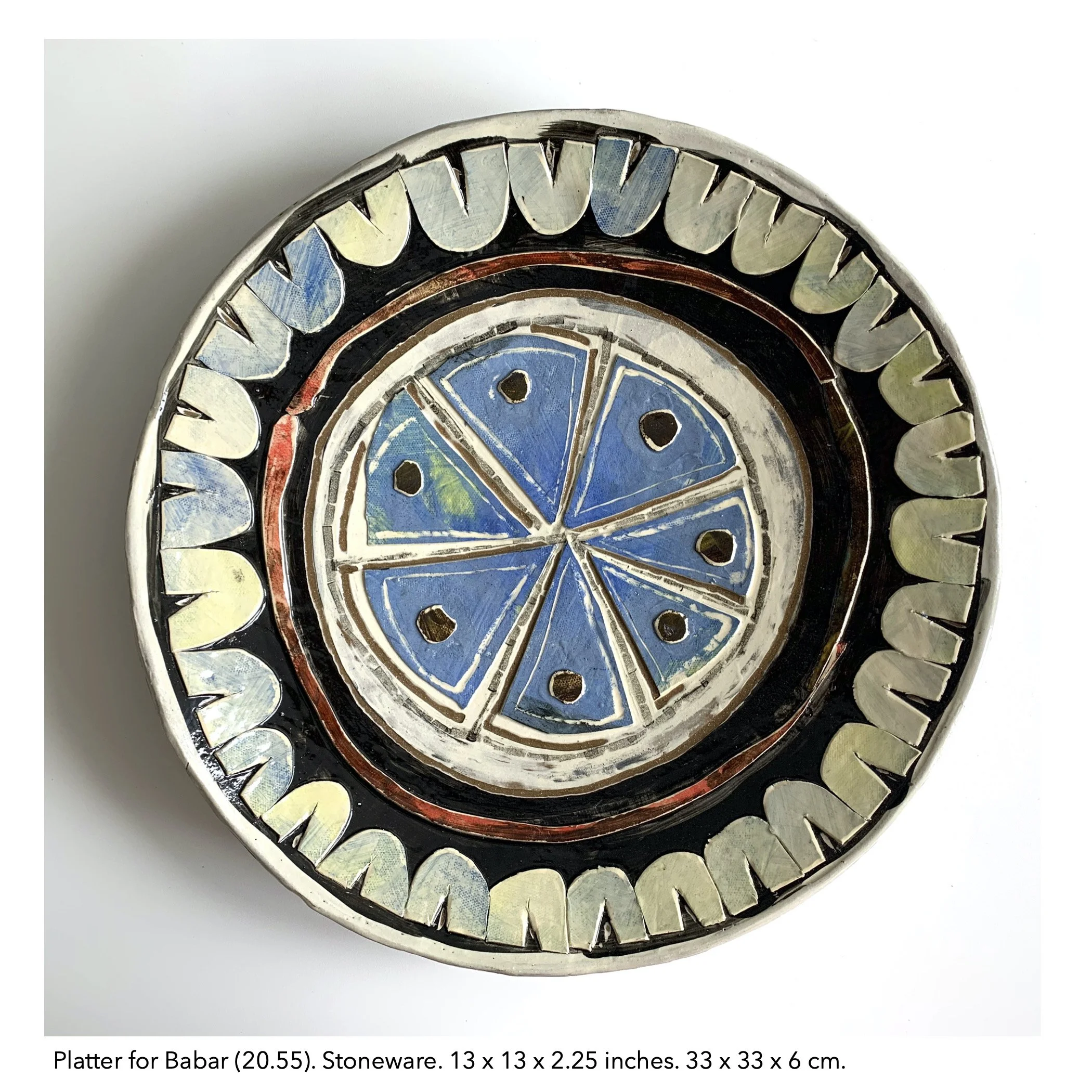
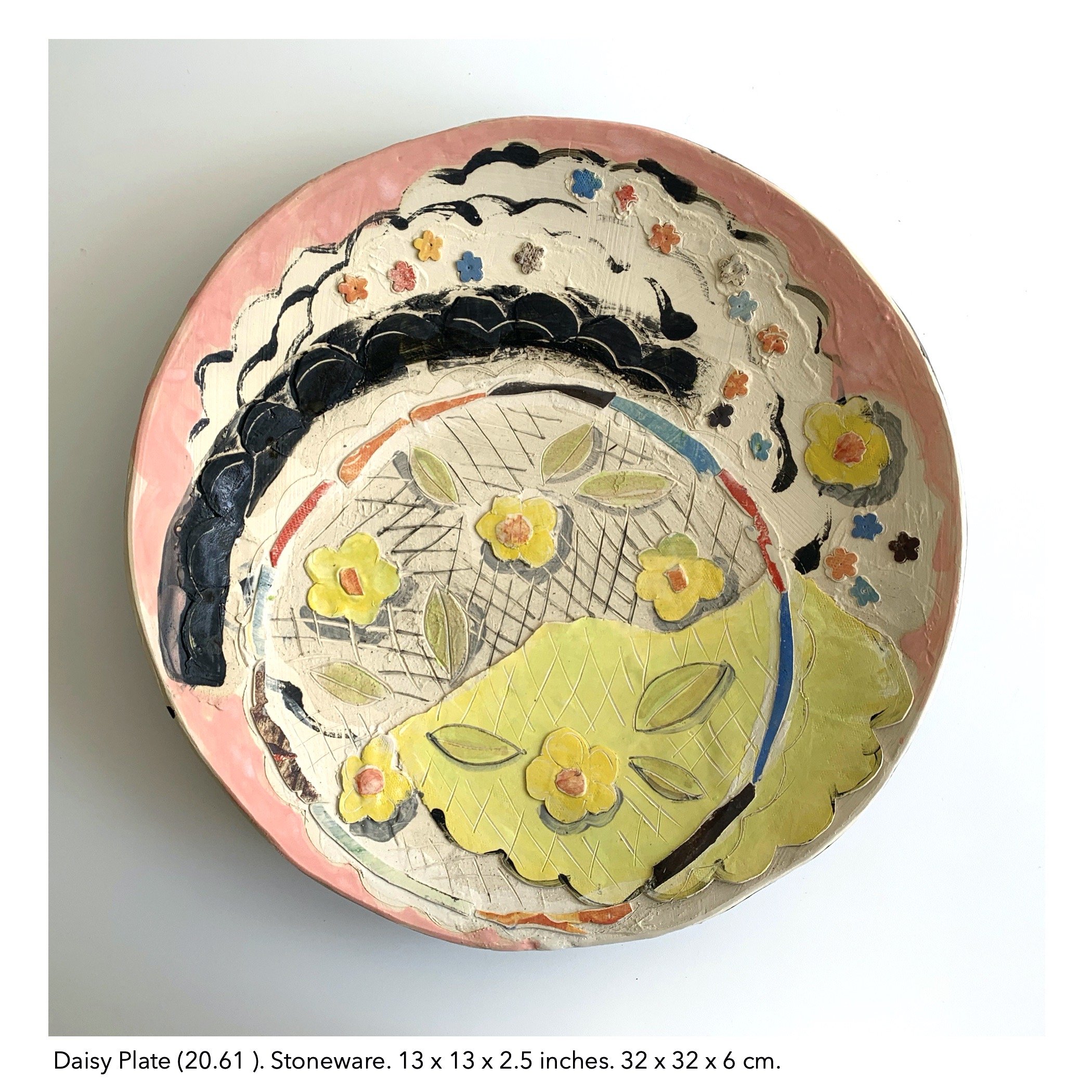
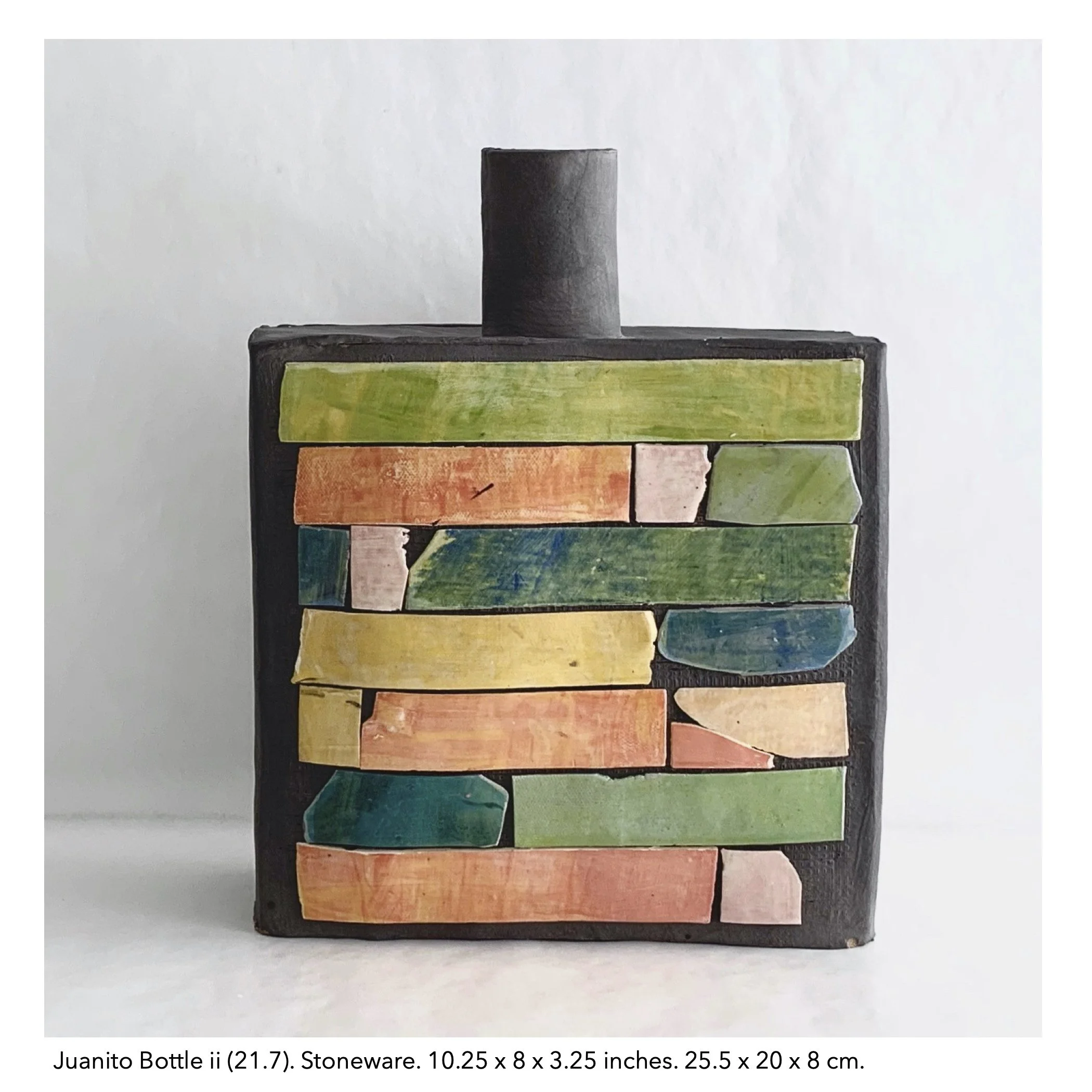
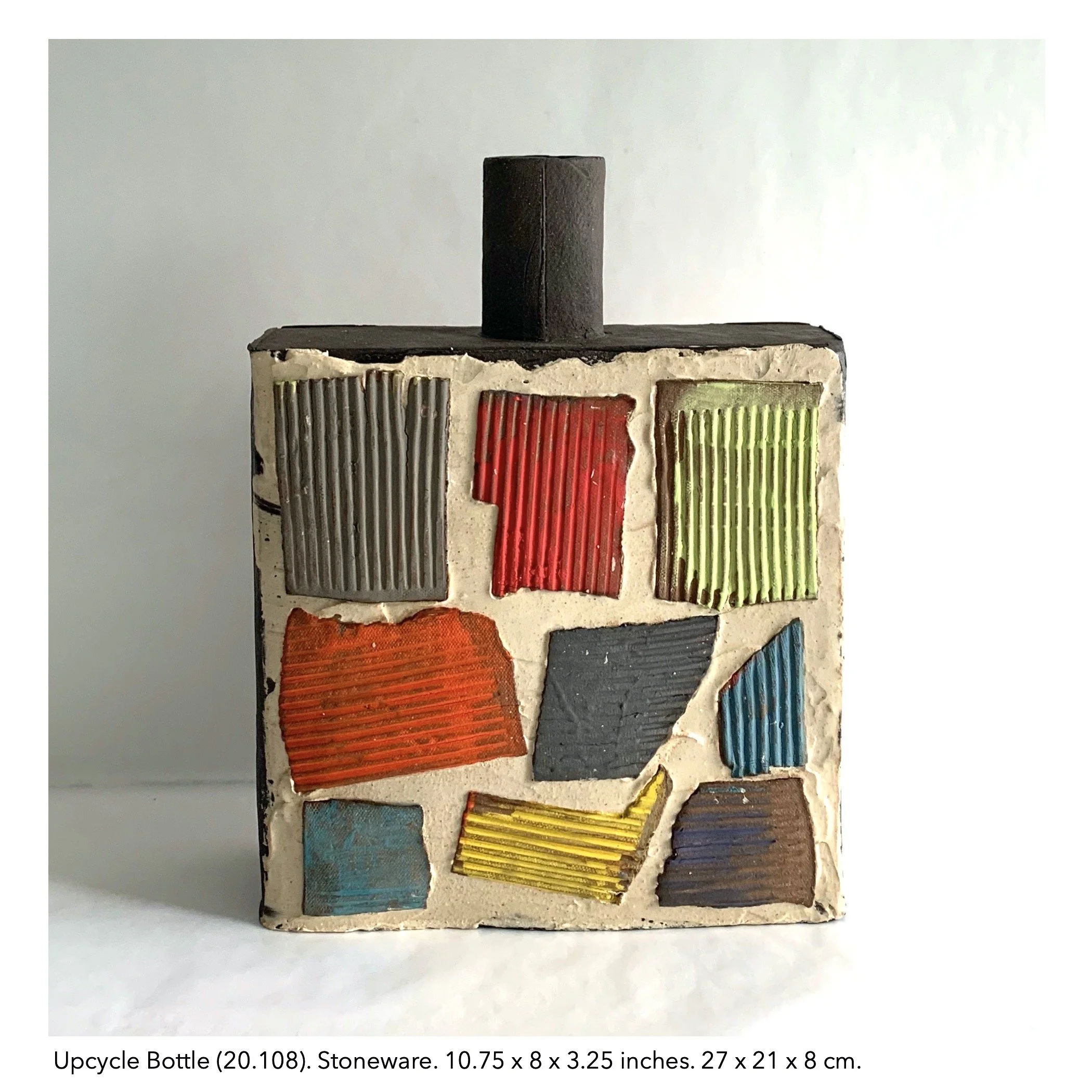
Impressing Stripes
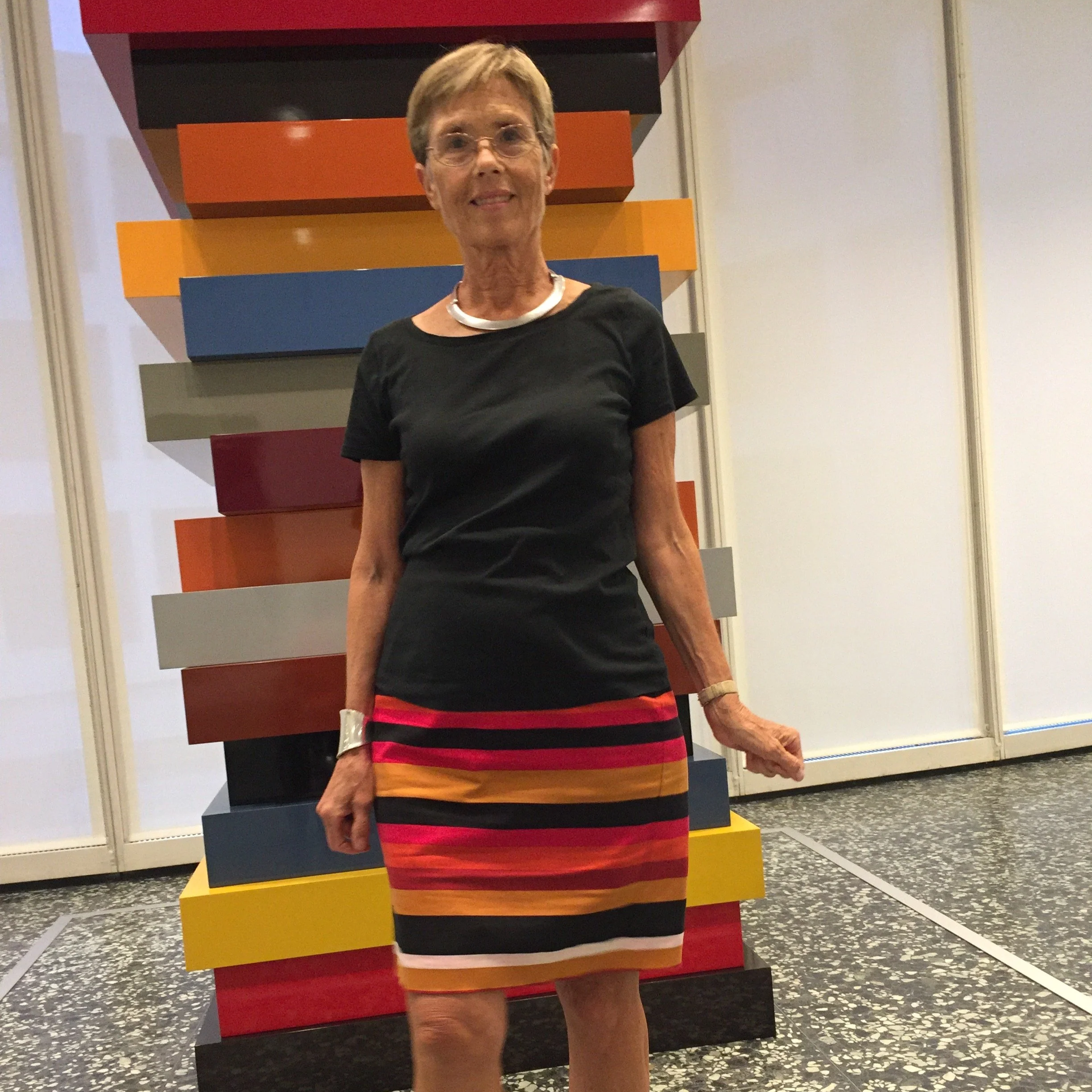
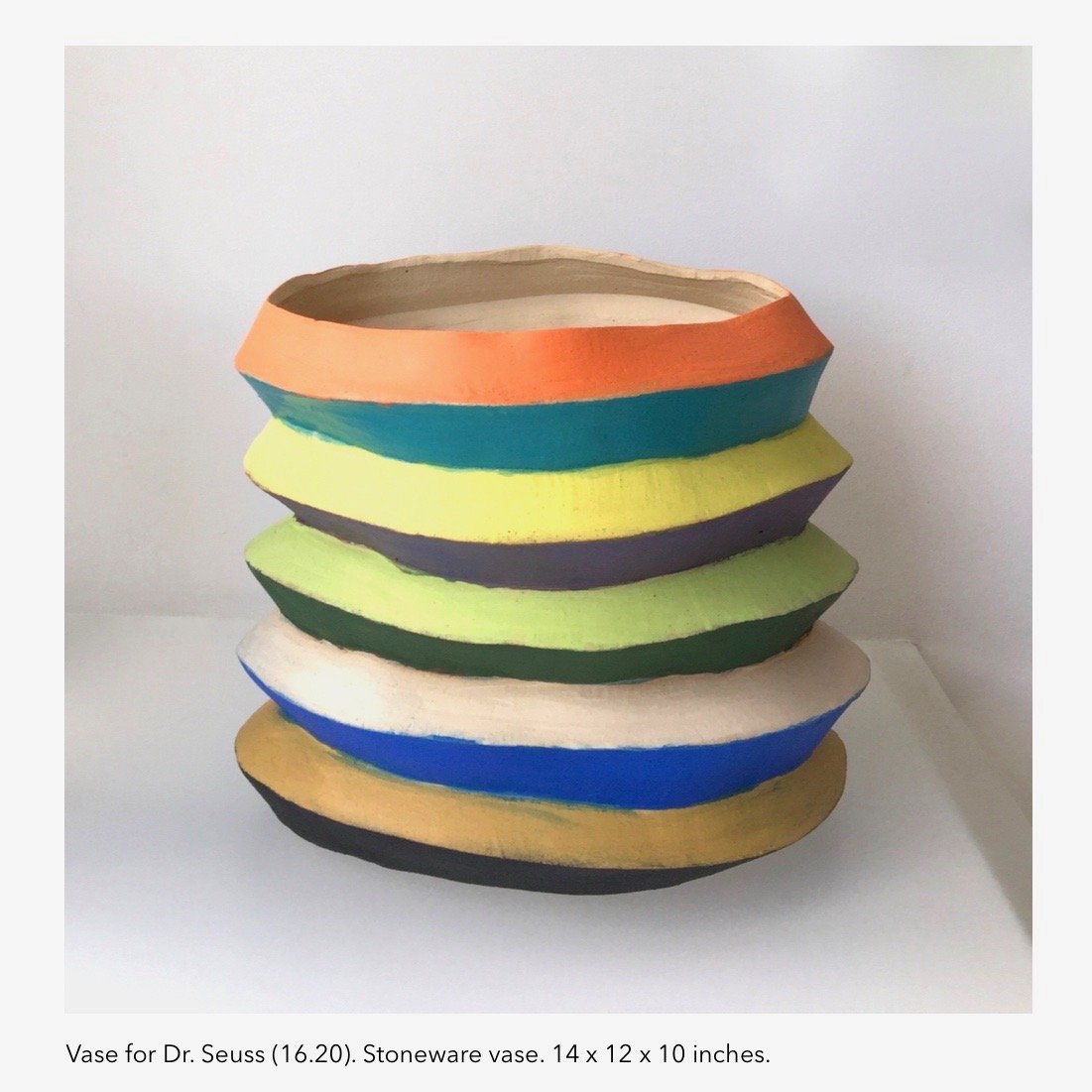
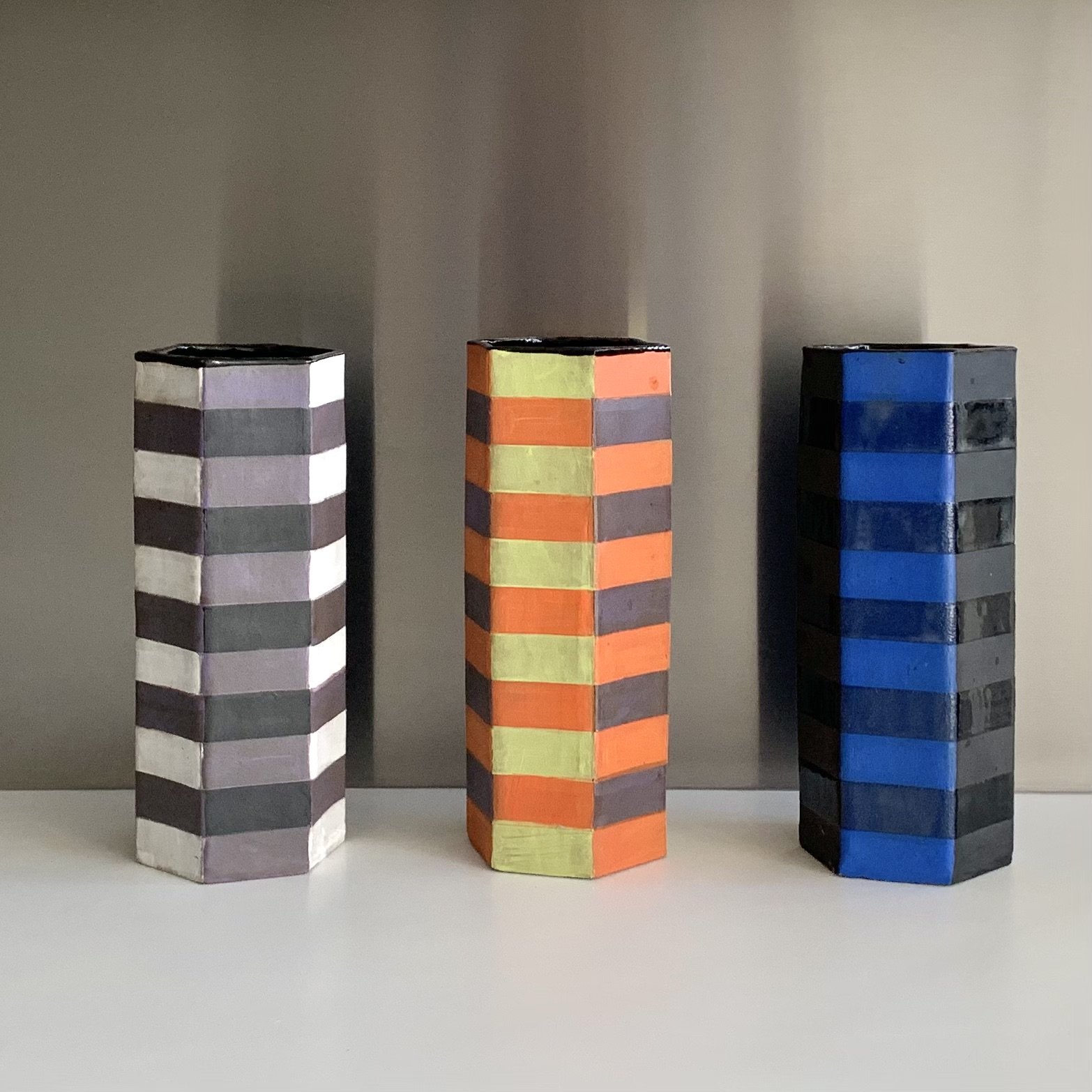
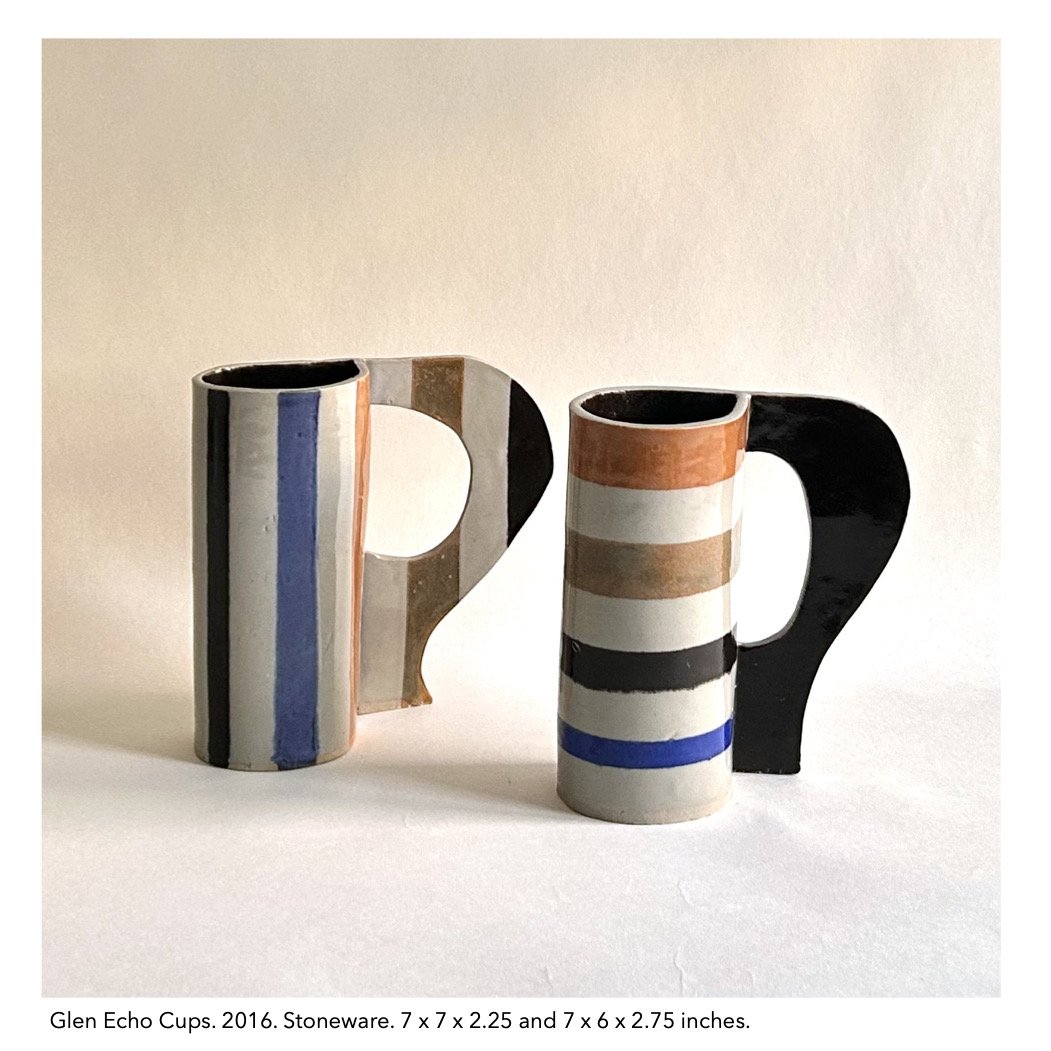
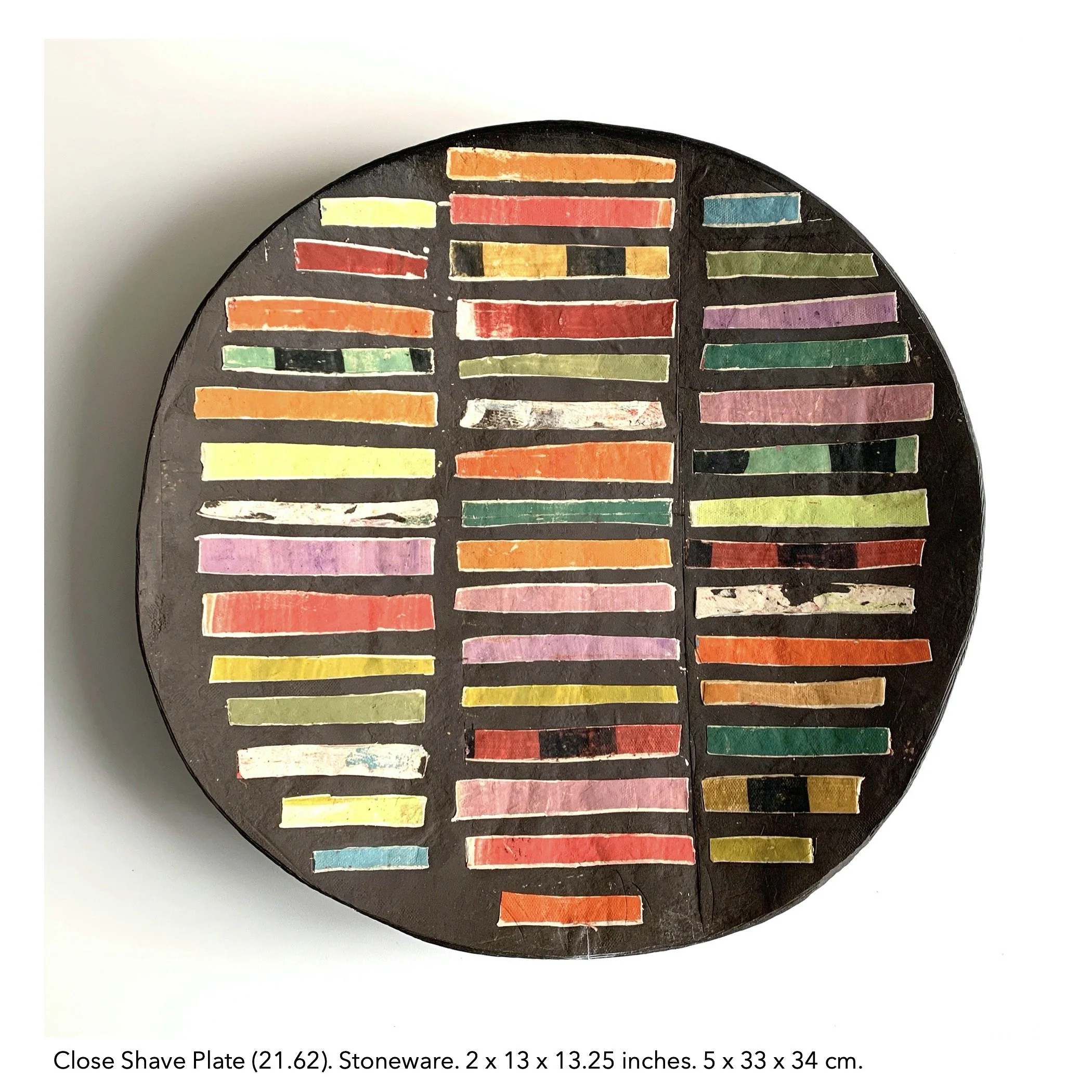
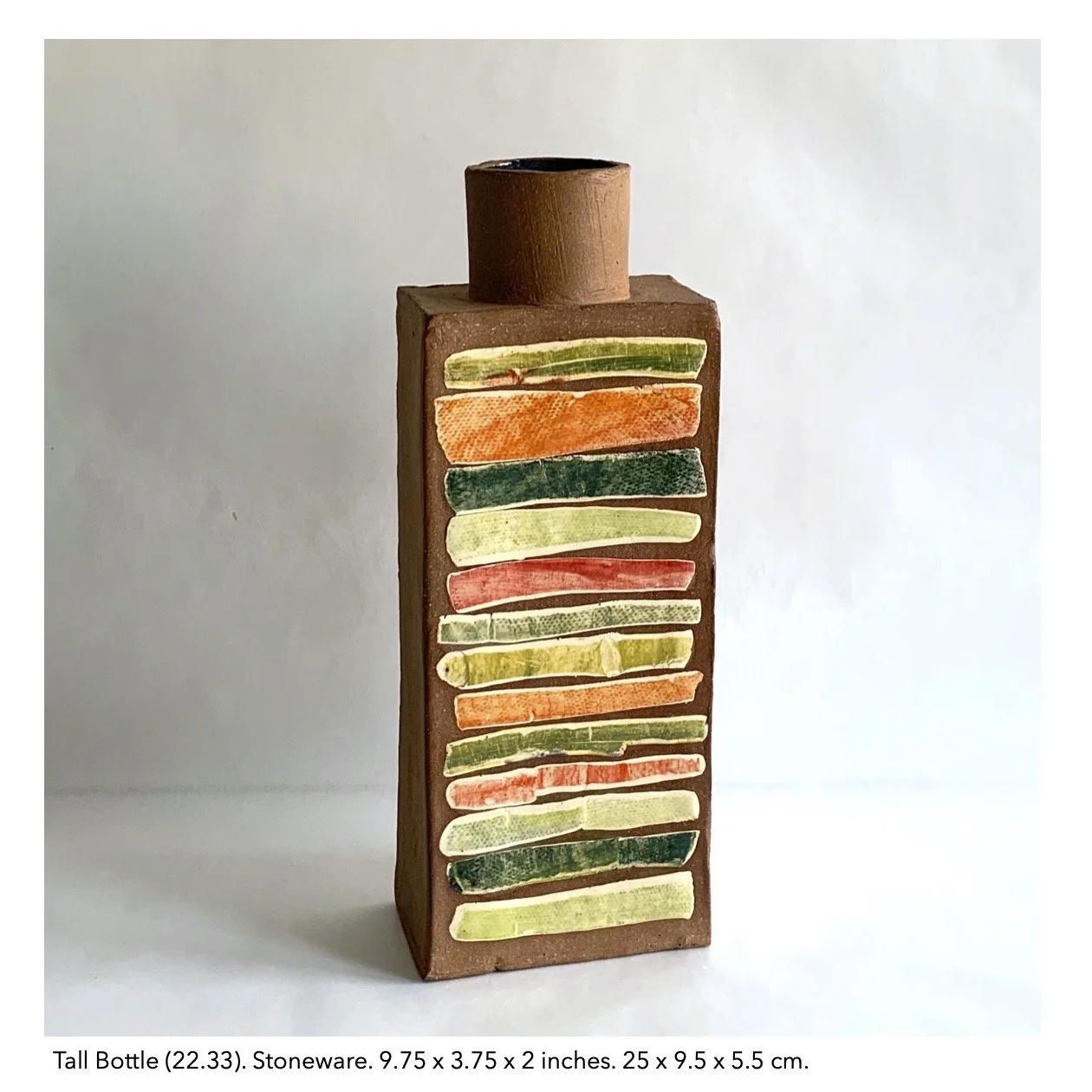
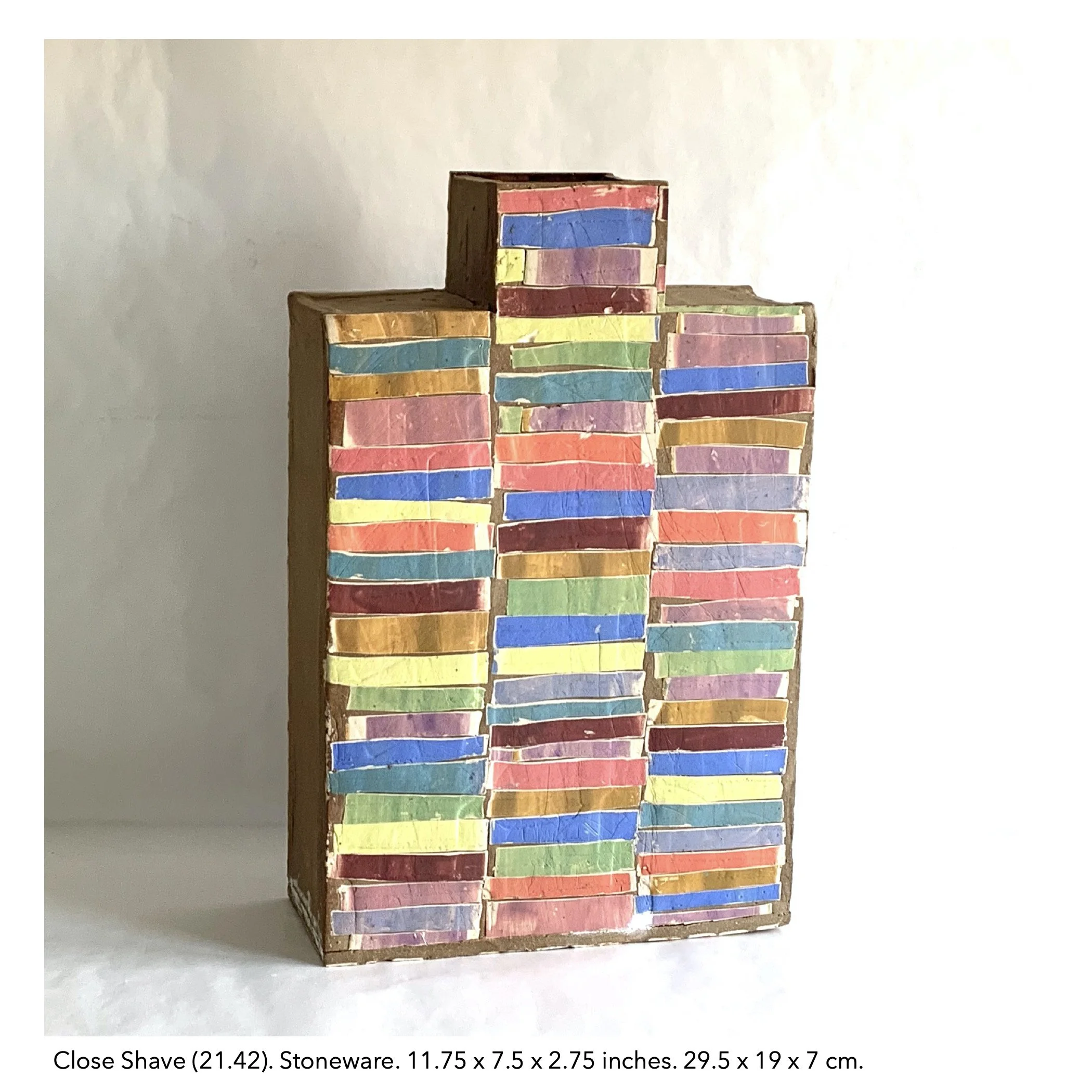
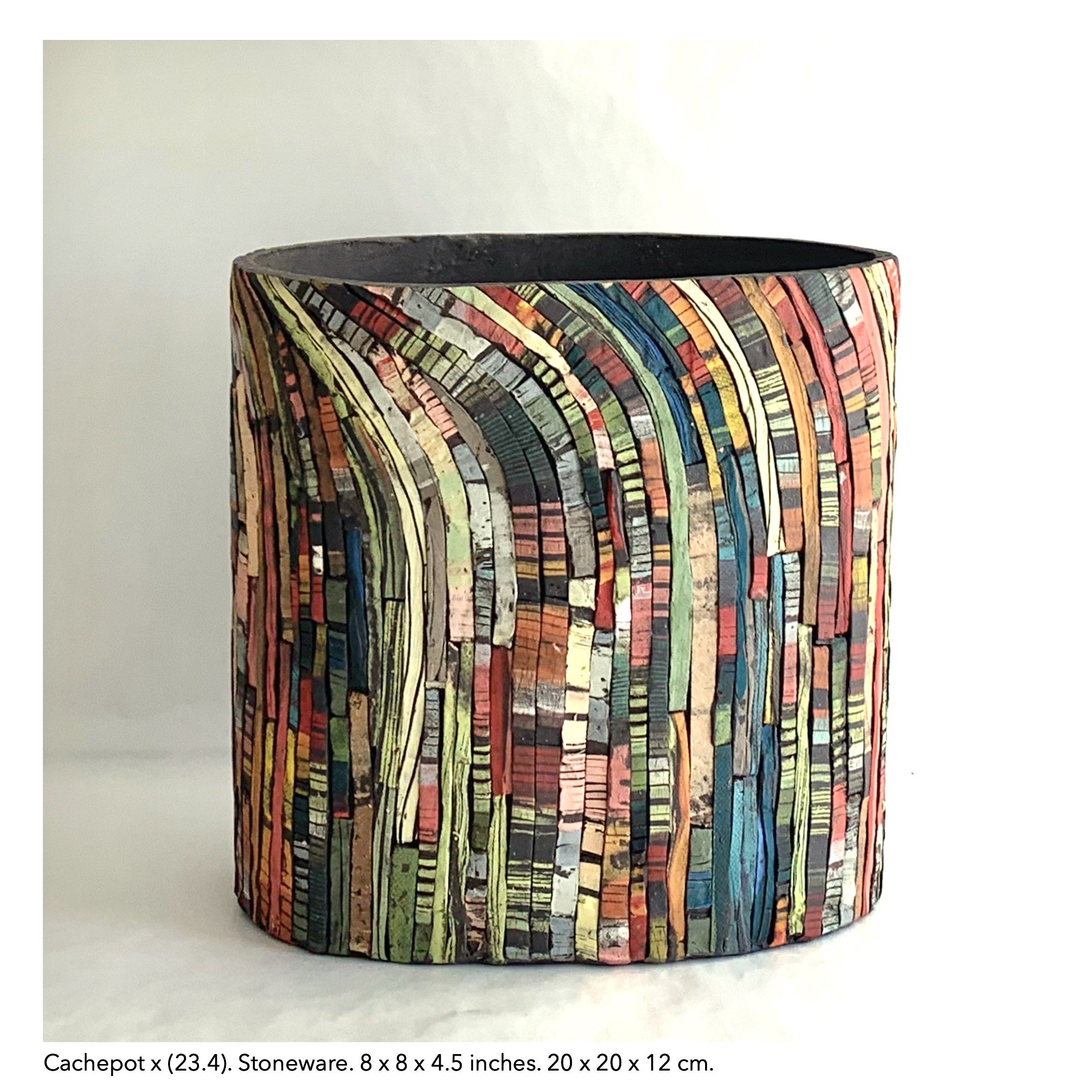
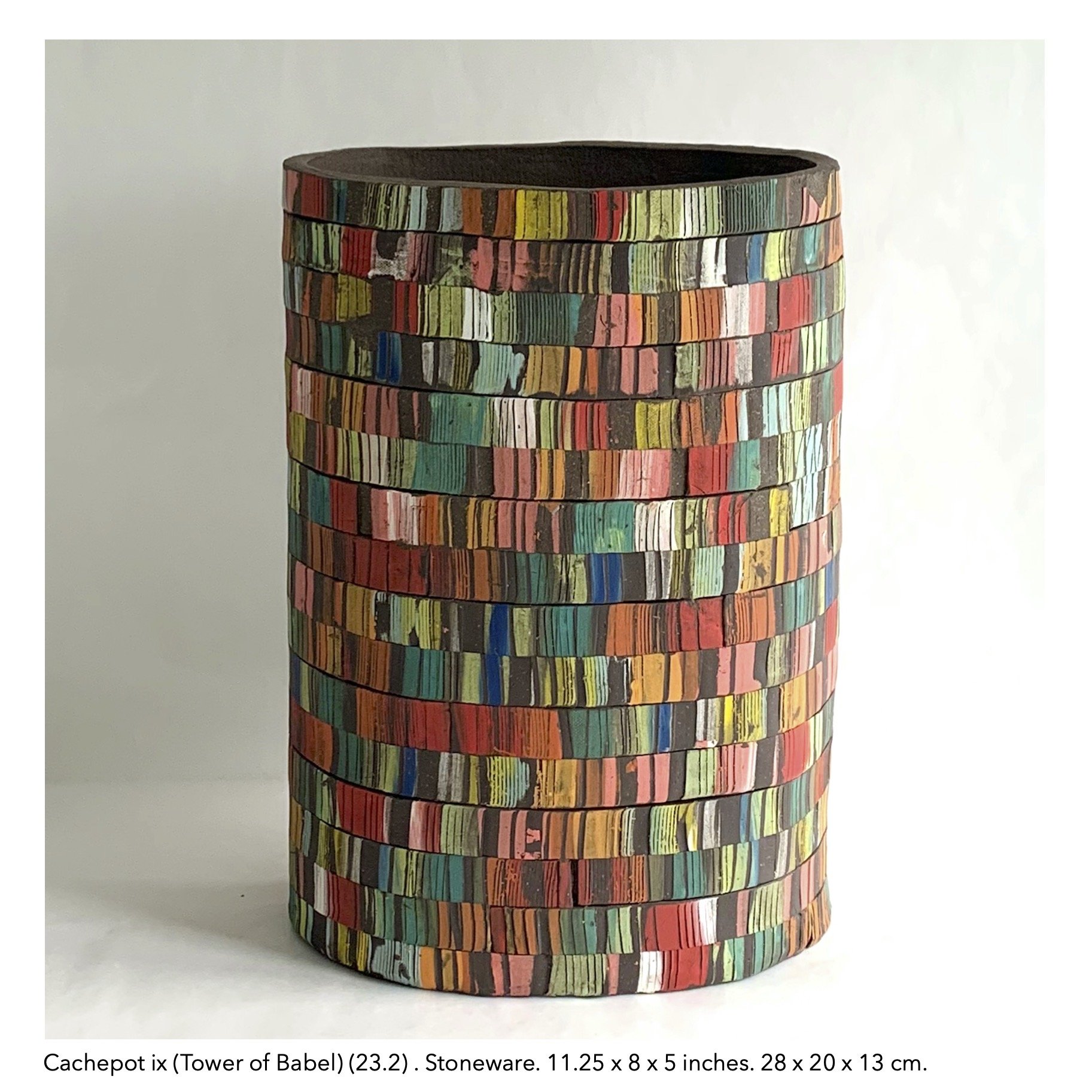
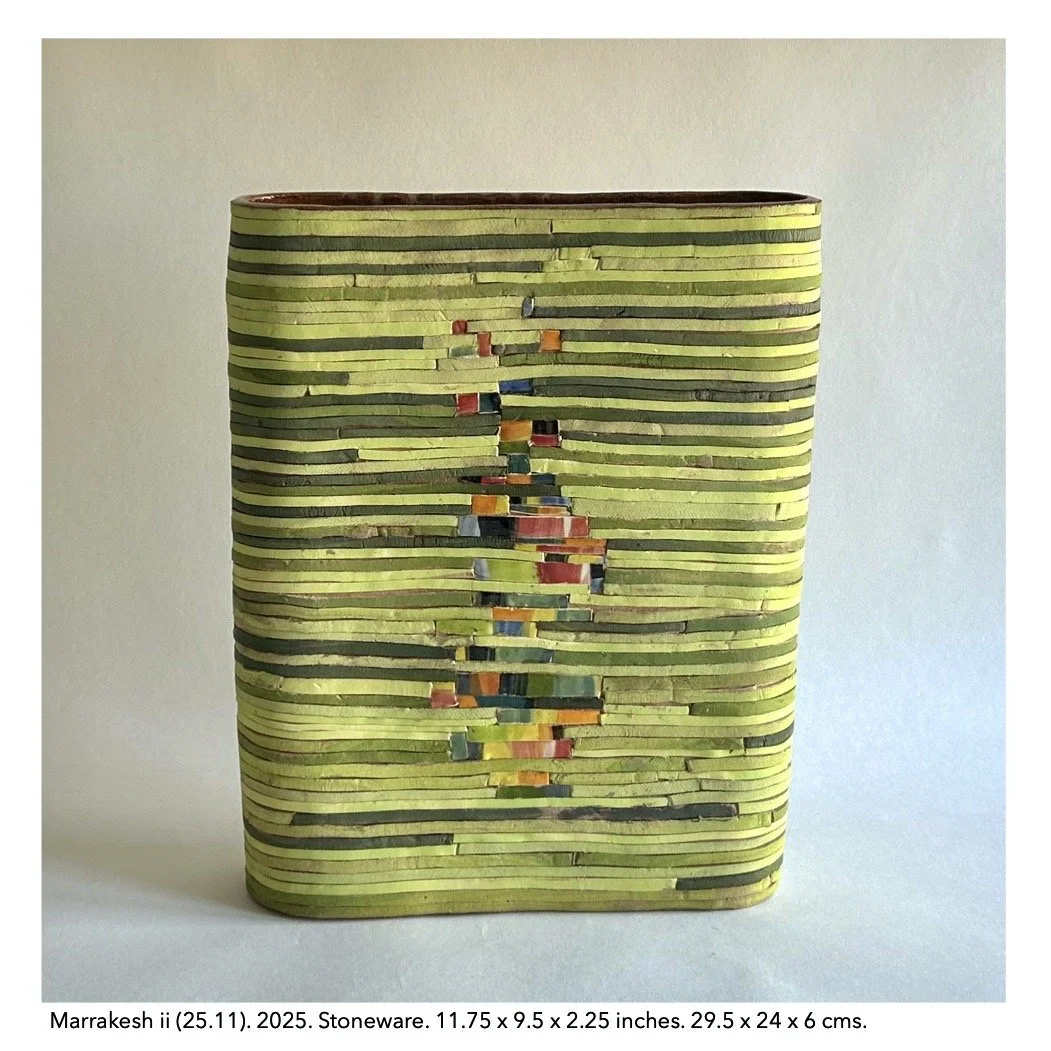
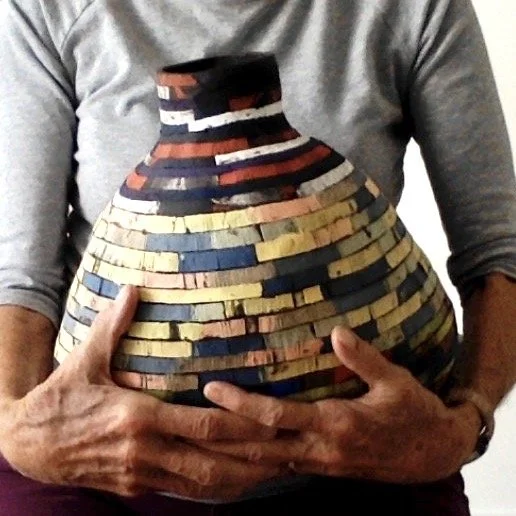
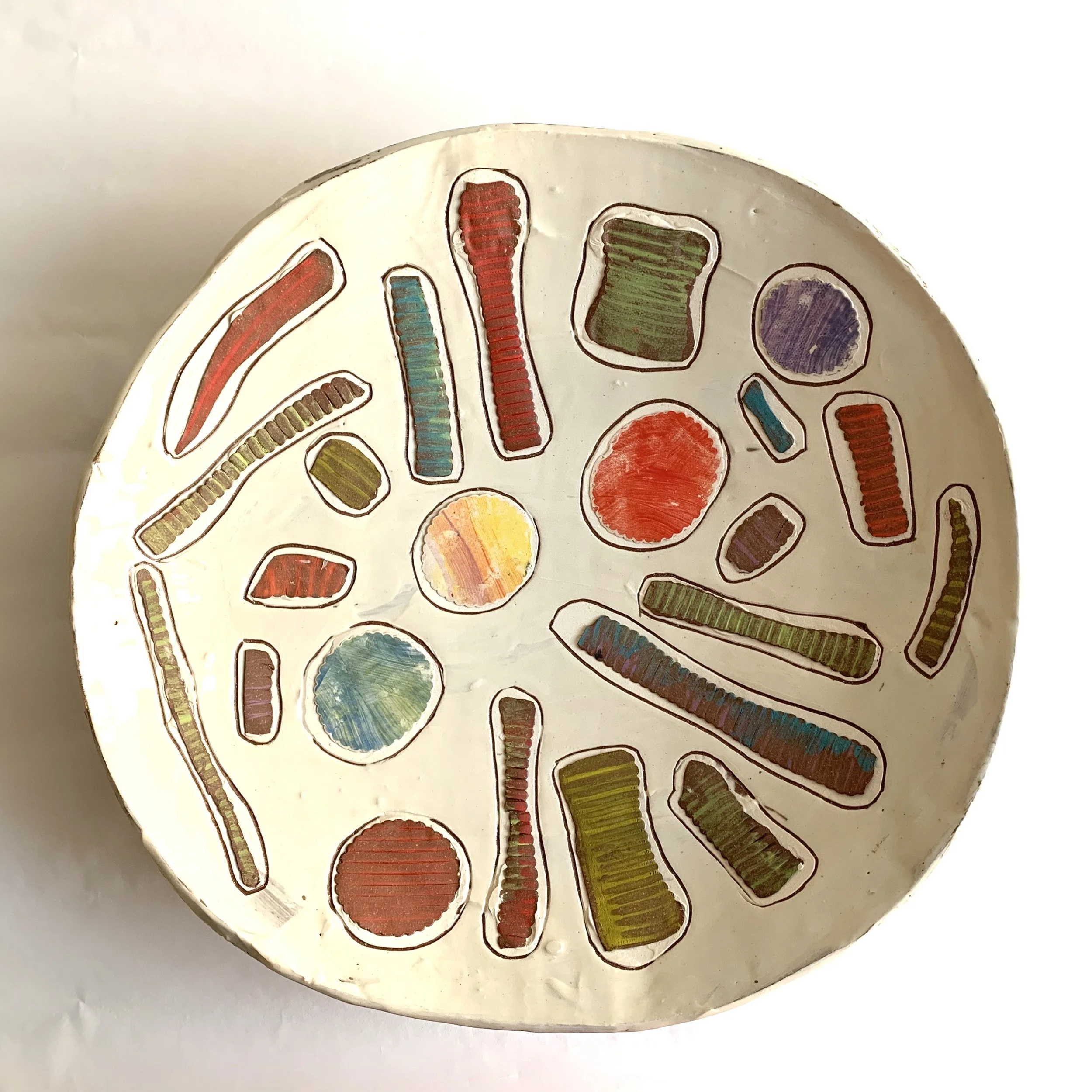
I’ve always been a lover of stripes—here I am at the Sean Scully retrospective at the Hirshhorn along with some early striped vessels painted with underglazes. A few years ago I began combining stripes with the collage approach, rolling out thin slabs, painting them with underglazes, then slicing them into narrow strips and embedding them into large soft slabs. When the slabs stiffened, I cut them out to form vessels.
Cladding Forms
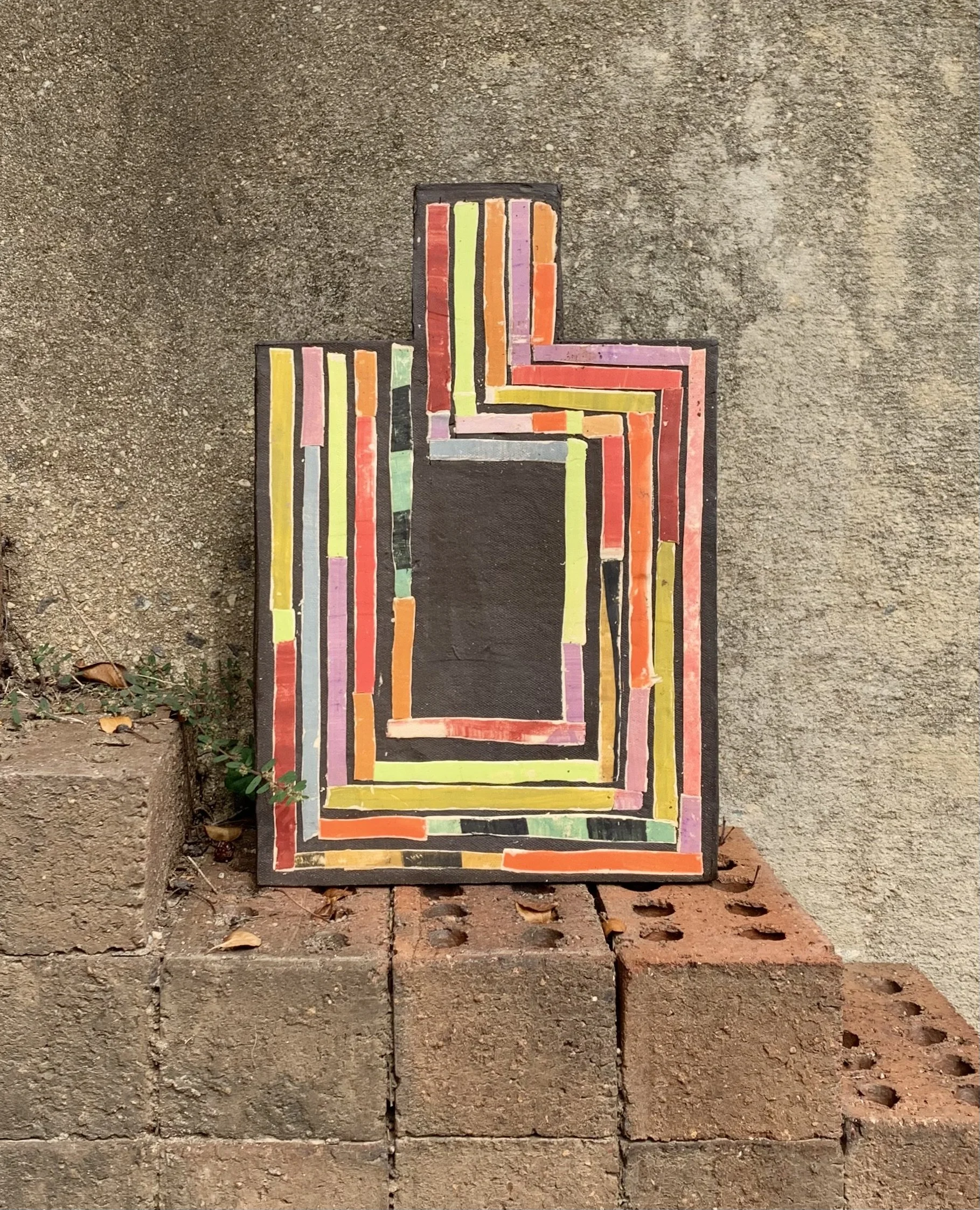
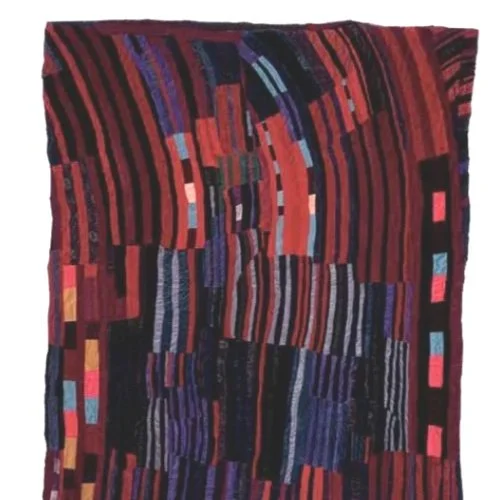
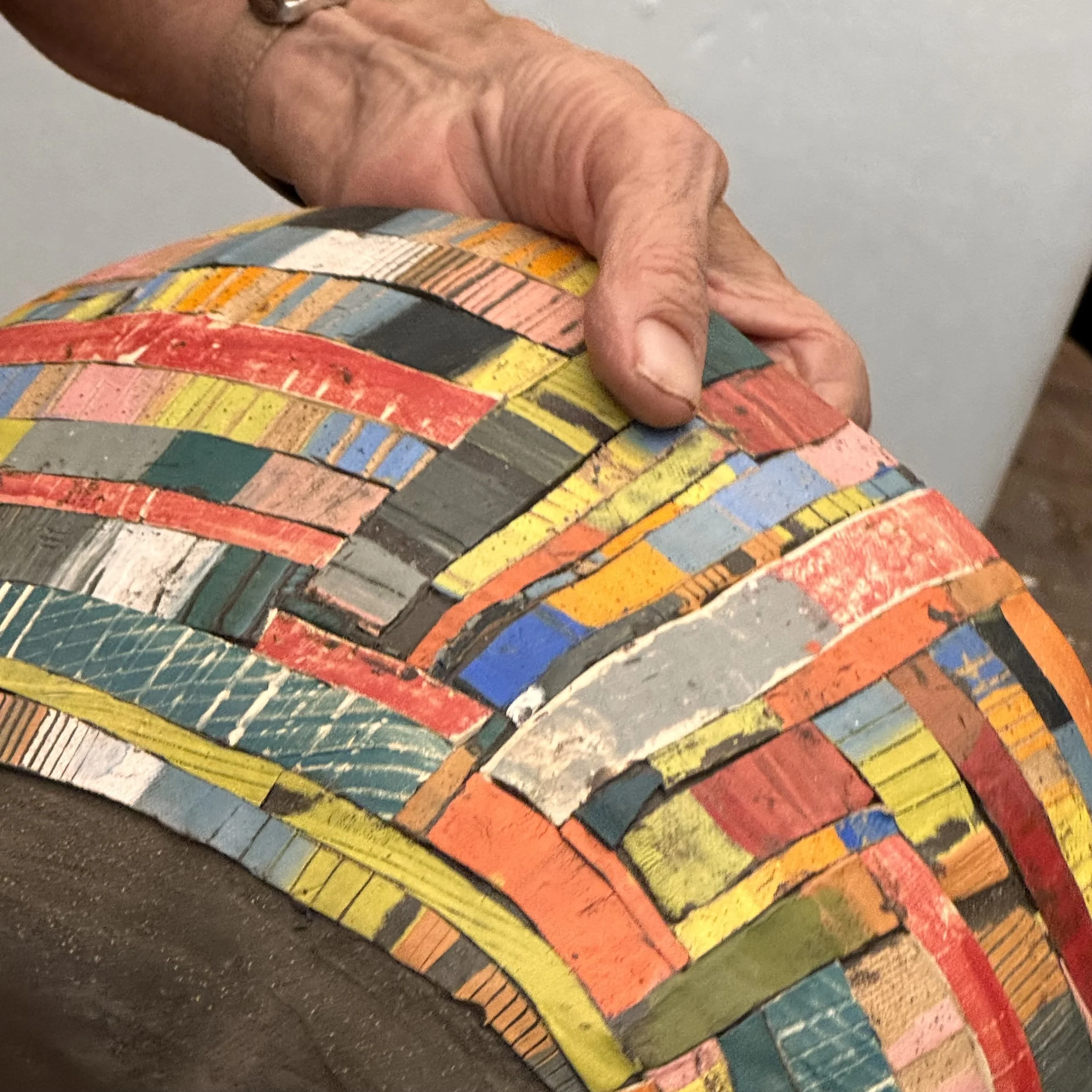
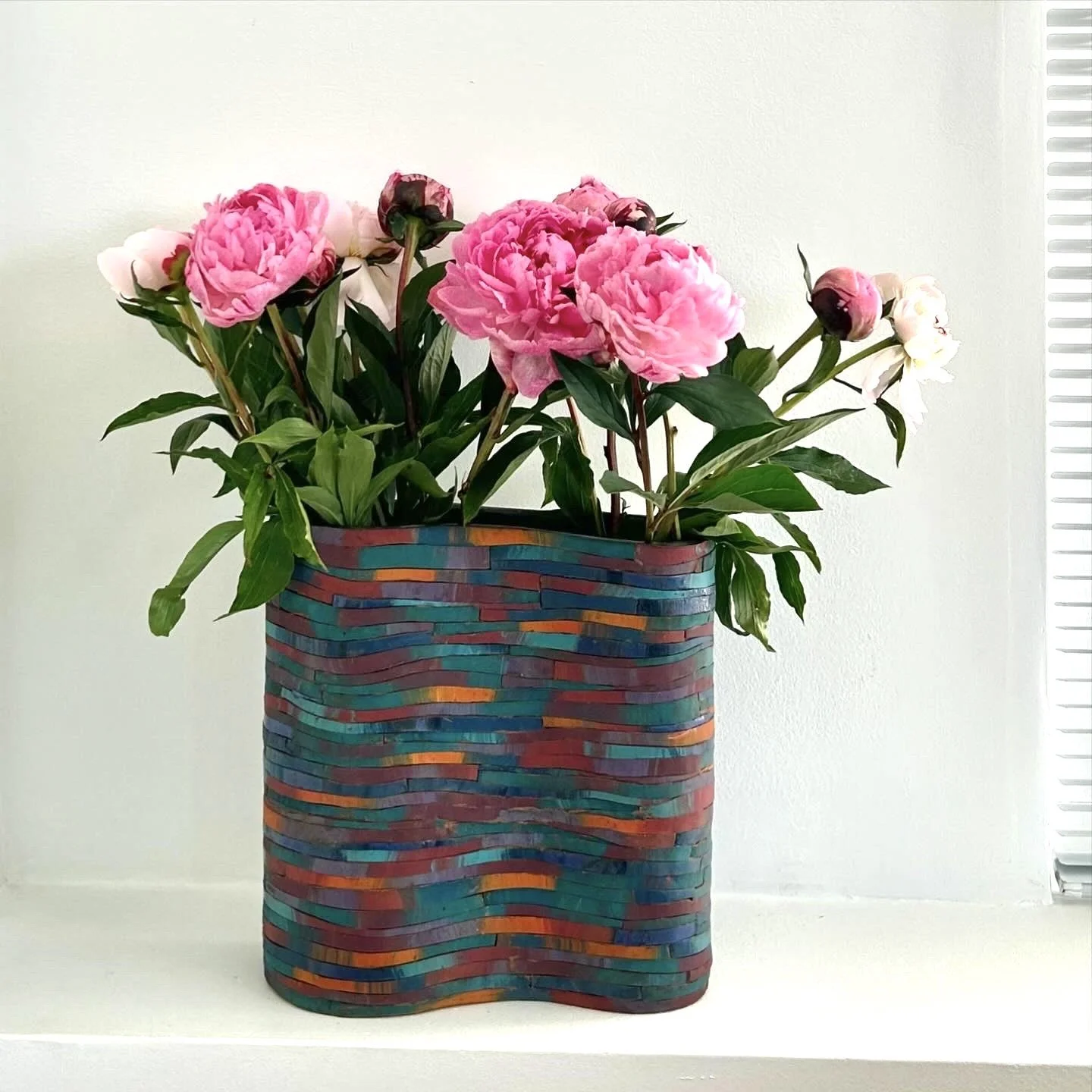
I’m a big fan of pieced quilts, and a few years ago, I came across a photo of this quilt by Rosie Lee Tompkins on Instagram, and it really blew me away. It suggested moving from solid-colored strips to incised and patterned strips, and moving from impressing strips into a soft slab base to completely cladding the exterior of a whole pre-fabricated leatherhard form with soft strips.
Kuba Series
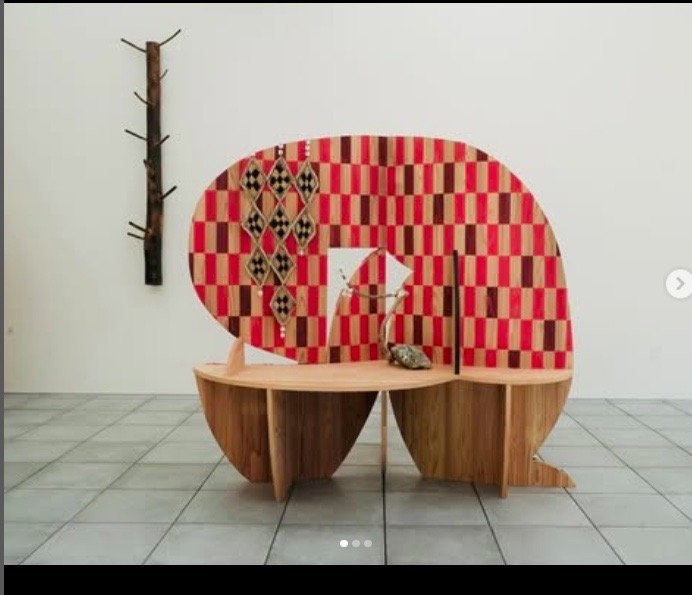
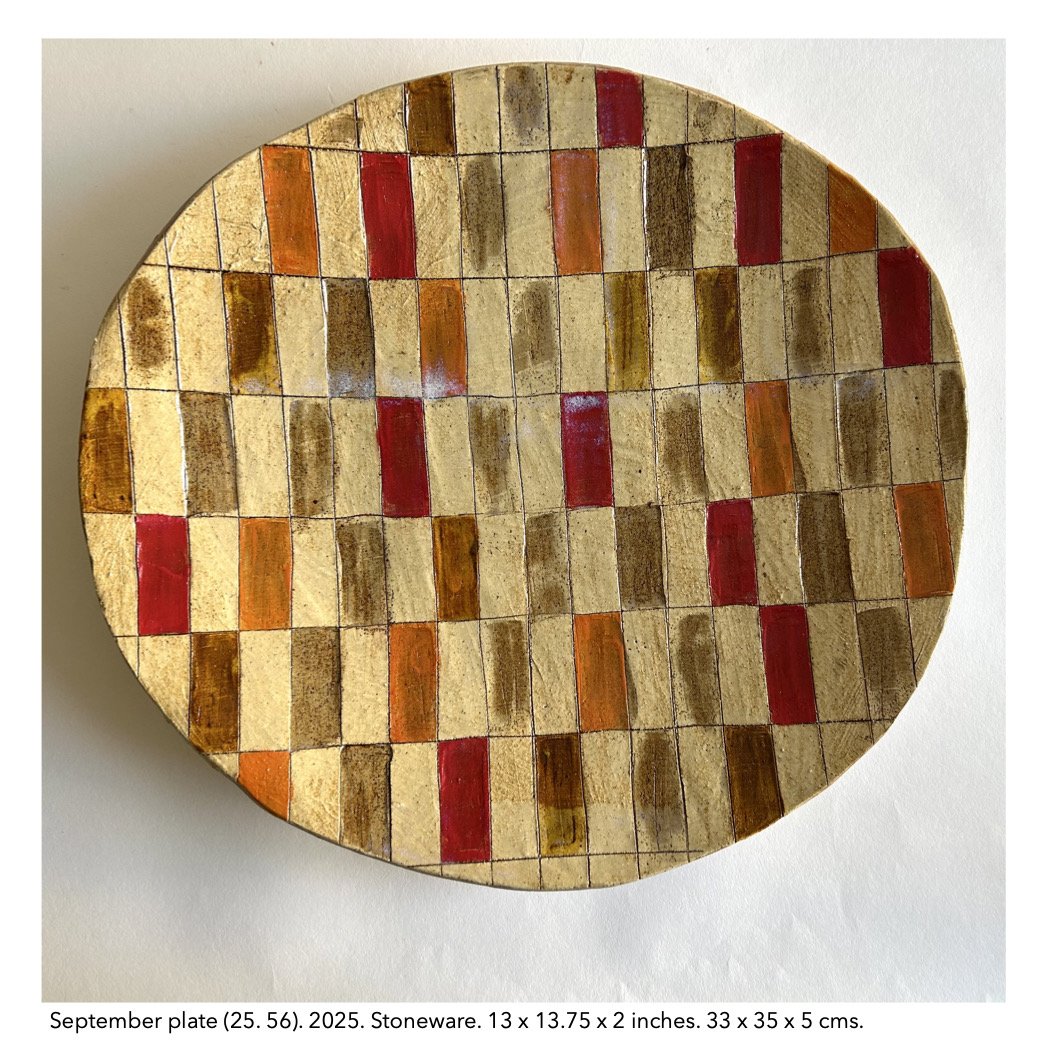
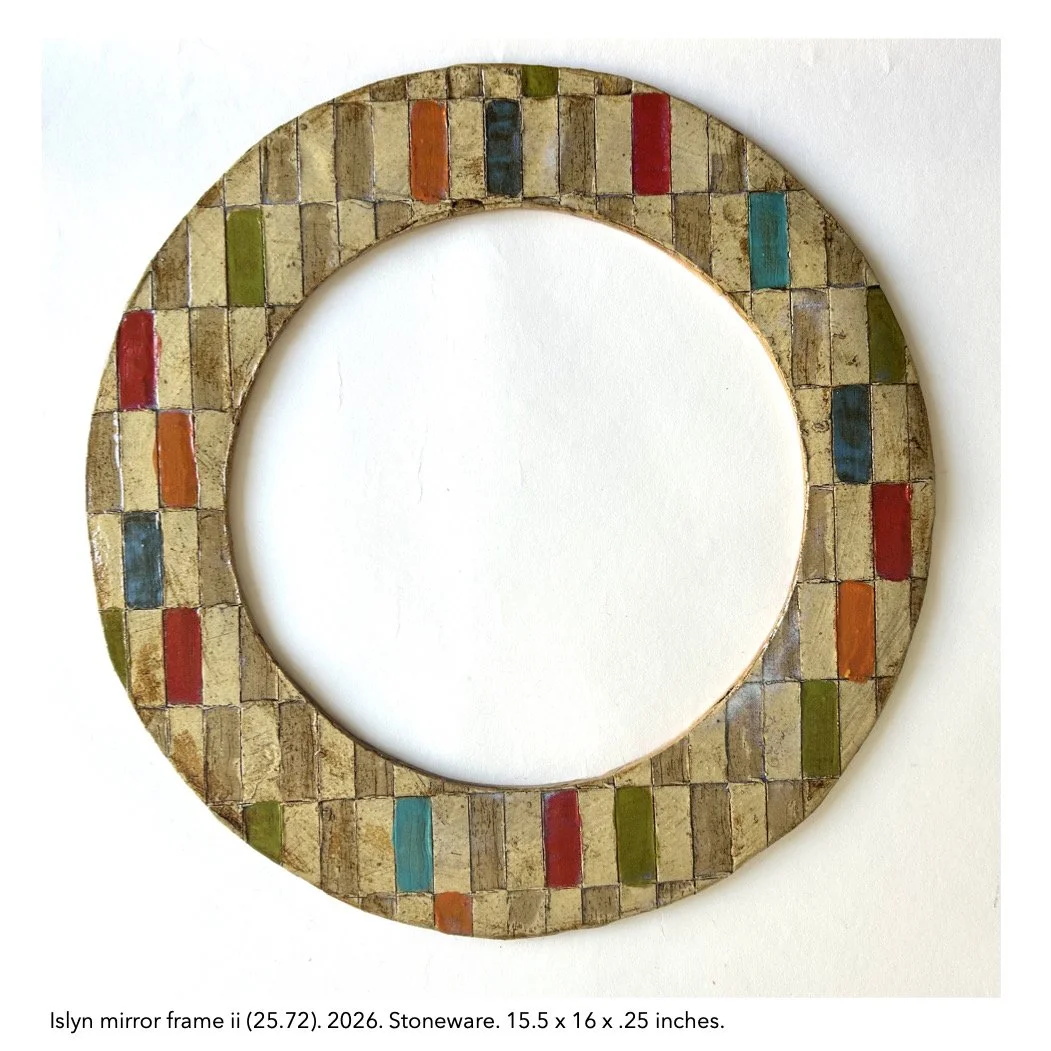
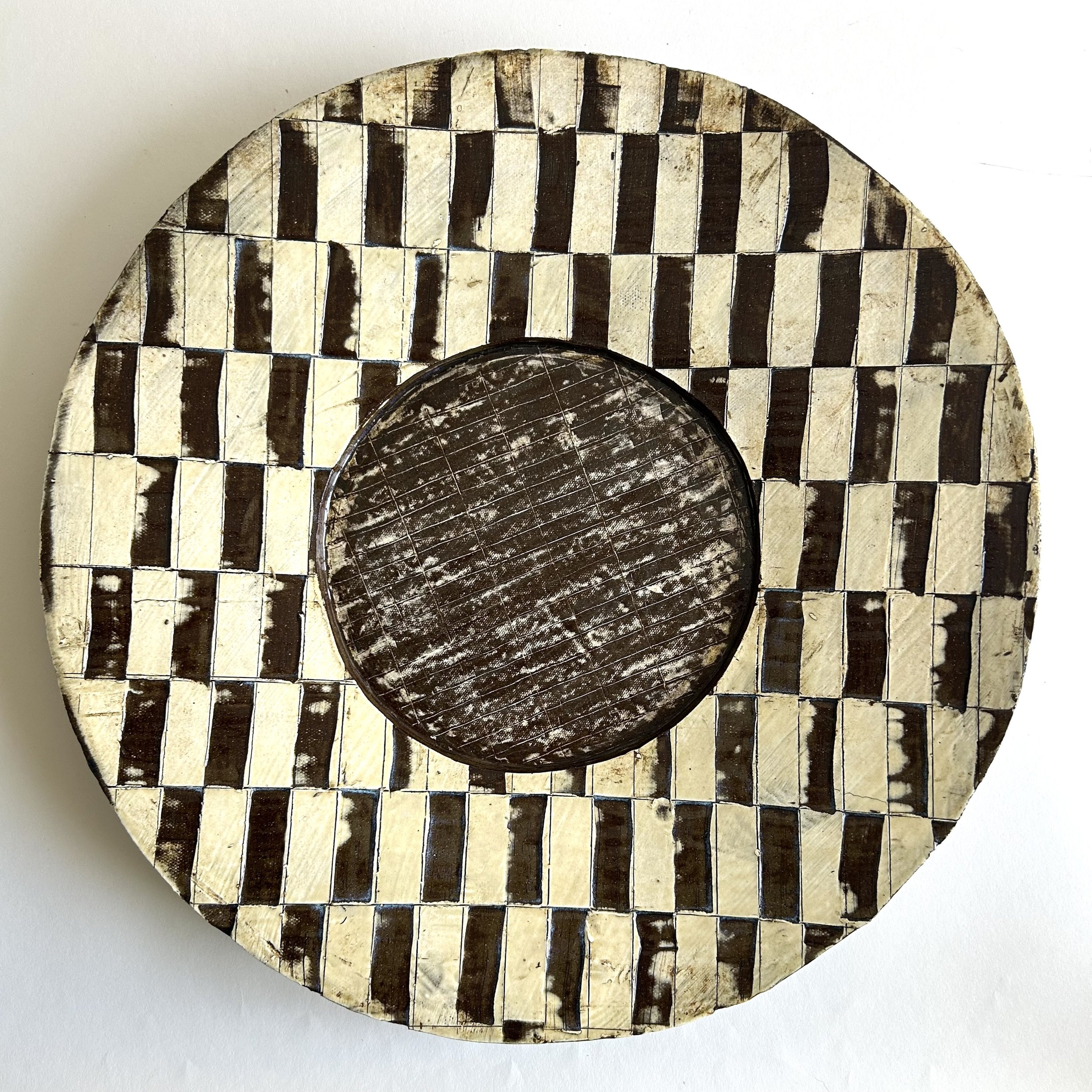
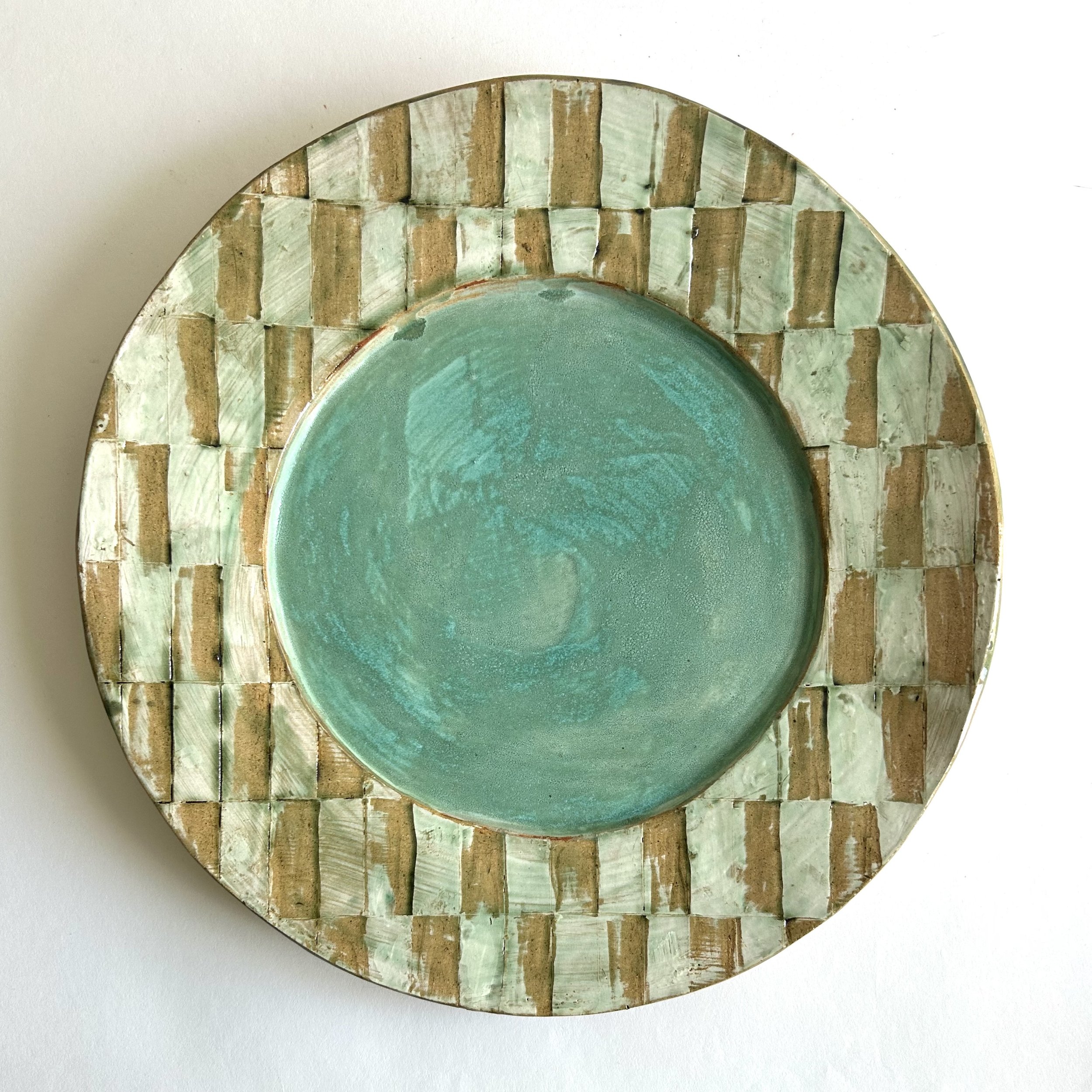
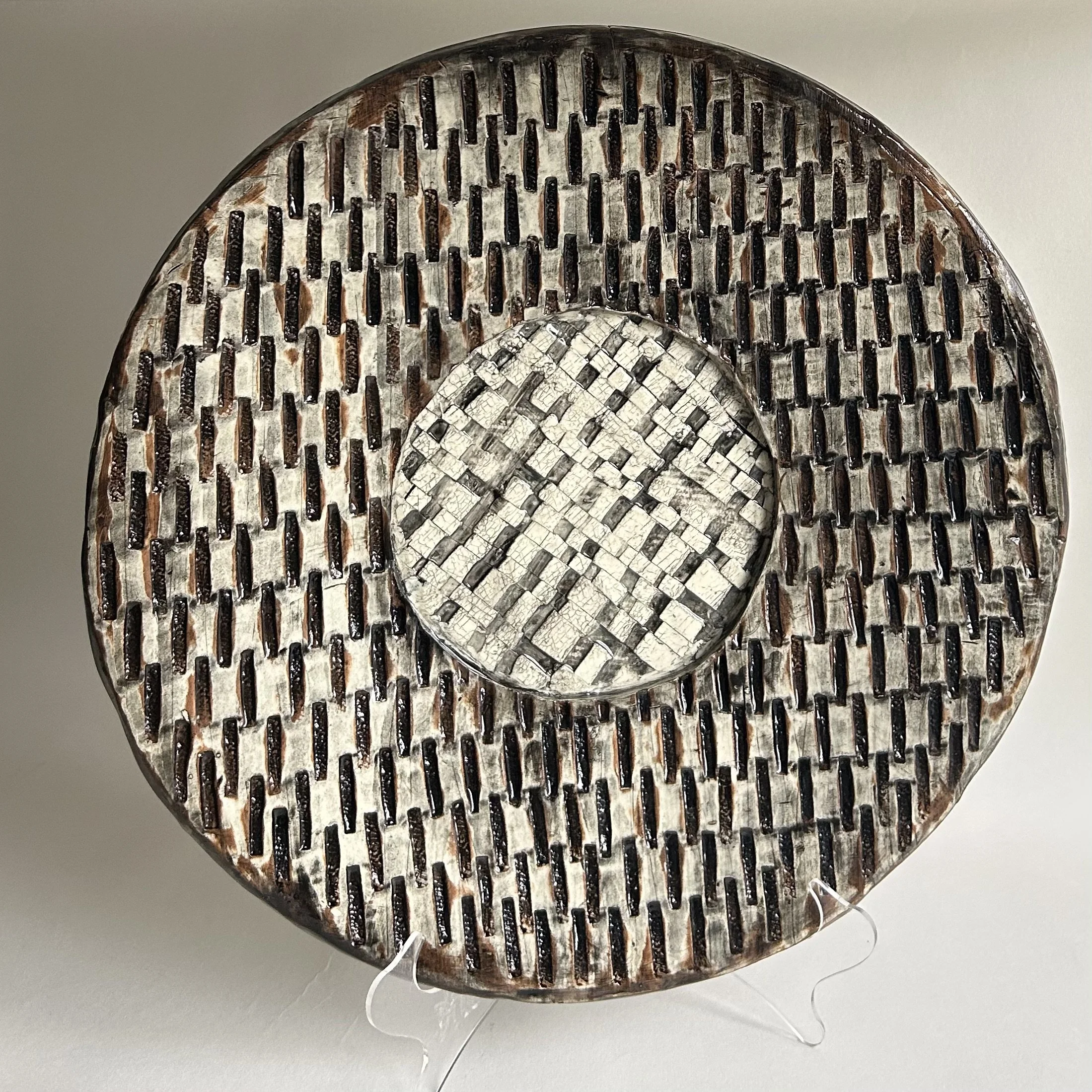
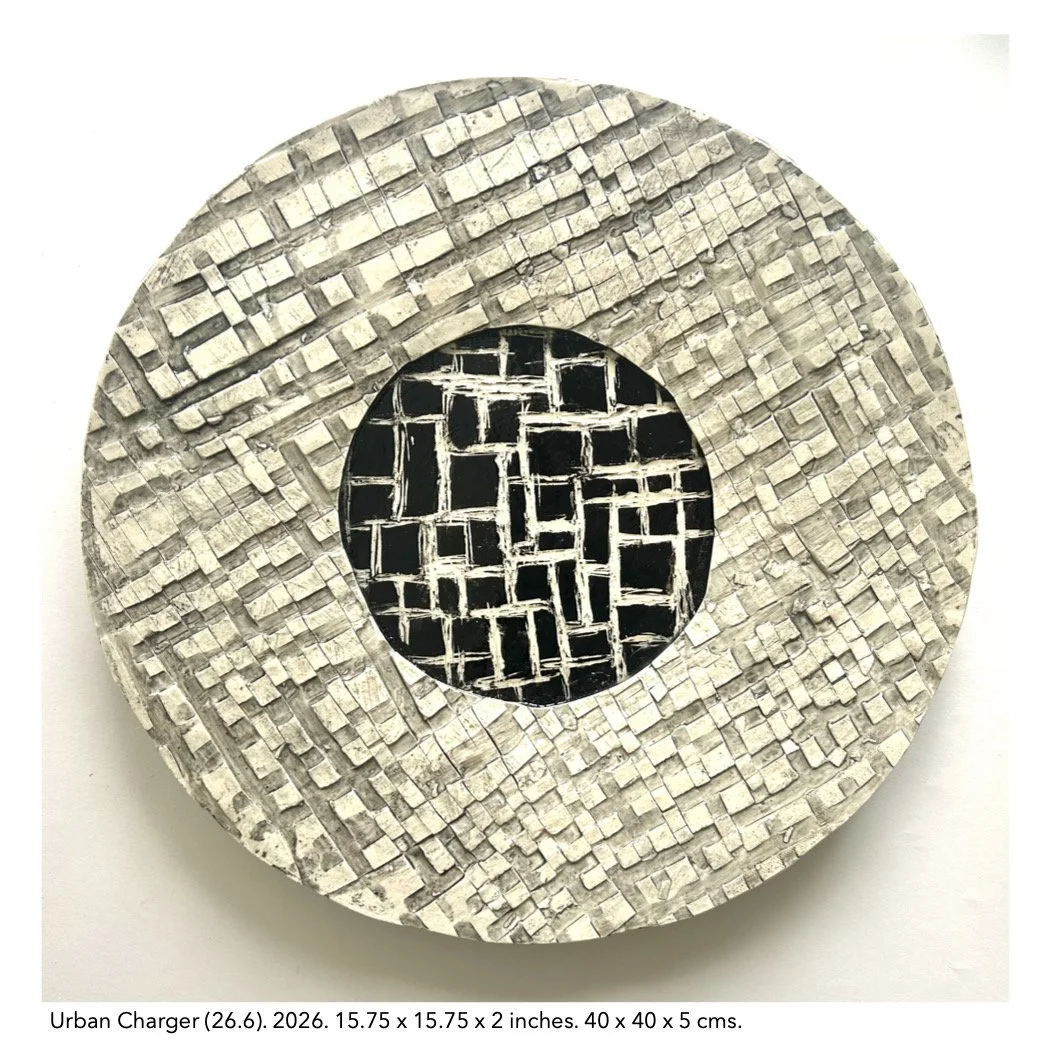
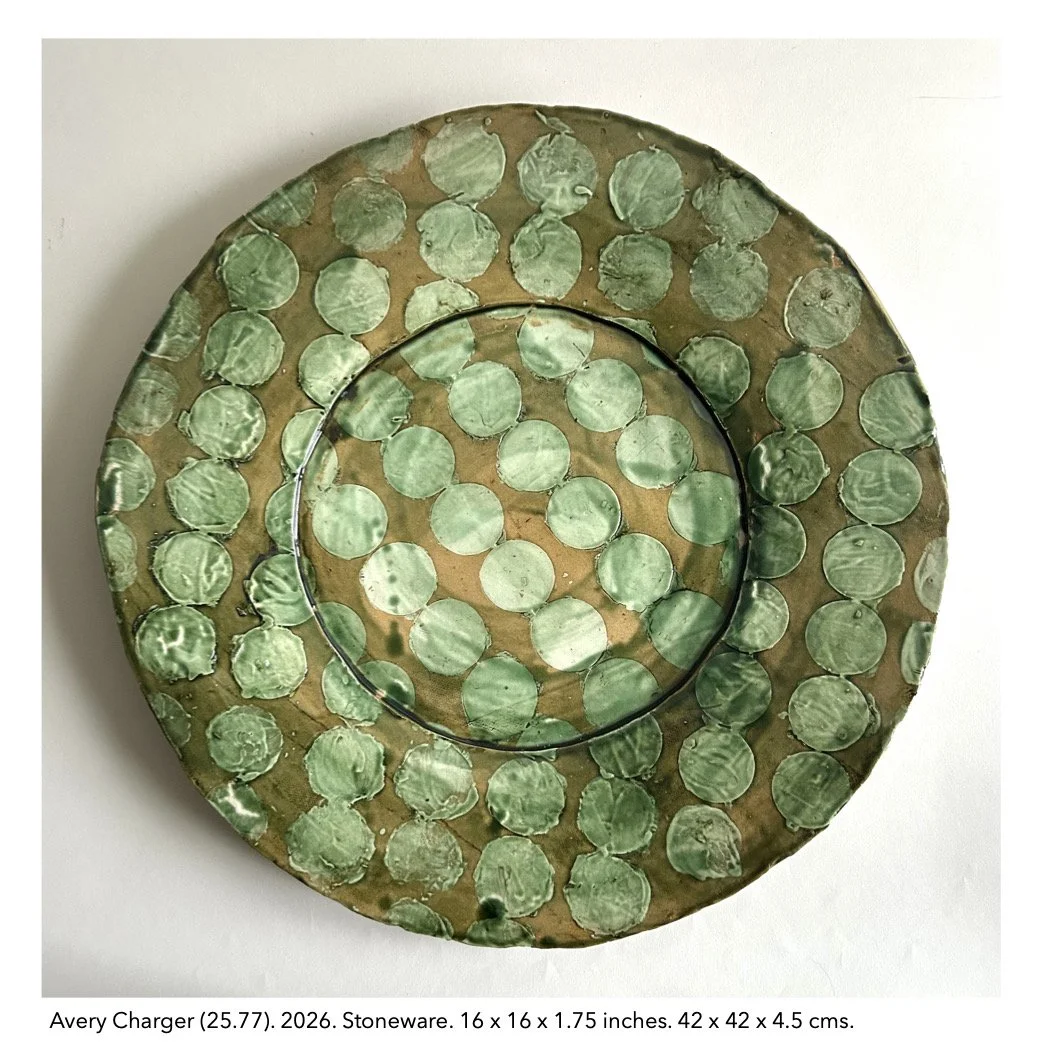
A recent Instagram find was this photo from Glenn Adamson of a work by designer Stephen Burks, who was inspired by the textiles and patterns of the old Kuba Kingdom of Central Africa. I made a big plate with the pattern, and when Islyn Studio in Brooklyn asked me to propose a mirror design, I sent them this. Working on the mirror suggested another direction which I call “chargers”: the center is cut out of a large round textured slab and then replaced by another contrasting disc.
Carnival Series
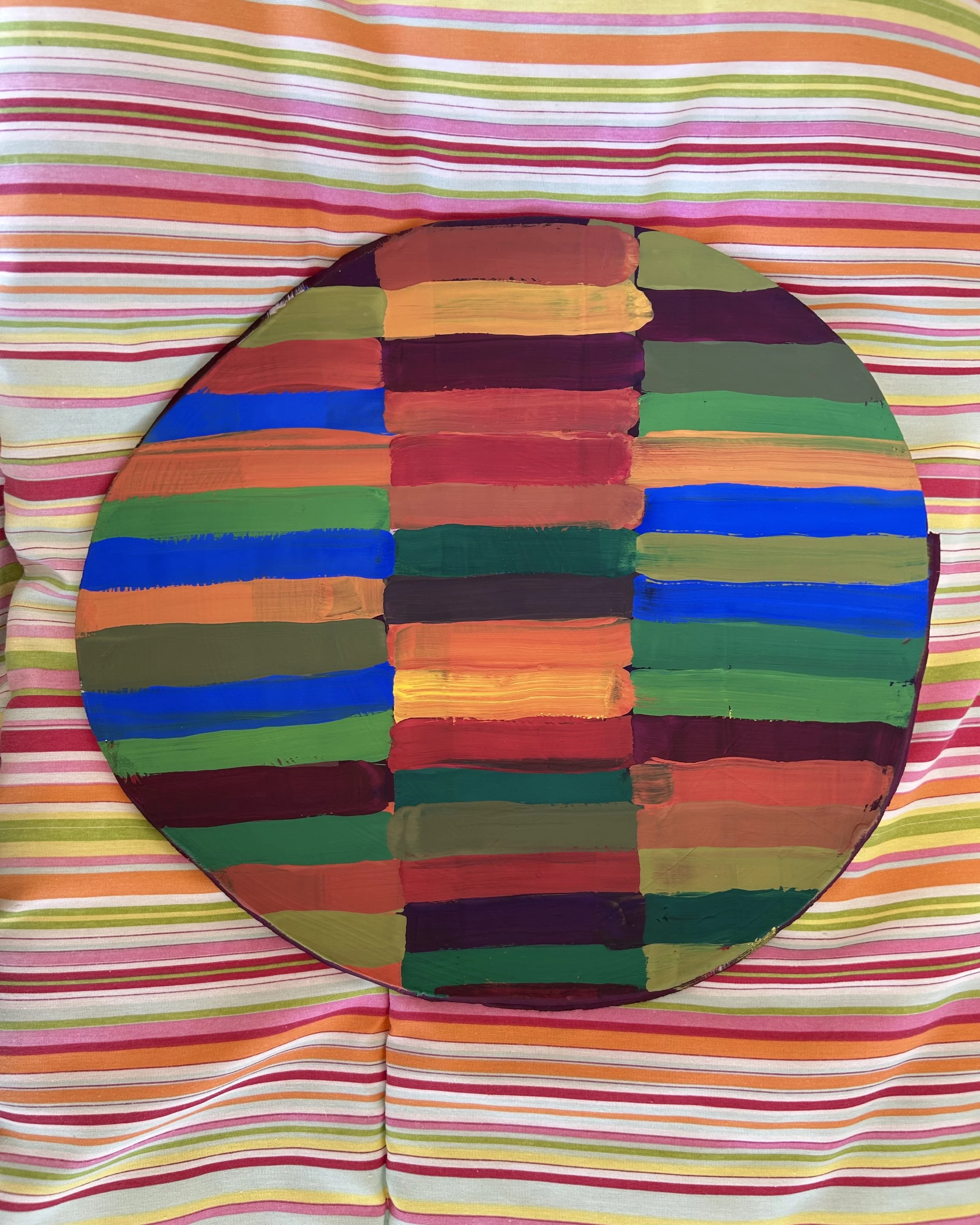
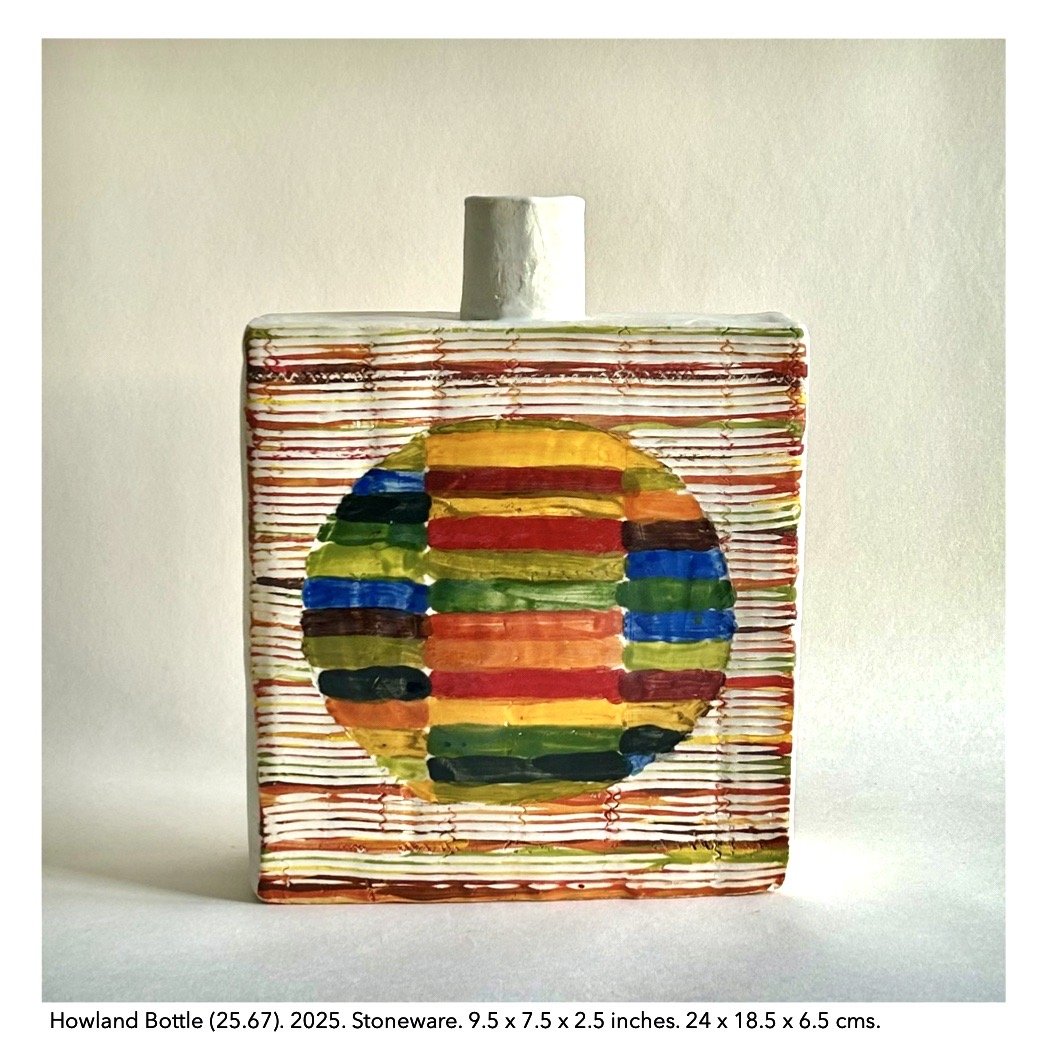
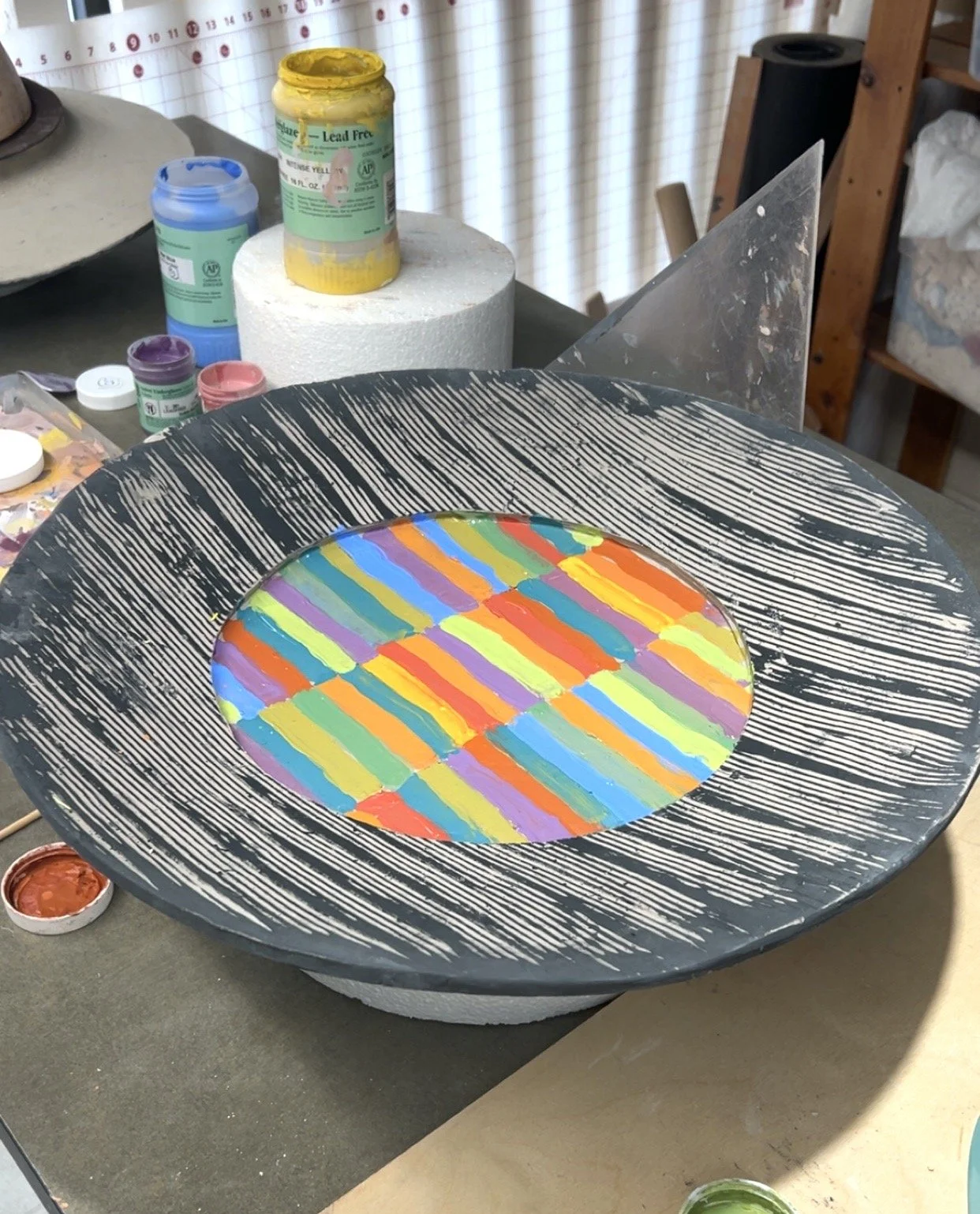
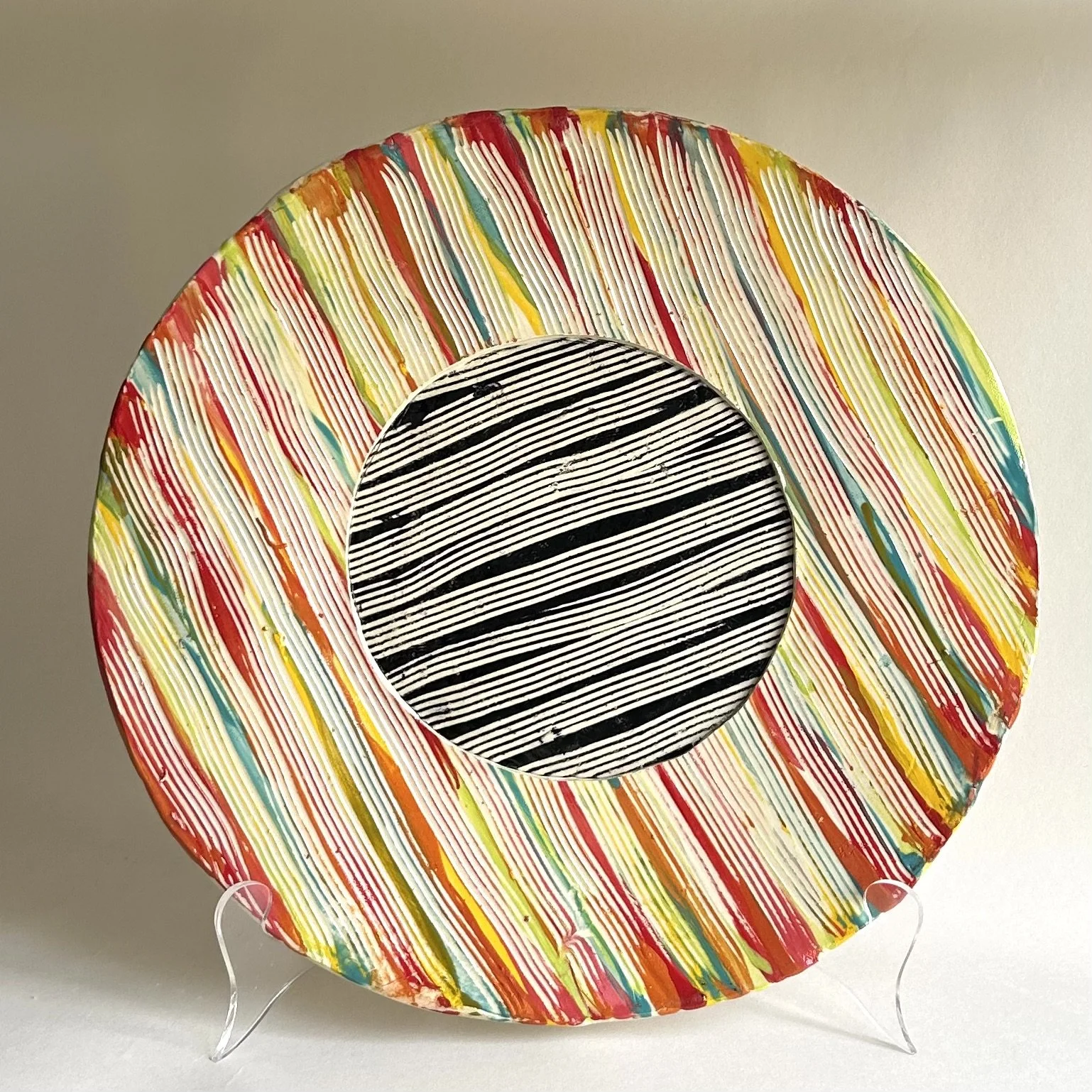
This fall I was in a kind of slump, and what I often do in those periods is scroll through my photos file for inspiration. This photo on the left below popped out at me: it’s a photo of a painted plate sitting on top of a striped comforter to dry. That led to two bottles and then some chargers and probably several more pieces in the future.
PART II: THE Problem of Originality or Too Close for Comfort
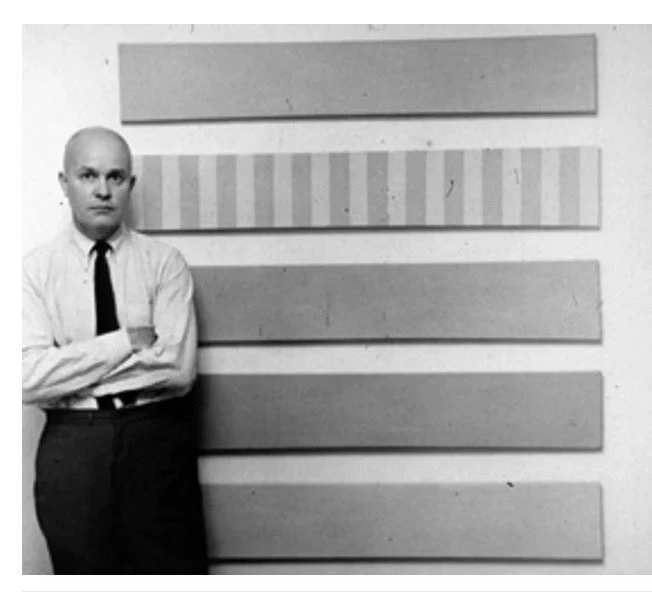
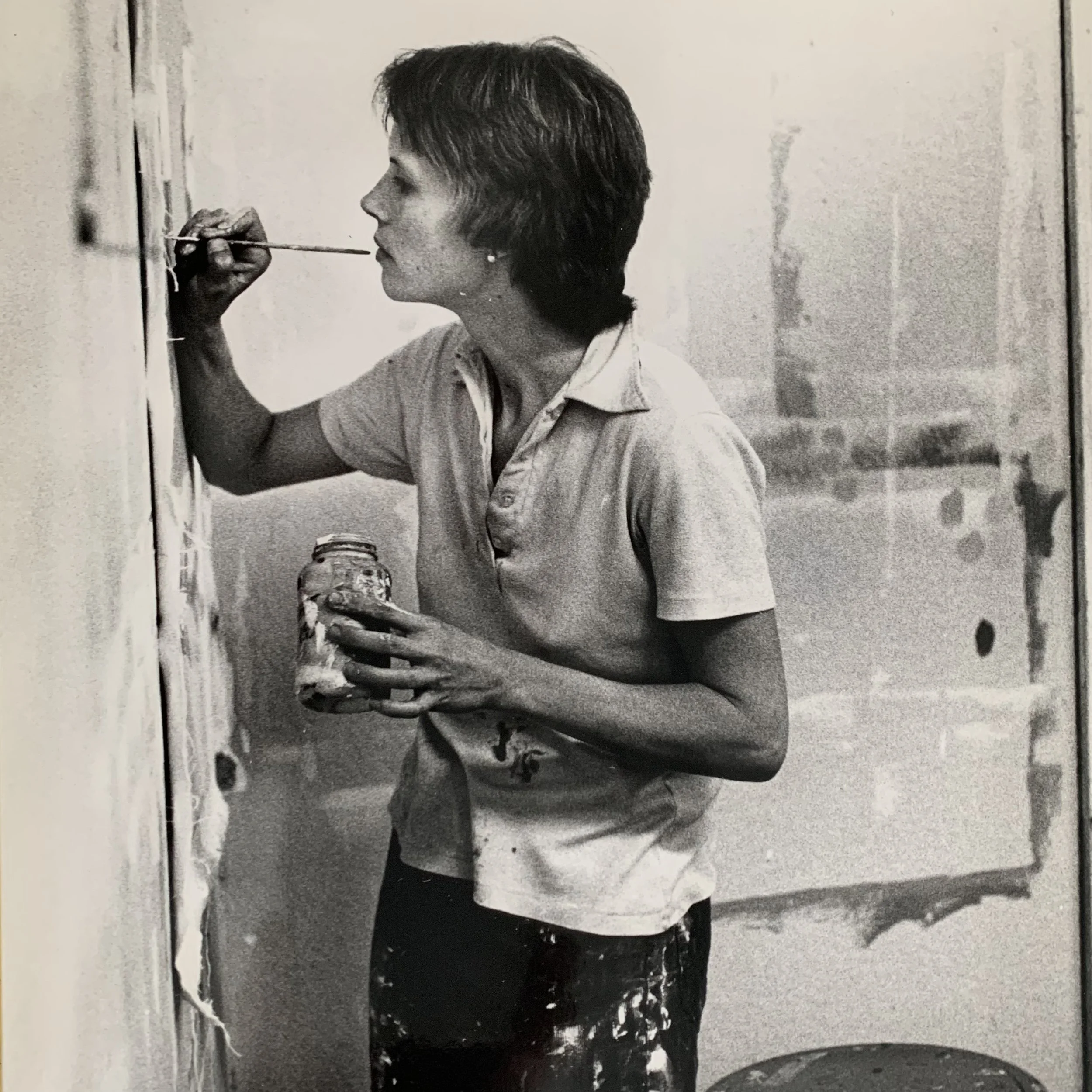
Okay, back to stripes for a moment. So where did my love of stripes come from? Perhaps from a Gene Davis painting I grew up with. Many years later I took a painting course with Gene at the Corcoran School of Art where he suggested that we copy works of art! Despite the trend at the time of appropriation, this suggestion was shocking to most of us in the class who were bred on the concepts of originality and spontaneity. This was 20th Century DC, not Beaux Arts Paris! Although some say there’s no such thing as originality, I do worry about it. Oftentimes as I’m working on a piece, I think to myself, “Haven’t I seen this before?”
Inspiration or Theft?
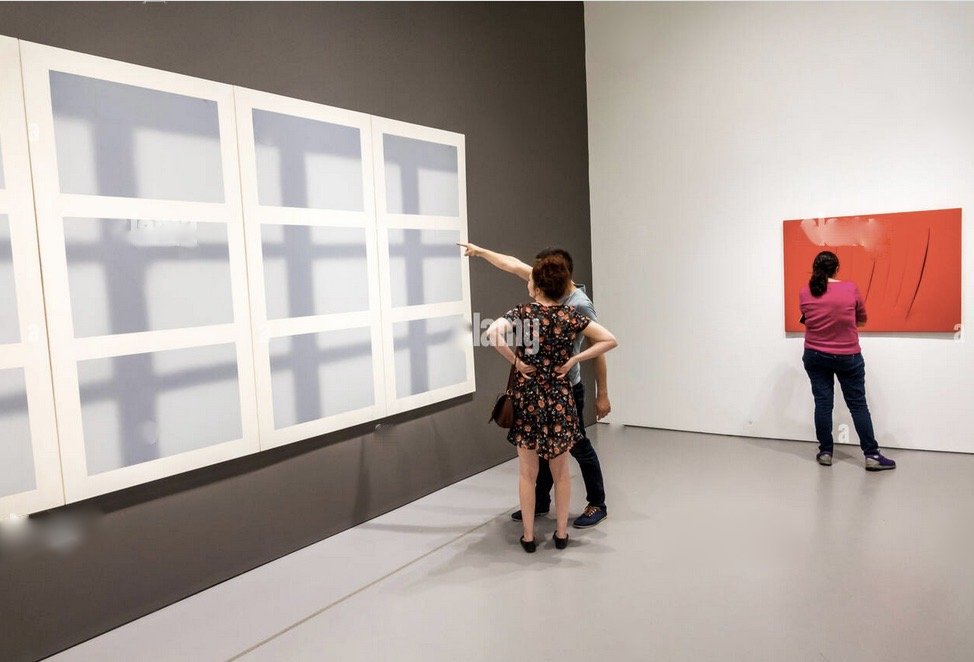
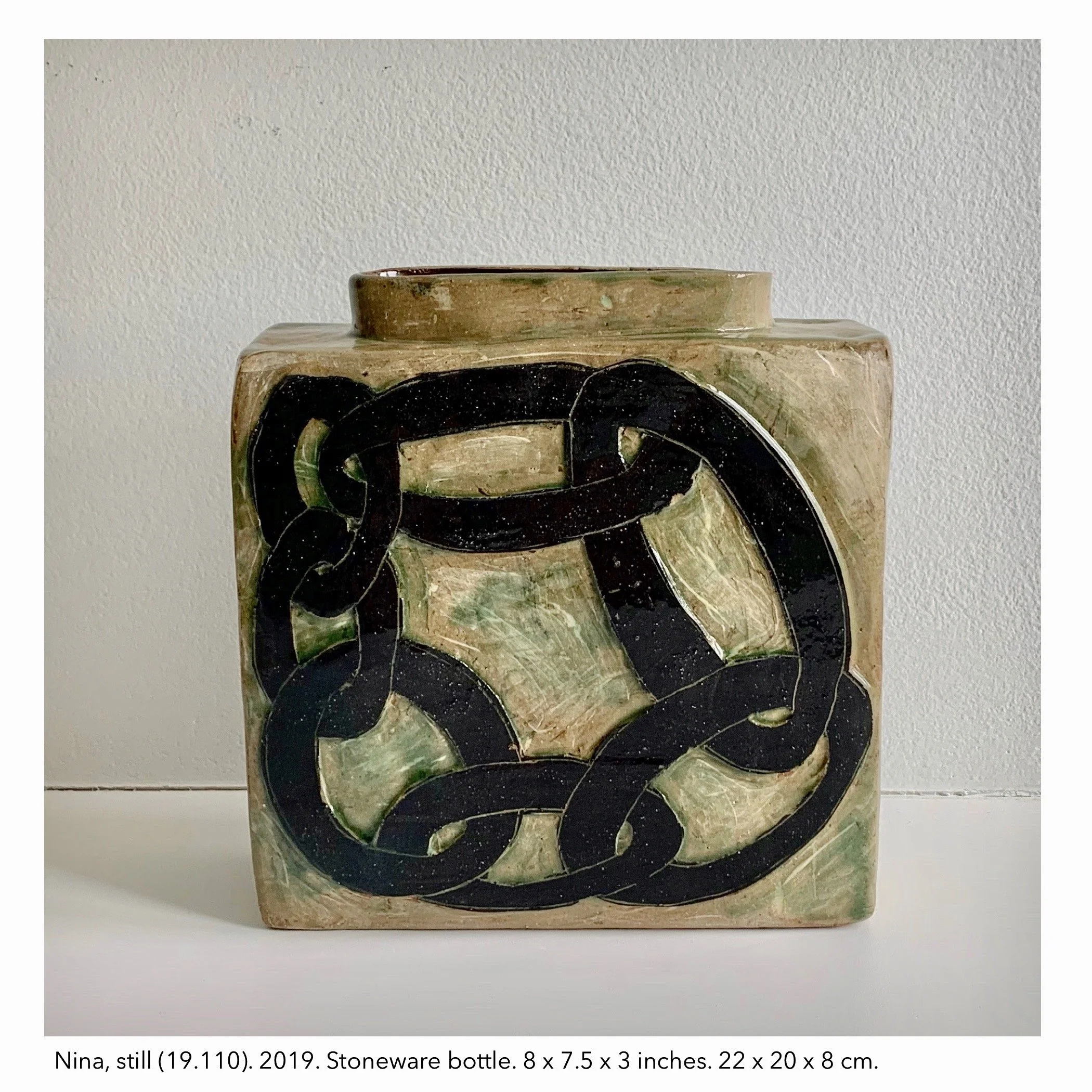
When I worked at the Hirshhorn, this painting by Gerhard Richter was on view for quite a while and I loved it. So I made this bottle and entitled it Richter Bottle. Is this a tribute or a theft? How about the vase after Rosie Lee Tompkins’ quilt or the pattern from Nelly Bonnard’s rug?
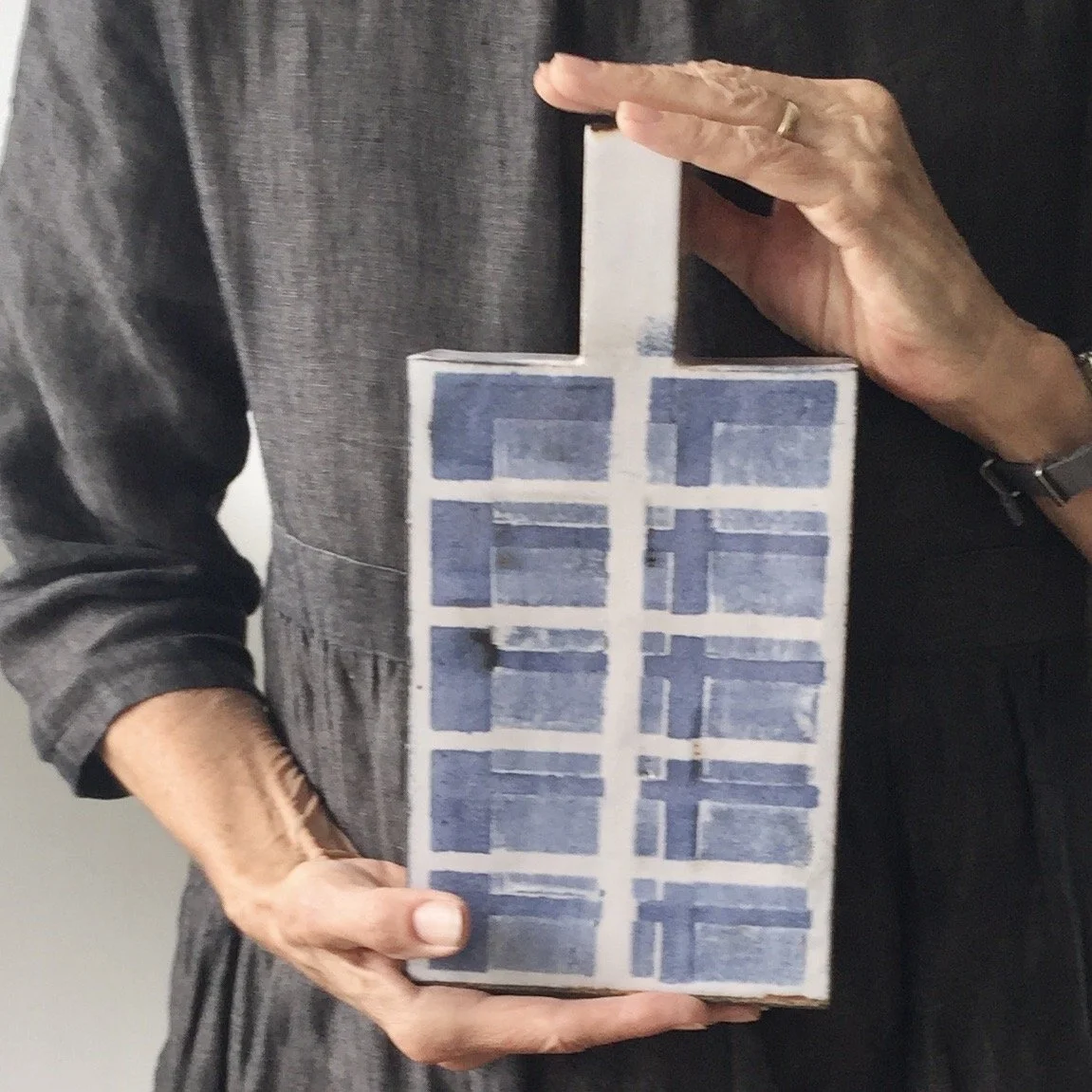
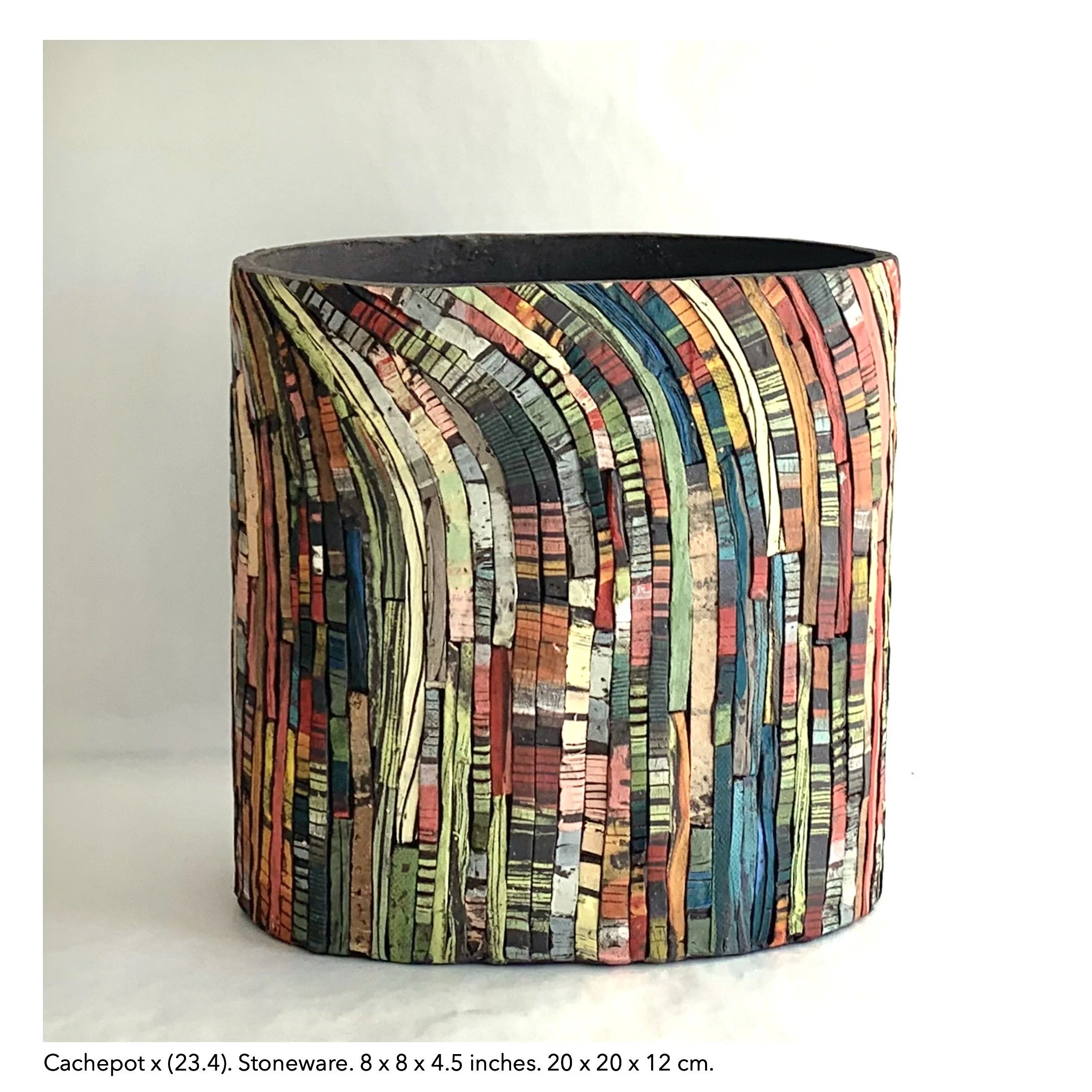
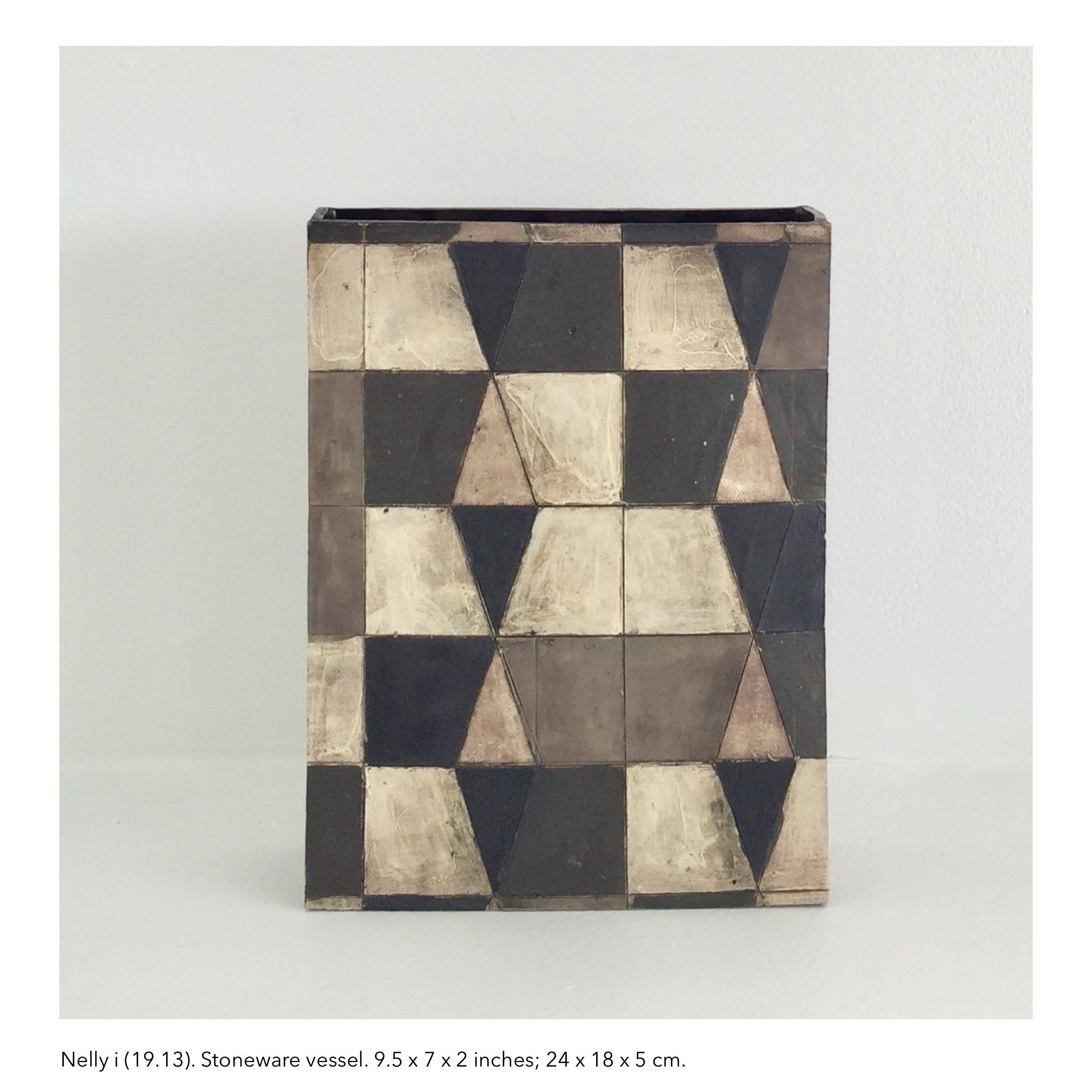
There are two works I’ve made which I feel are so close to the source that it’s stealing—these based on Joel Robinson’s textiles I saw at the Cooper Hewitt.
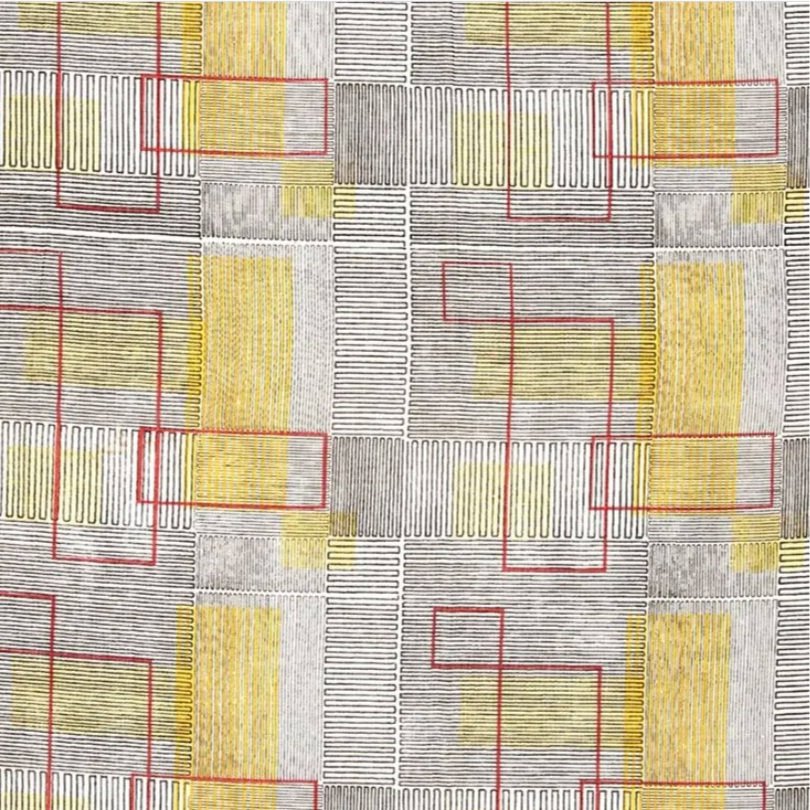
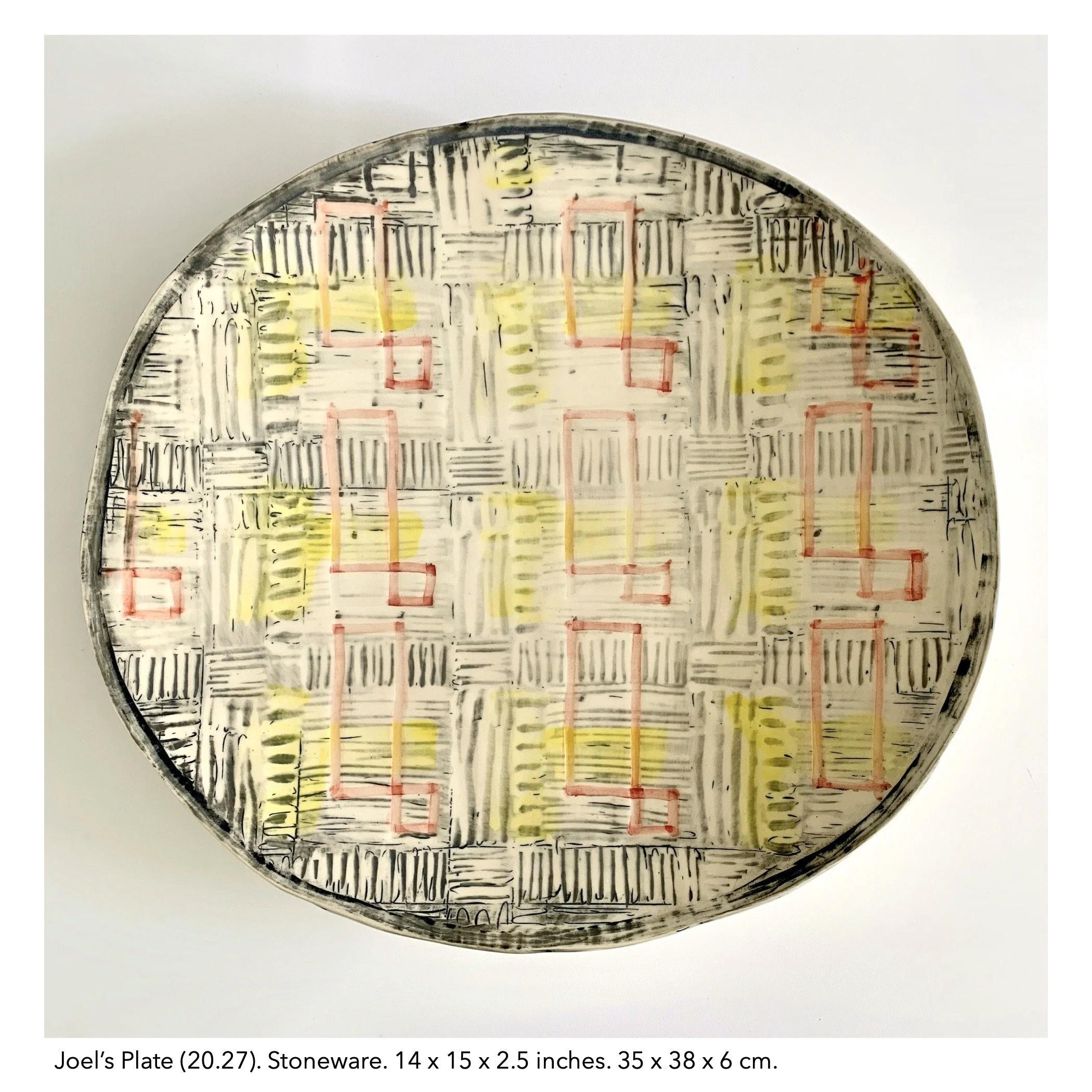
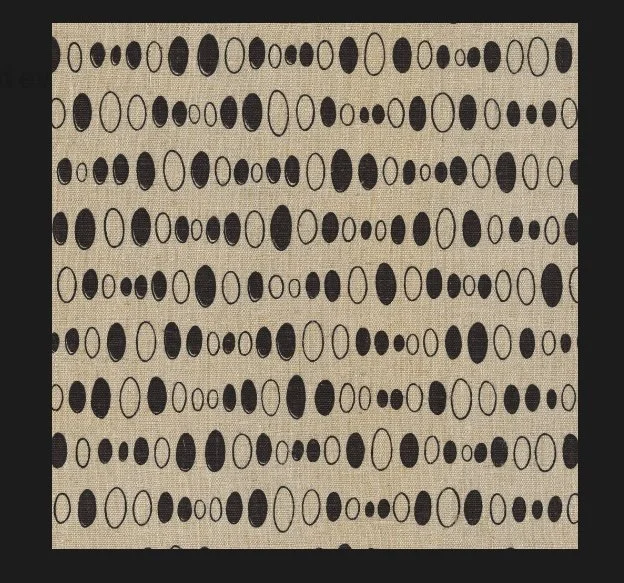
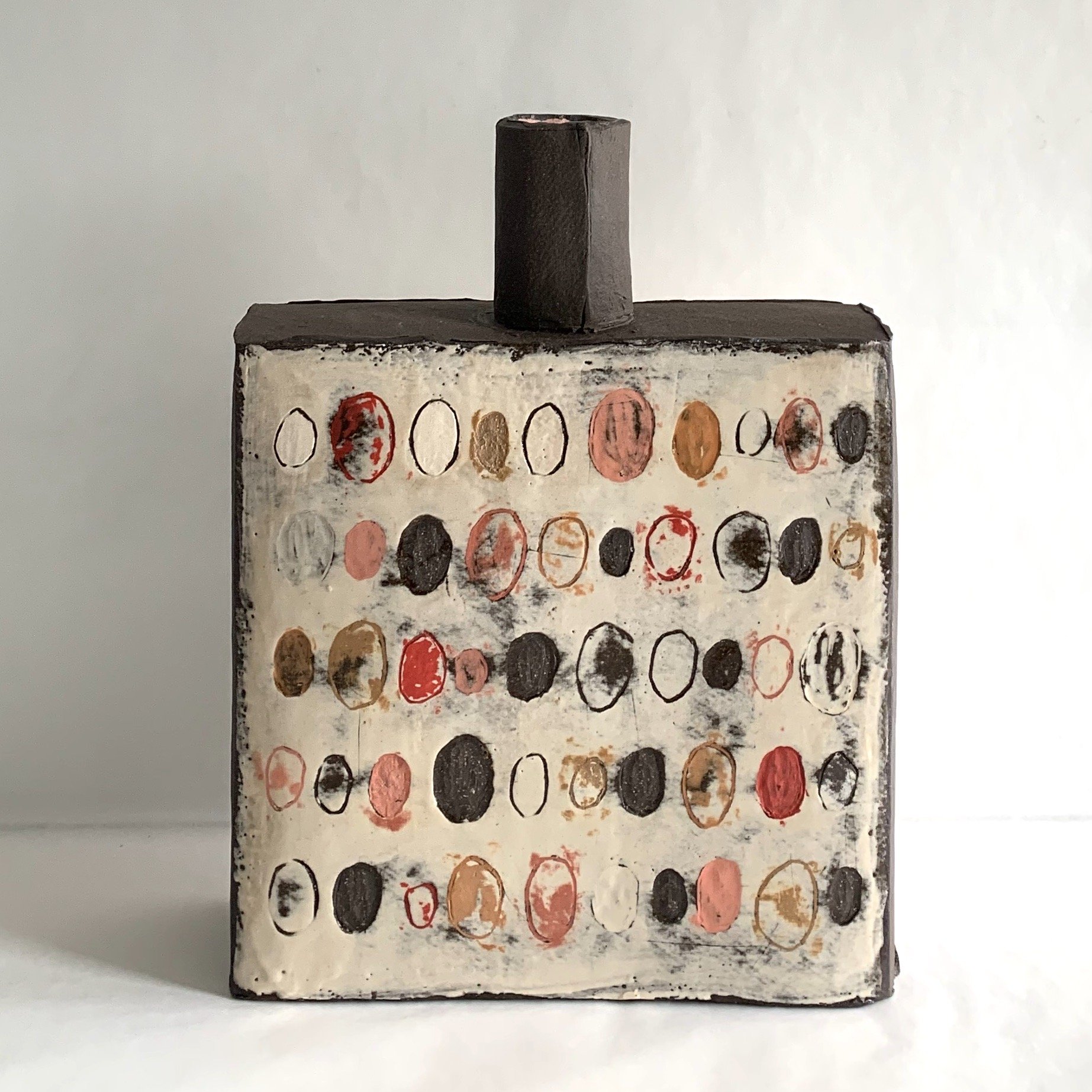
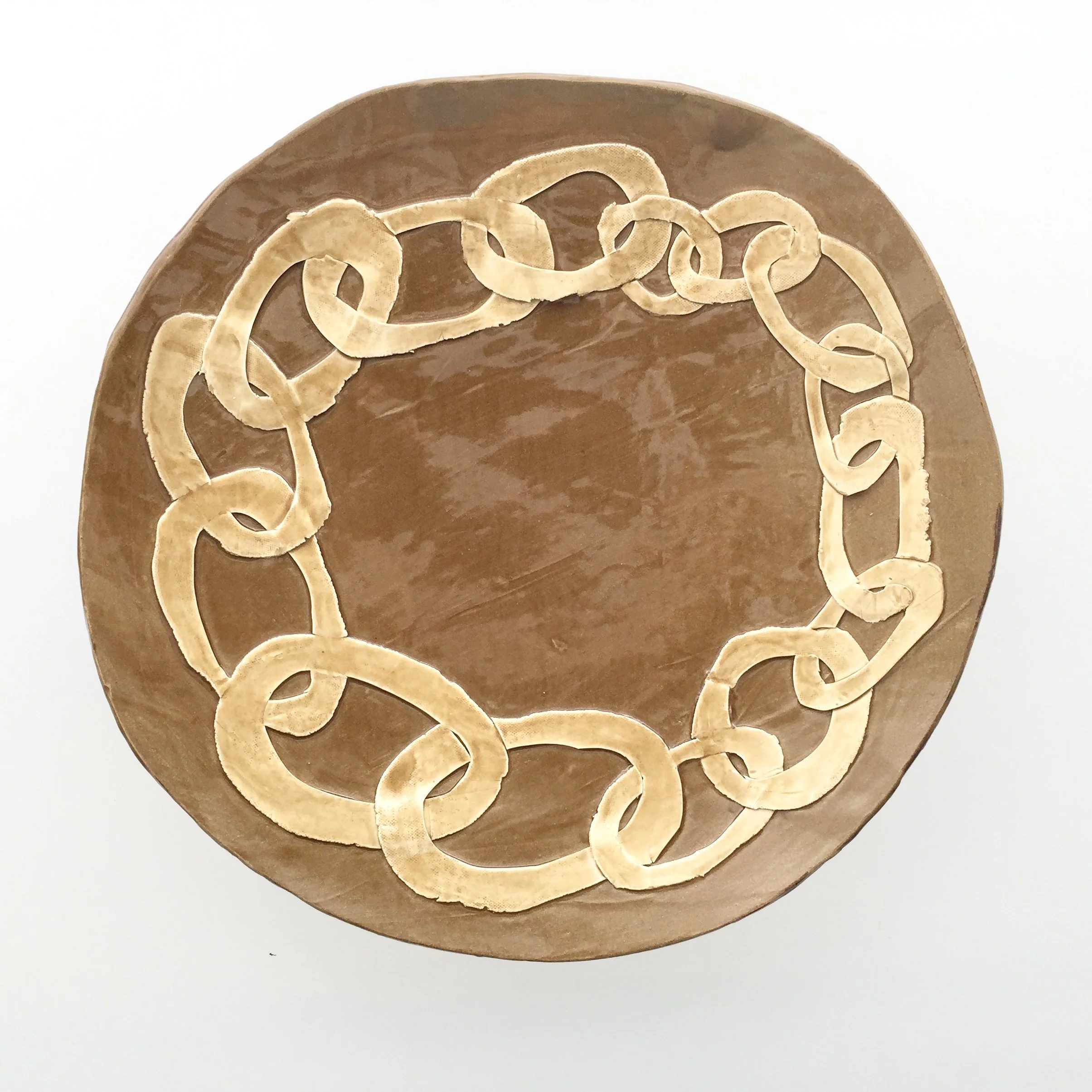
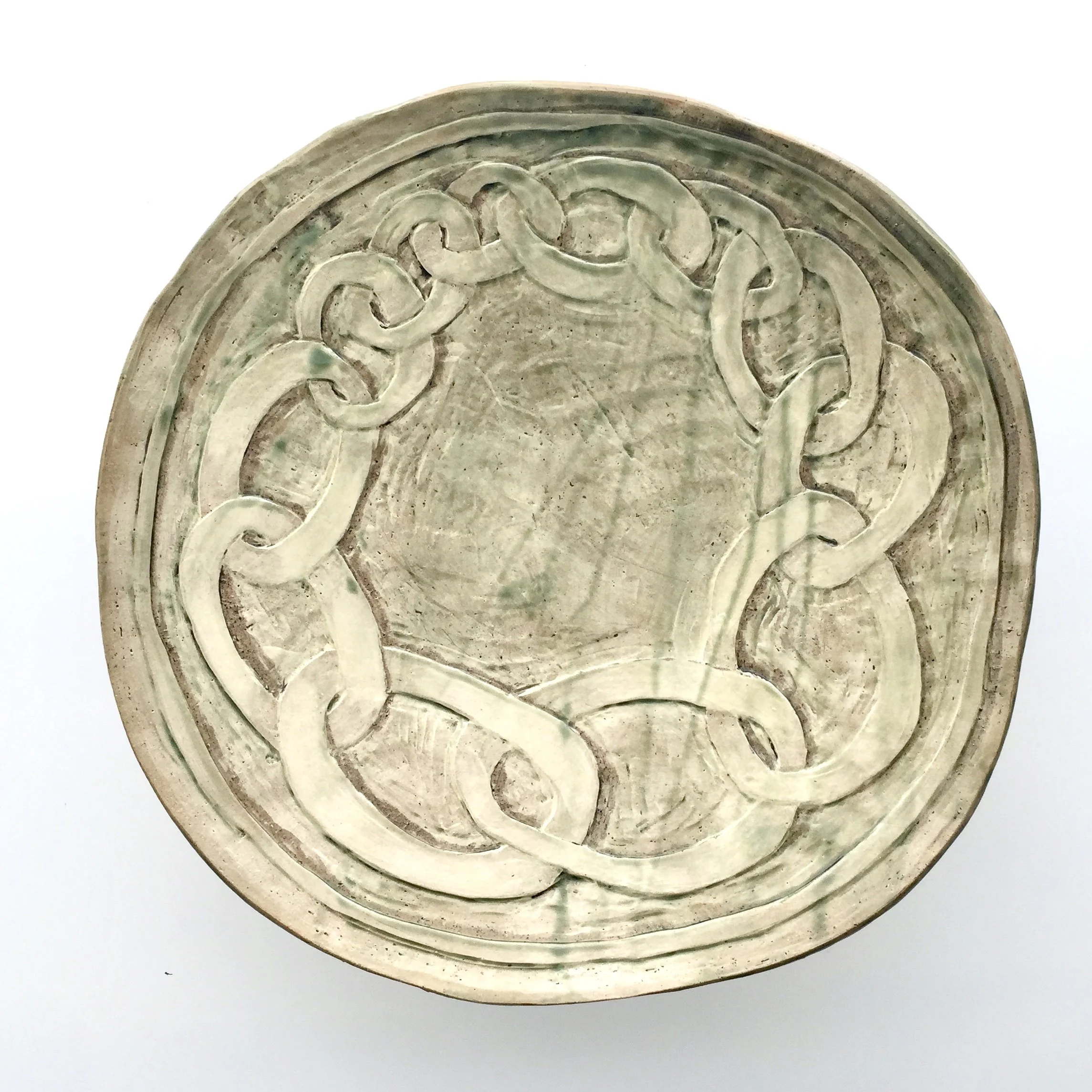
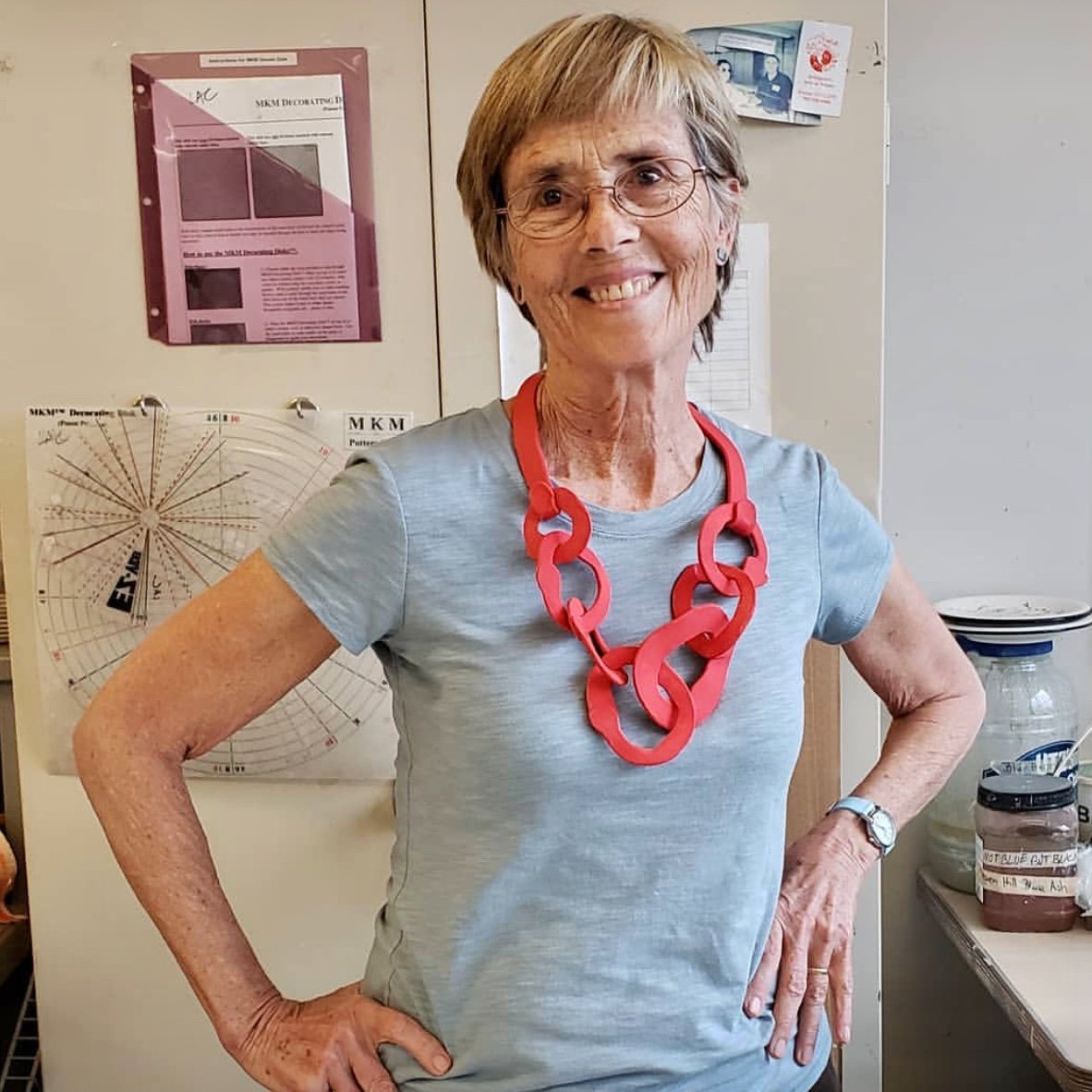
Here’s a situation where I was called out by another artist, a jeweler in New York. She had a show of her work a few years ago, and I really loved her silver necklace of large, flat loops. I made several vases and plates inspired by it and posted pix on Facebook. She responded by saying how flattered she was that I had been inspired by her work. Then I made ceramic necklaces based on her design, posted those on Facebook, and she was furious! My necklaces were so fragile, I never could have sold them, but they made fine gifts for friends who knew they wouldn’t last long.
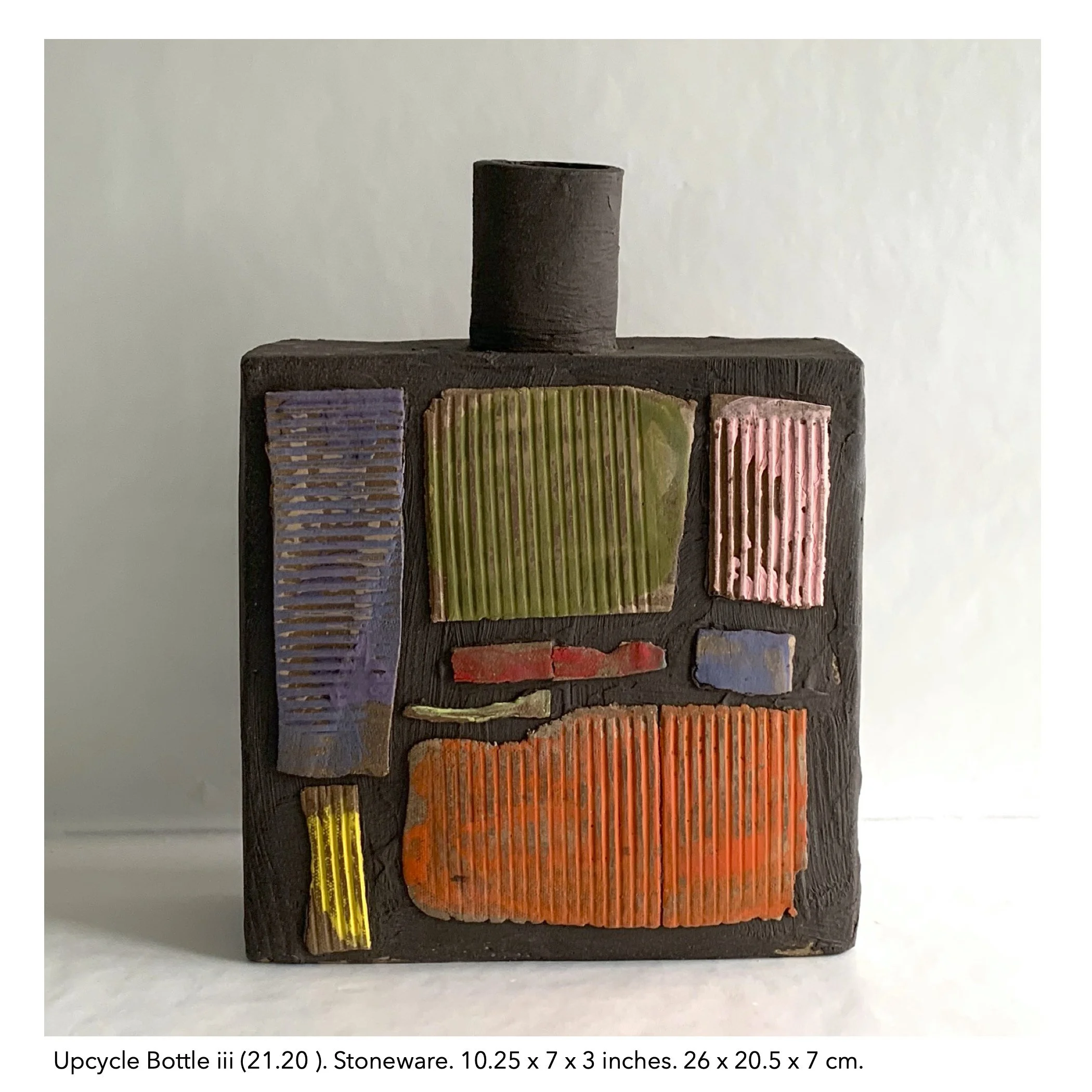
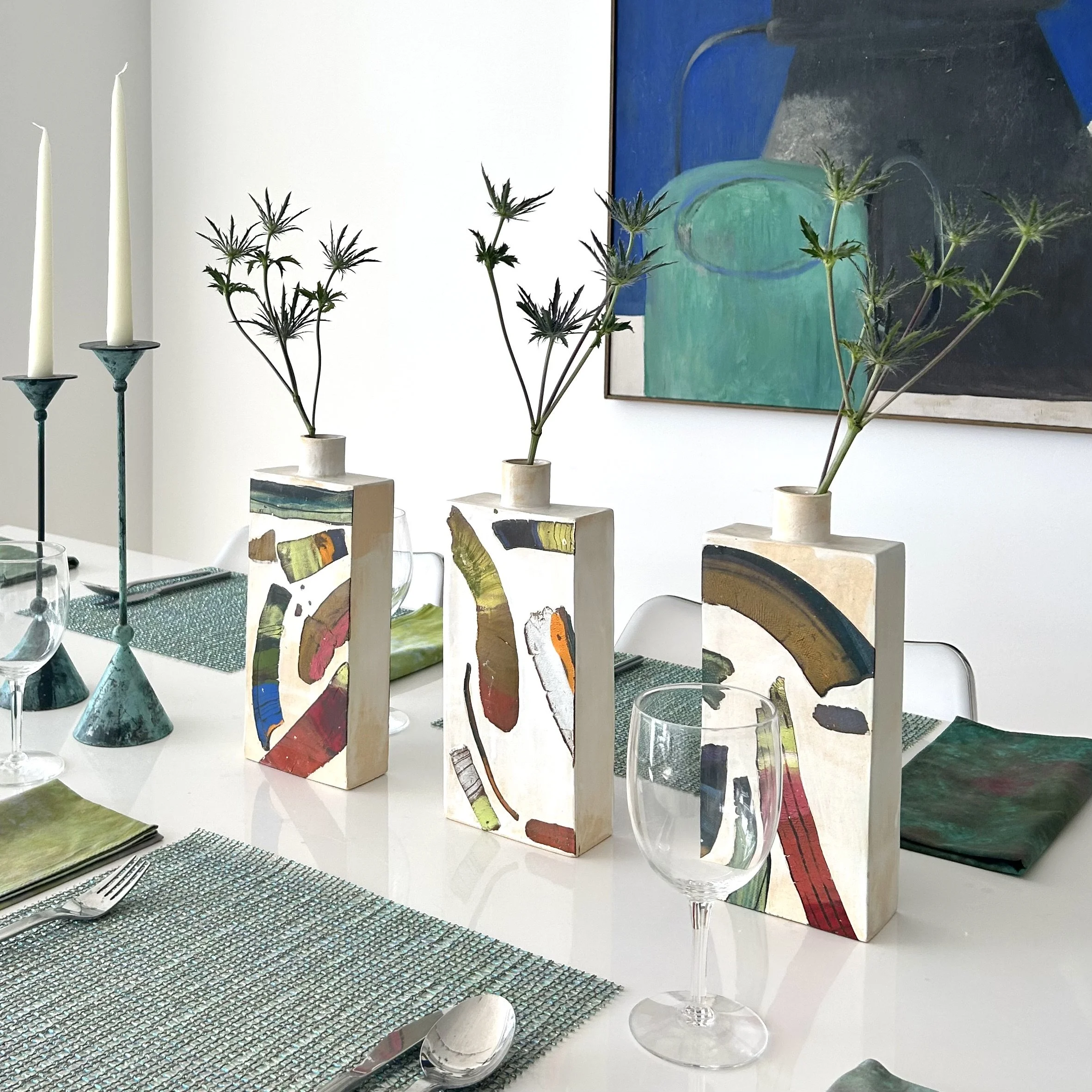
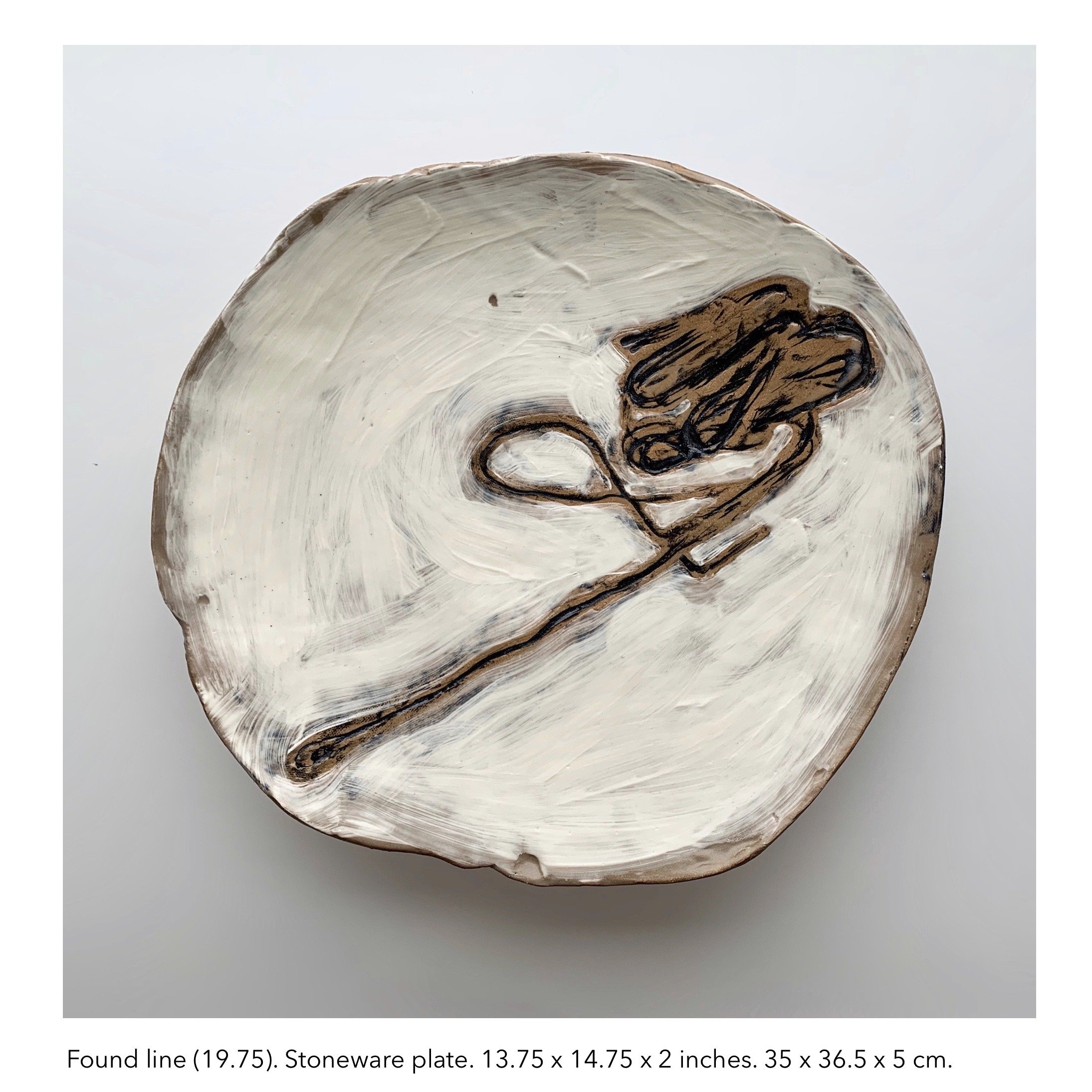
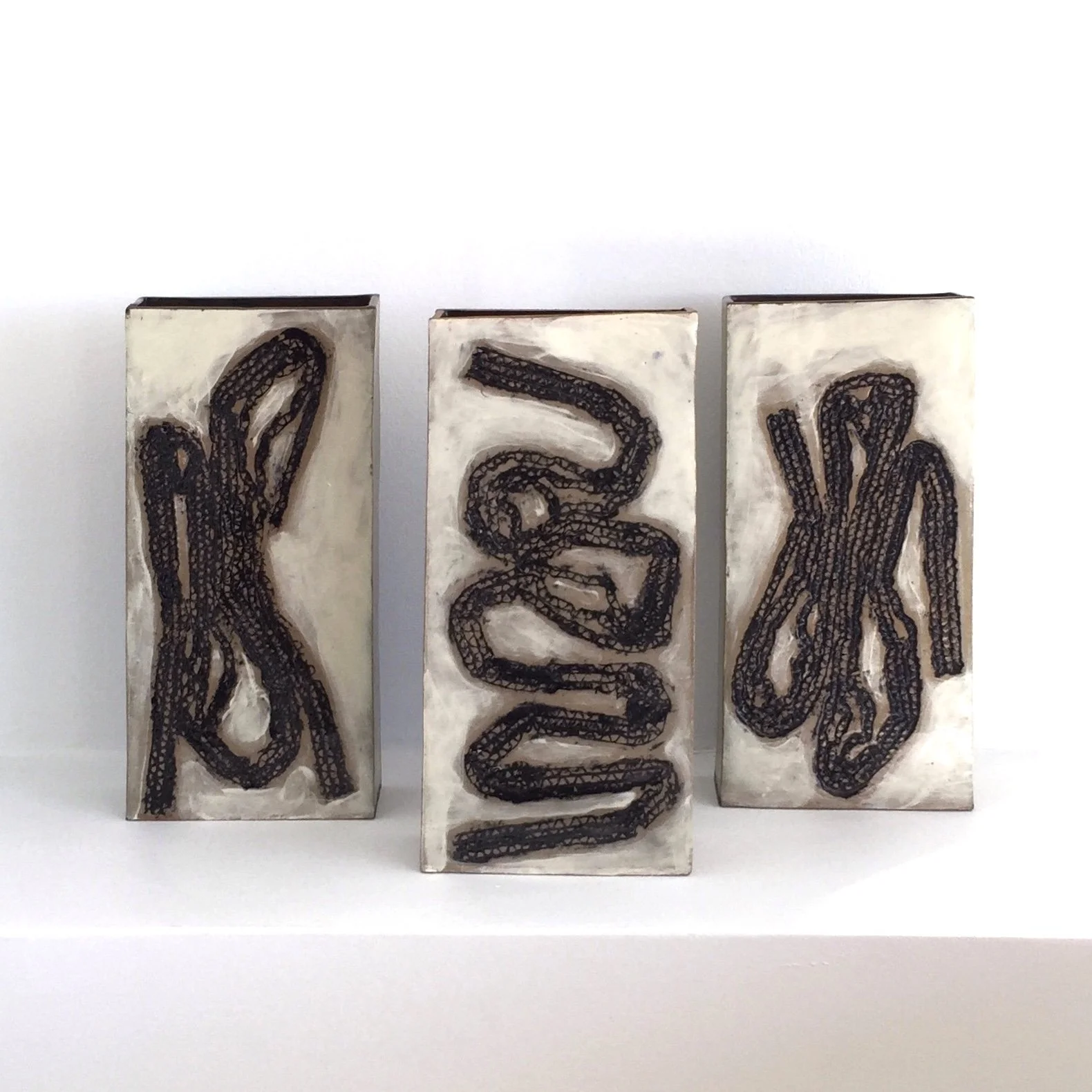
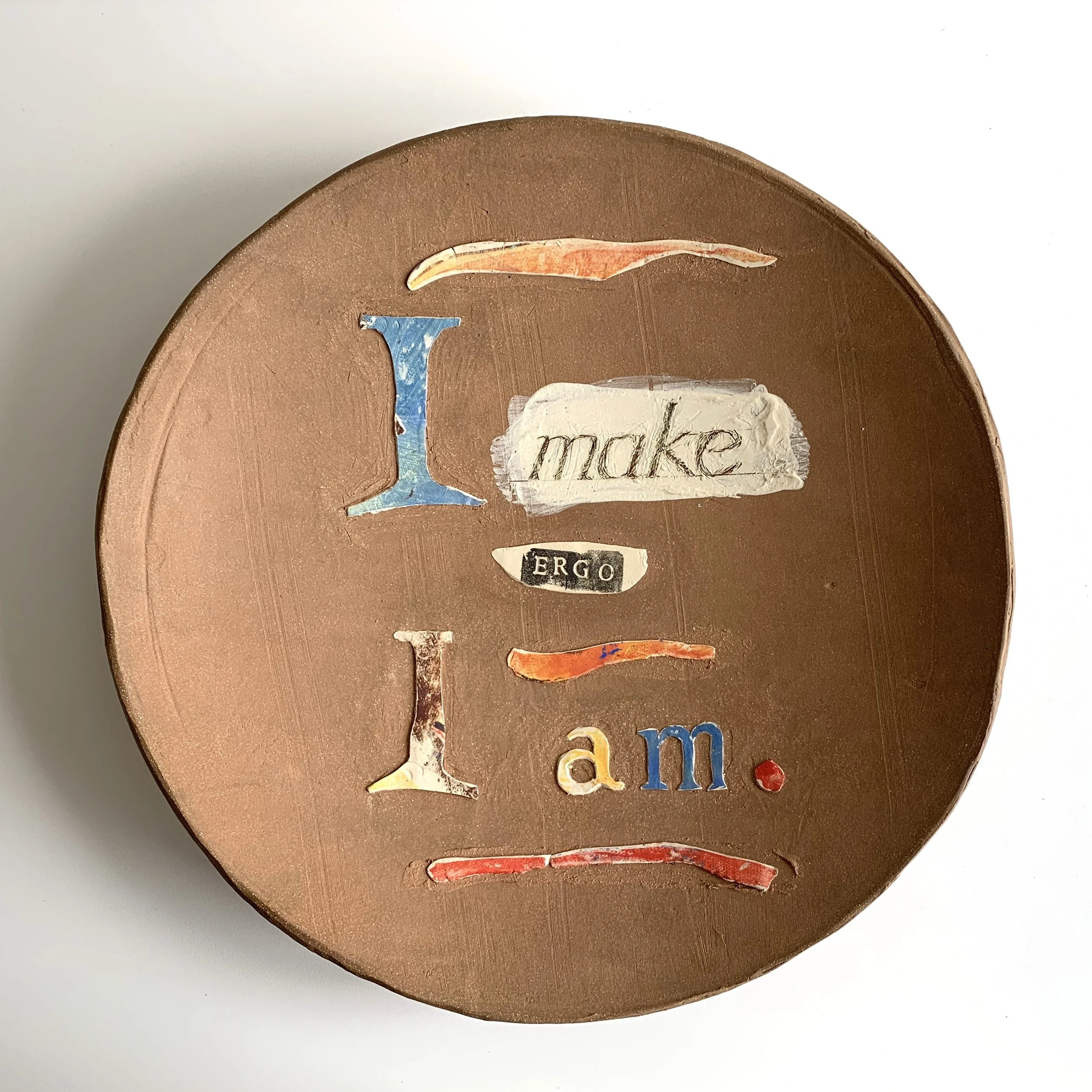
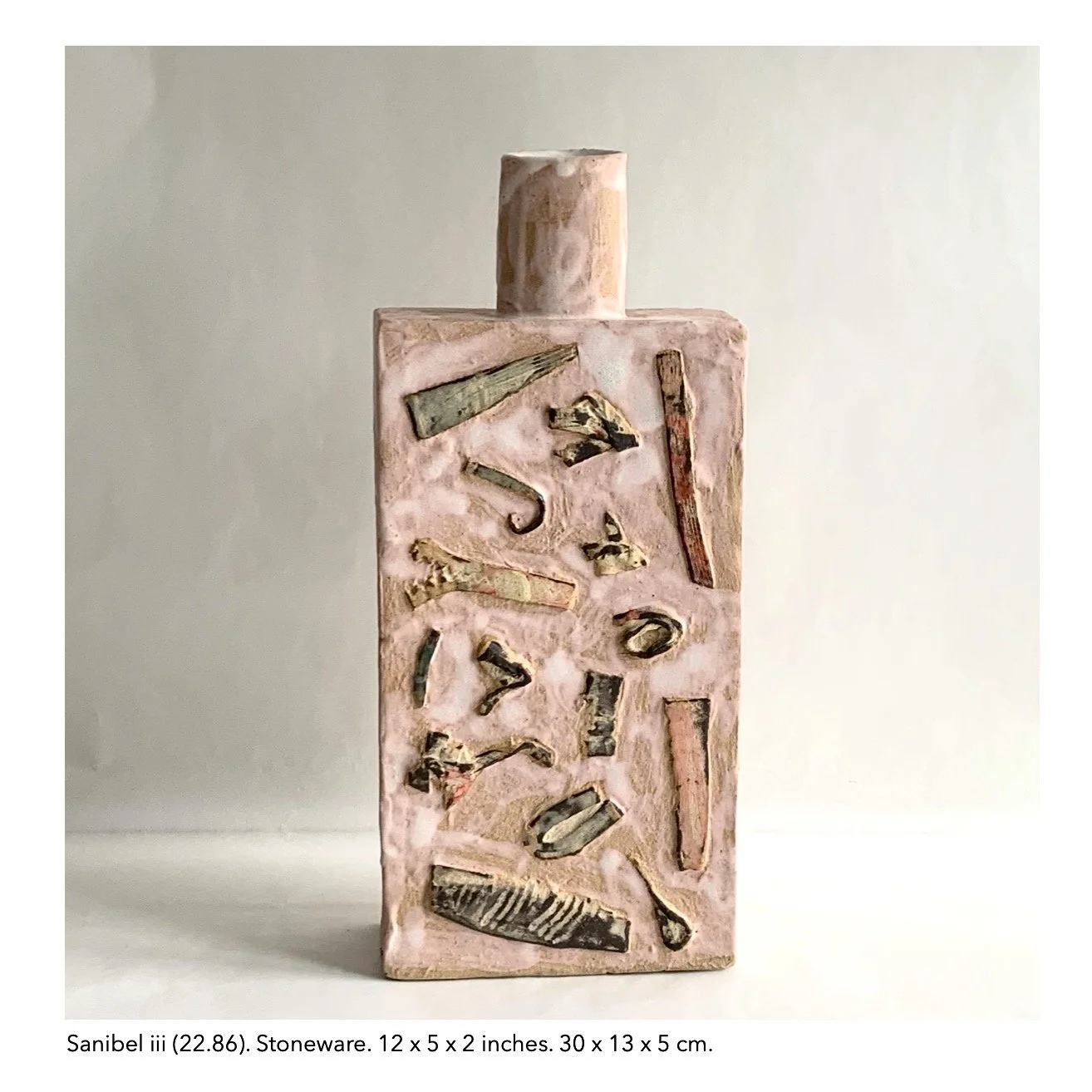
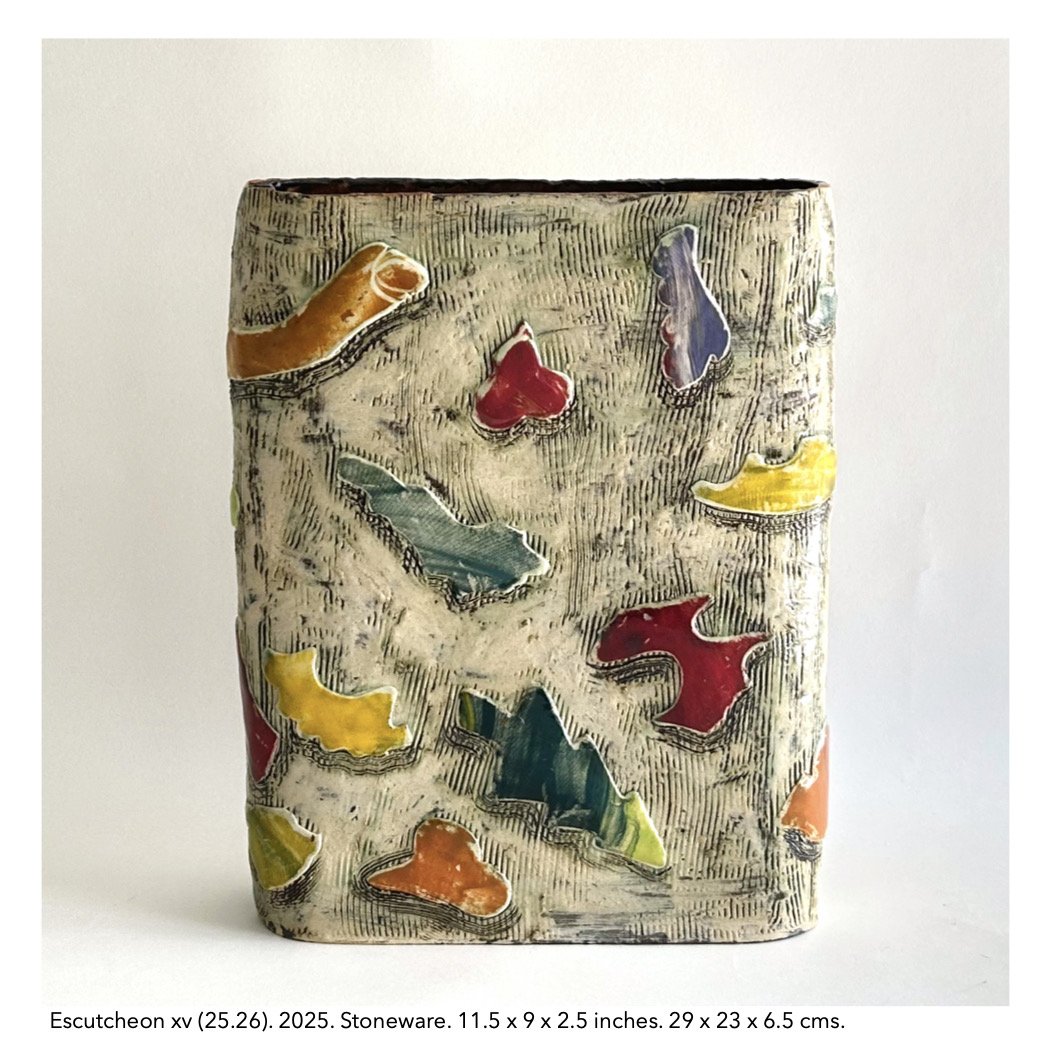
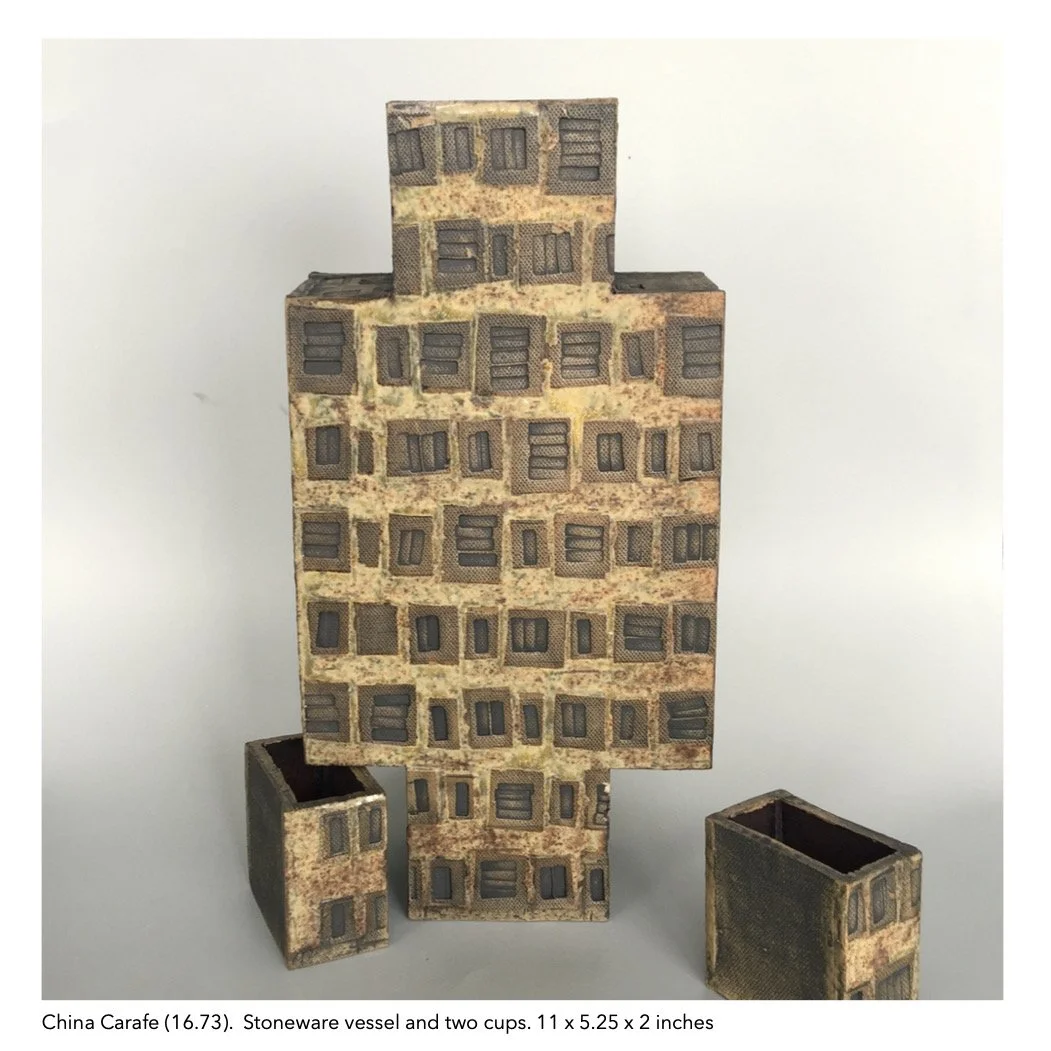
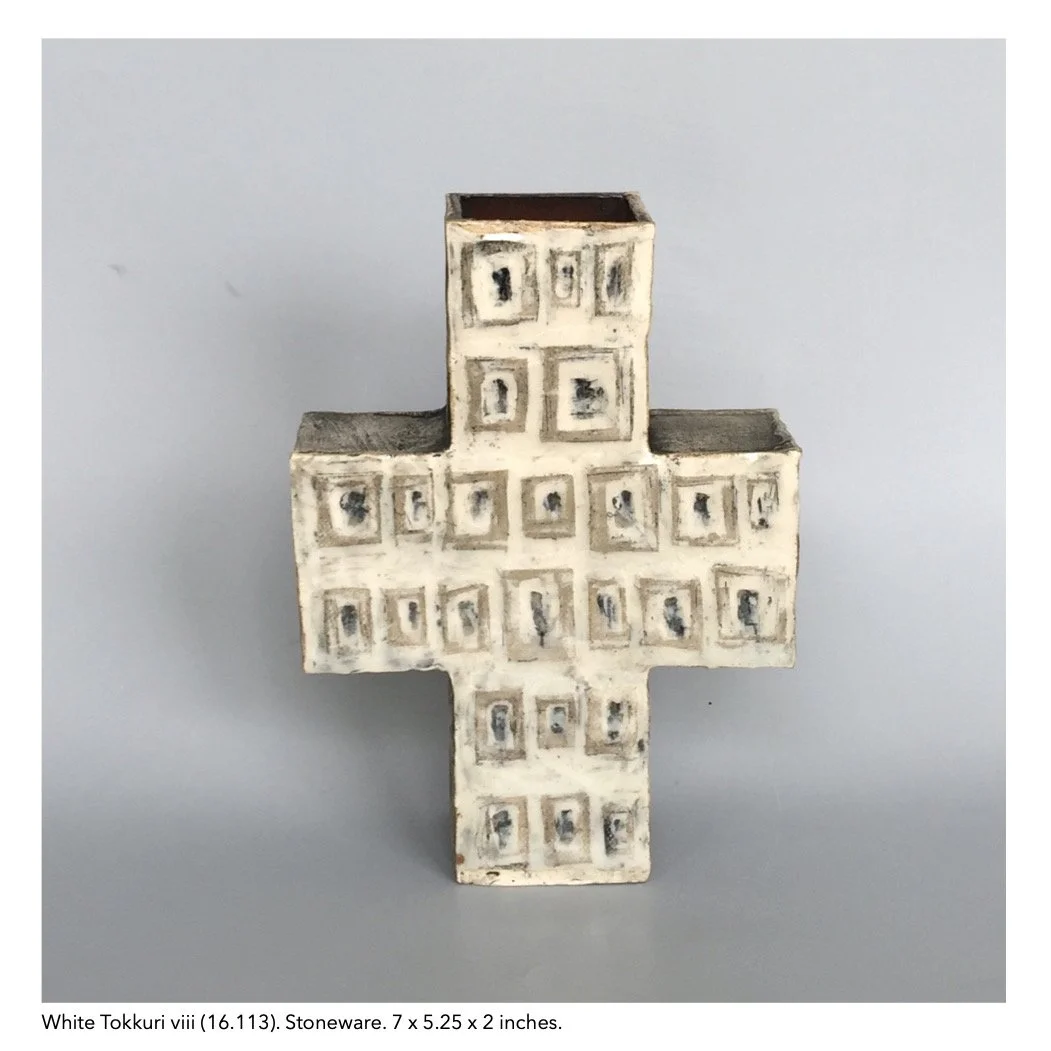
Here are some pieces that are absolutely not stolen! The three DM bottles—from Latin, disjecta membra, “scattered fragments”—were made from leftover scraps rolled out thin and pressed into another larger slab for construction. For the plate, I pressed a piece of metal wire—found lying in the street, most likely run over by a truck—on to the damp clay slab. The three tall vases were pressed with a strip of corrugated cardboard I found in the recycling bin in my apartment building. Also not stolen: Earthly Delights, pat the bunny, ERGO, Sanibel, and Escutcheon xv all came from leftovers I couldn’t bear to throw away.
Allan McCollum and Mark Twain
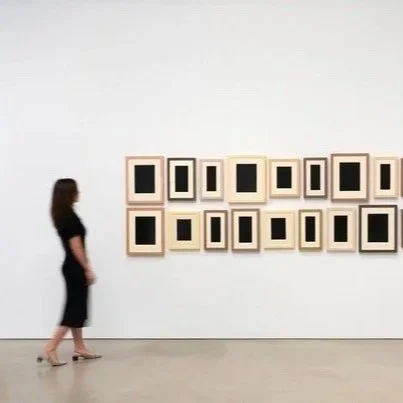
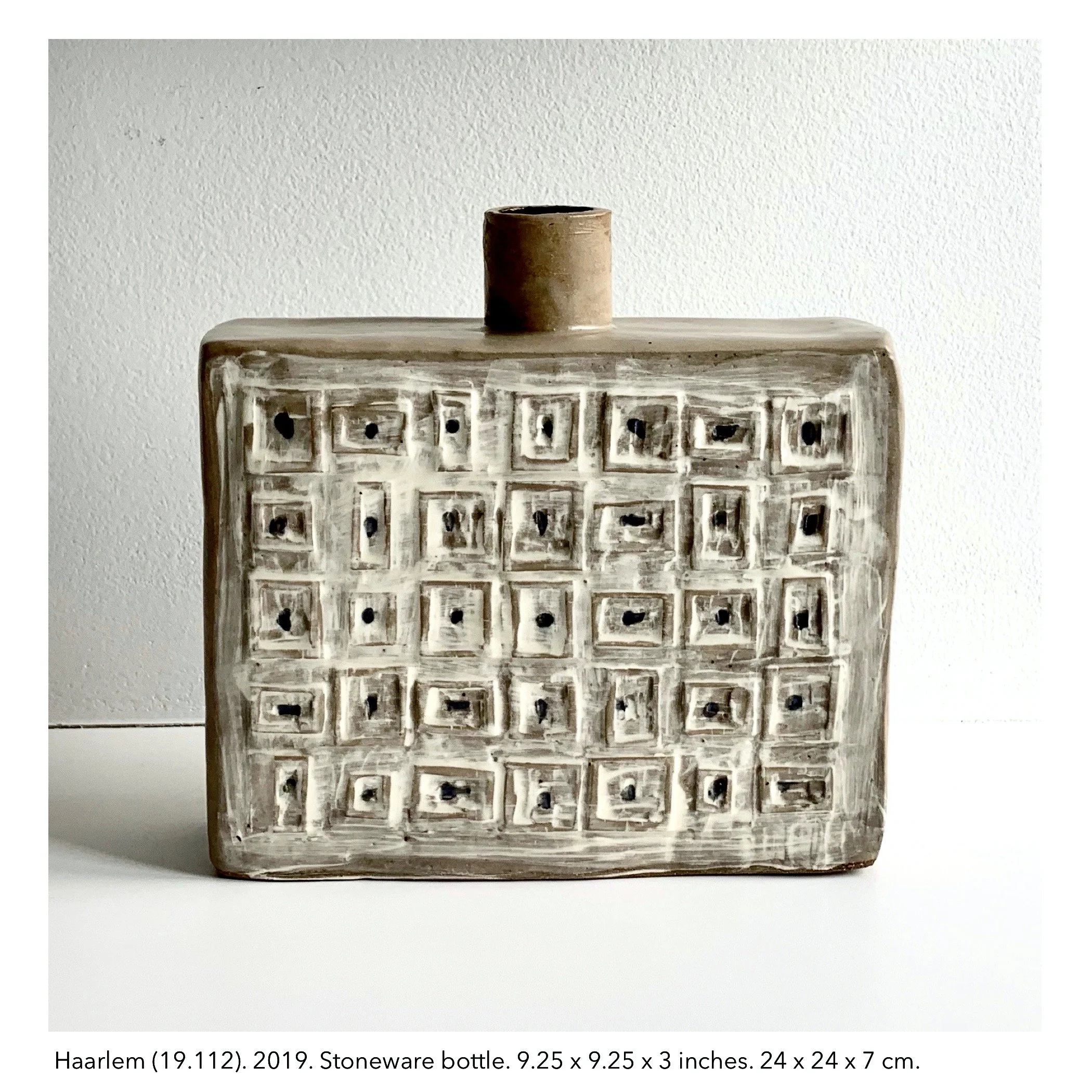
I’ll end with a positive interaction I had with an artist. I got to know and love Allan McCollum’s Plaster Surrogates while working at the Hirshhorn. A few years later when I began working with clay, his work came to mind, and I made these grid pieces and posted a few of them on Etsy. When I sold one of the plates, there was a note in the customer comments section that said “I just had to buy this,” signed Allan McCollum. I assumed it was a joke, but I responded by telling the writer how much I loved the Plaster Surrogates and that I had hung them in the Hirshhorn gallery. When he responded by expressing his sympathy that the installation must have been difficult due to the museum’s curved walls, I knew it really had to be the artist! And he didn’t suggest there had been a theft!
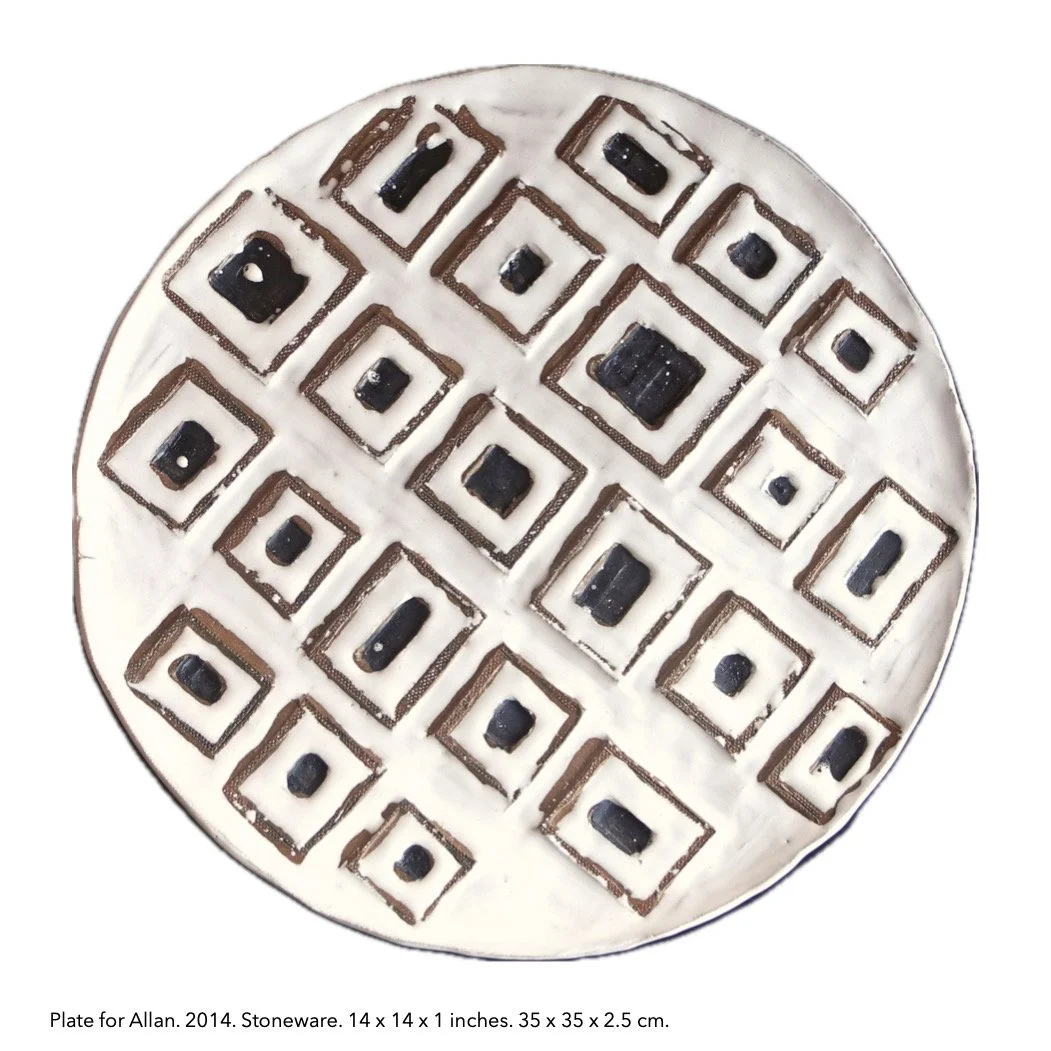
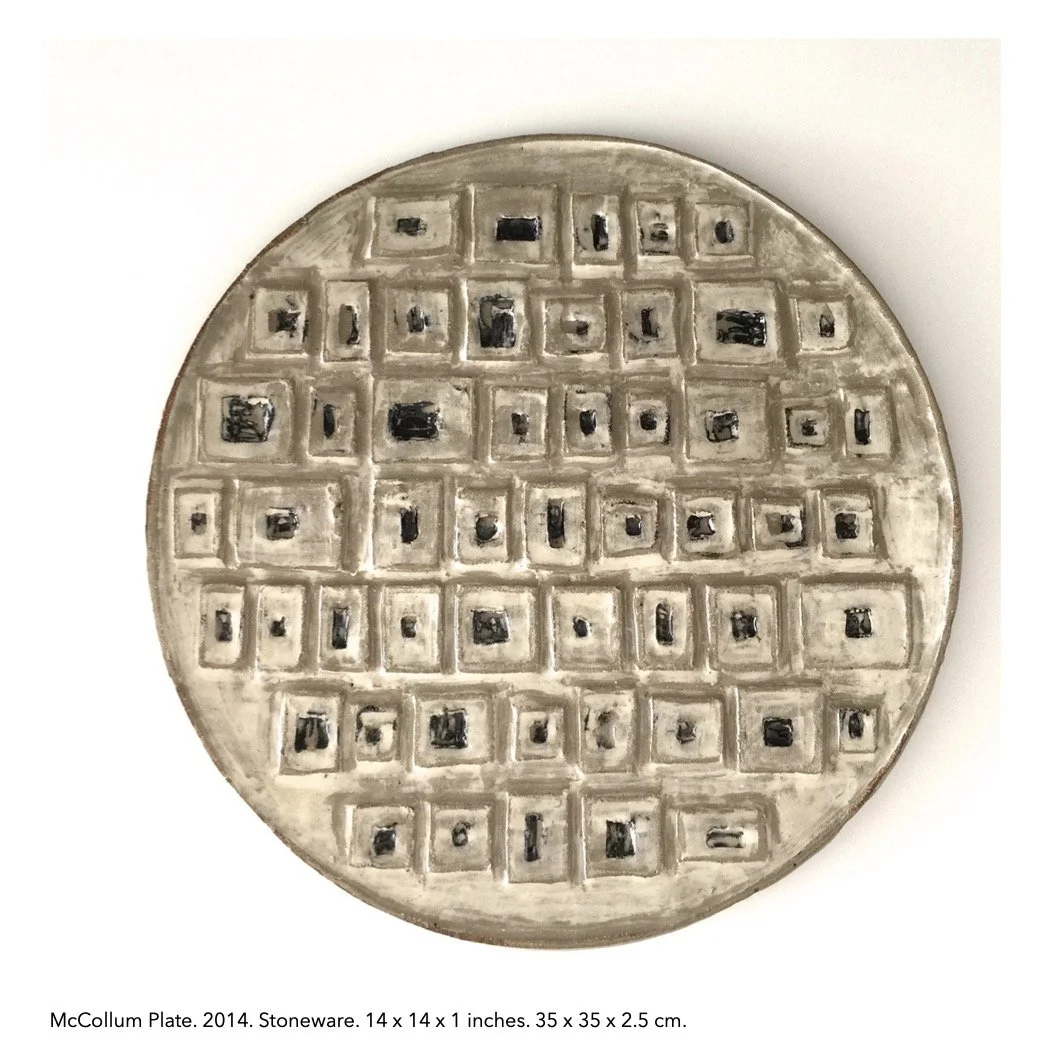
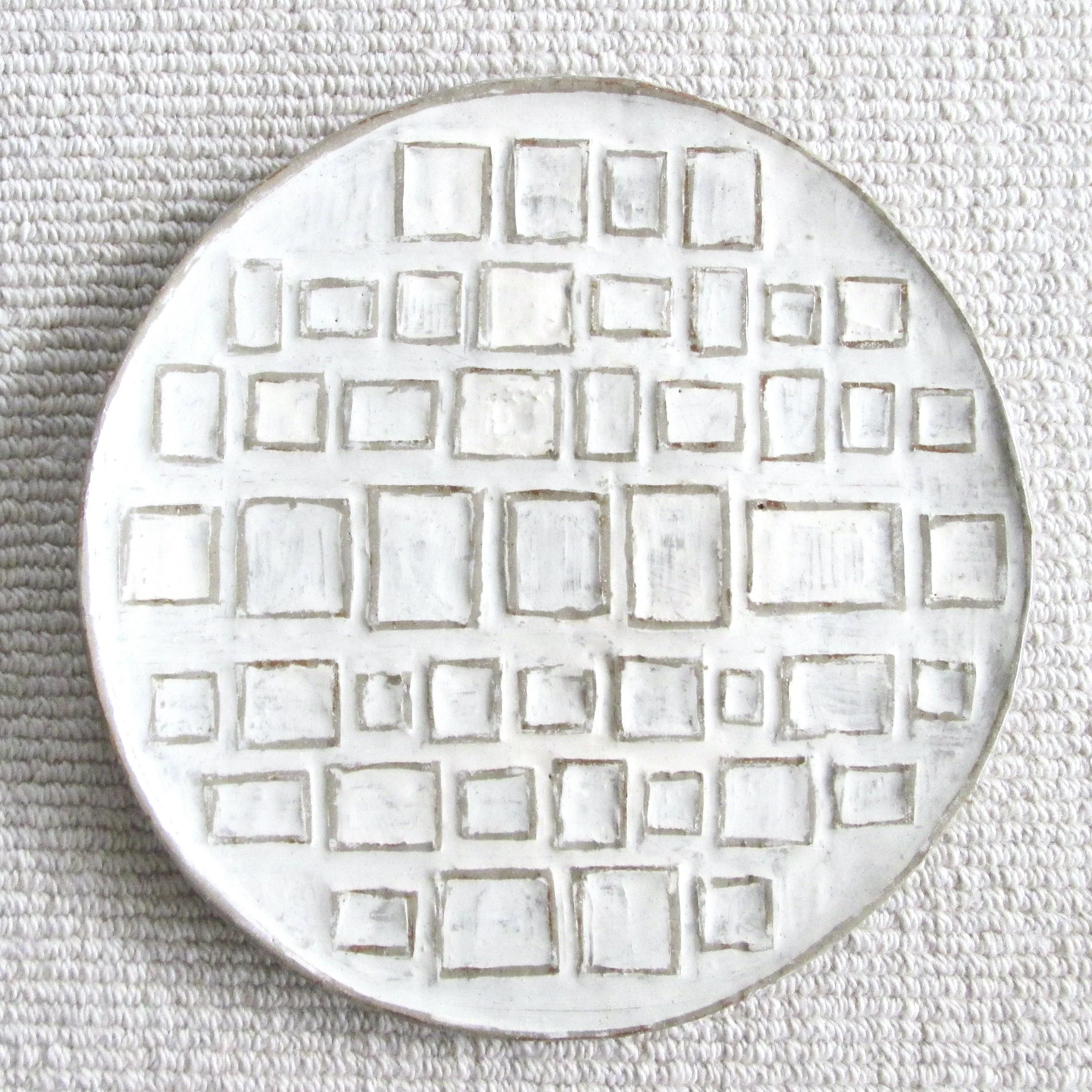
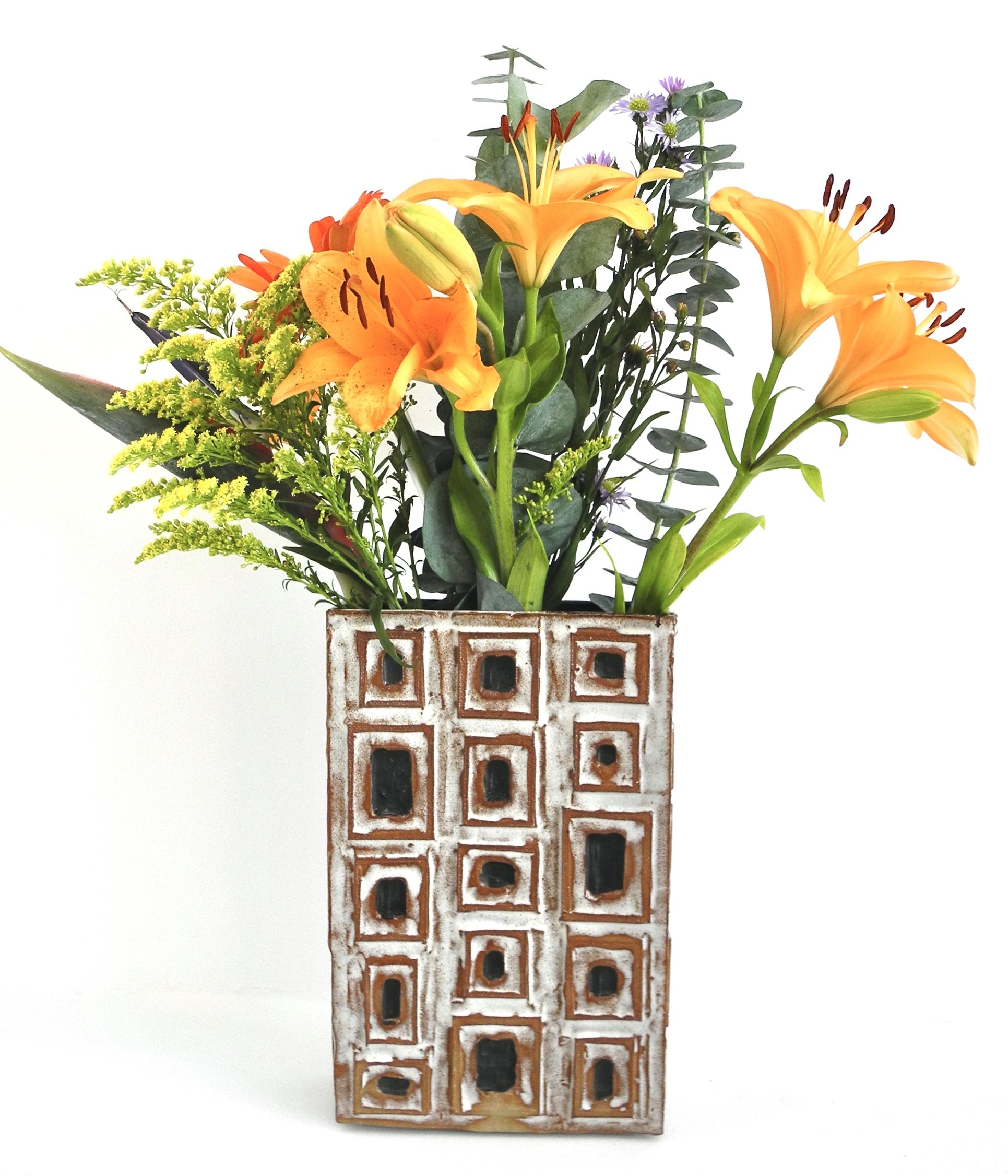
Here’s what Mark Twain had to say about originality:
“There is no such thing as a new idea. It is impossible. We simply take a lot of old ideas and put them into a sort of mental kaleidoscope. We give them a turn and they make new and curious combinations. We keep on turning and making new combinations indefinitely; but they are the same old pieces of colored glass that have been in use through all the ages.”